
how to organize socks and undergarments neatly starts with one honest goal: make it easy to find what you need in 10 seconds, even on a rushed morning.
If your sock drawer feels like a “clean laundry holding zone,” you’re not alone, small items create big mess fast, and they’re the easiest to re-mess after one bad grab.
The good news is you usually don’t need more space, you need clearer categories, a folding method you’ll actually keep up with, and drawer boundaries that stop the slide back into chaos.
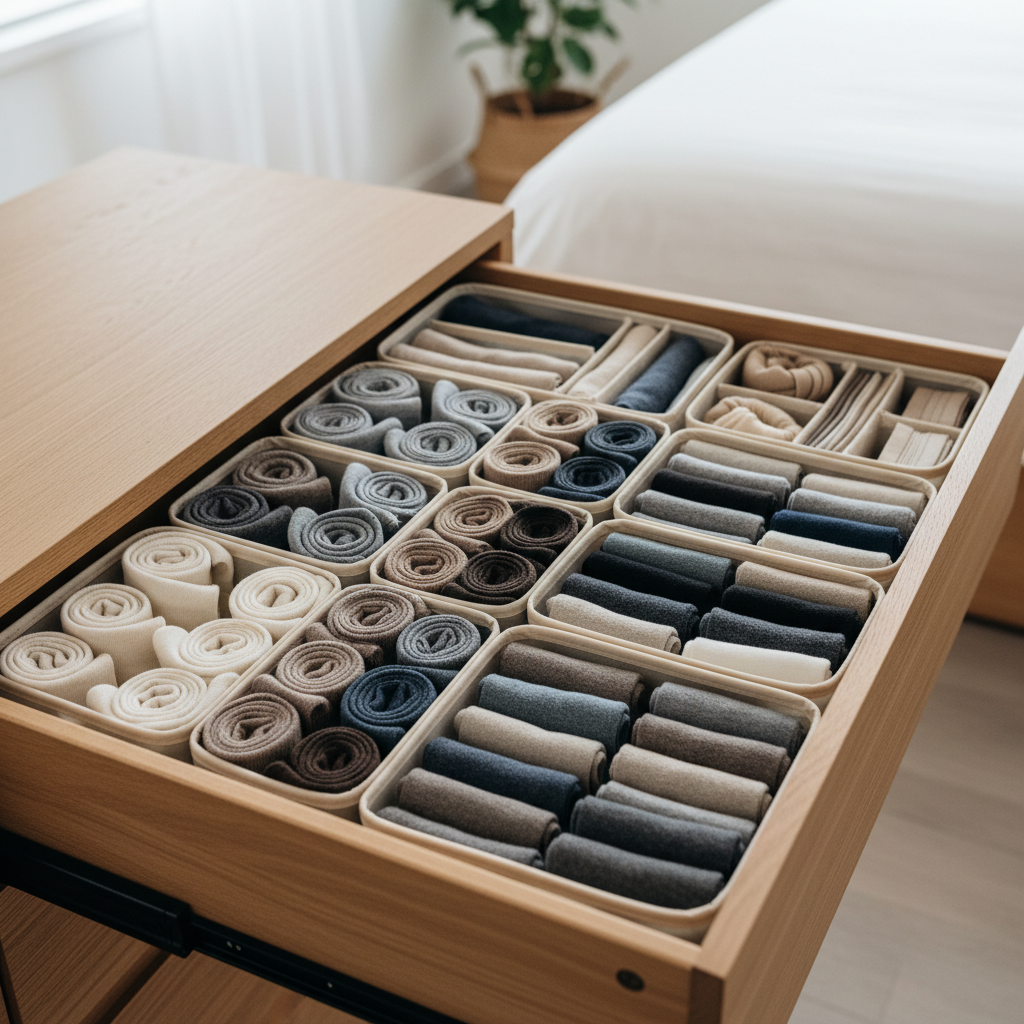
Why socks and undergarments get messy so quickly
Small items don’t “stay put” the way shirts do, and drawers invite rummaging. Most messy drawers come from a few predictable patterns.
- Too many categories mixed together, athletic socks, dress socks, lounge socks, and hosiery all competing for one pile.
- No physical boundaries, without bins or dividers, folded items migrate every time you open and close the drawer.
- Folding method is too fussy, if it takes extra steps, you’ll skip it when putting away laundry.
- “Maybe” items never leave, stretched underwear, single socks, and uncomfortable bras quietly occupy prime space.
According to Good Housekeeping, drawer dividers and simple folding systems help keep small garments from turning into piles, the core idea is reducing friction so you maintain the setup.
A quick self-check: what kind of drawer problem do you have?
Before you buy organizers, figure out what’s really going on. Different problems need different fixes, and this is where most people waste time.
- Overflow problem: the drawer doesn’t close easily, items pop up when you slide it shut.
- Visibility problem: you own enough, but you can’t see options, so you default to the same few pairs.
- Maintenance problem: it looks good for two days, then collapses after the first laundry cycle.
- Mismatch problem: you constantly have single socks, or pairs “vanish” because they’re not stored as pairs.
If you’re dealing with overflow, you’ll need a keep/toss decision and better volume control. If it’s mainly visibility, dividers and vertical folding usually fix it fast.
Reset your drawer in 30–45 minutes (the realistic way)
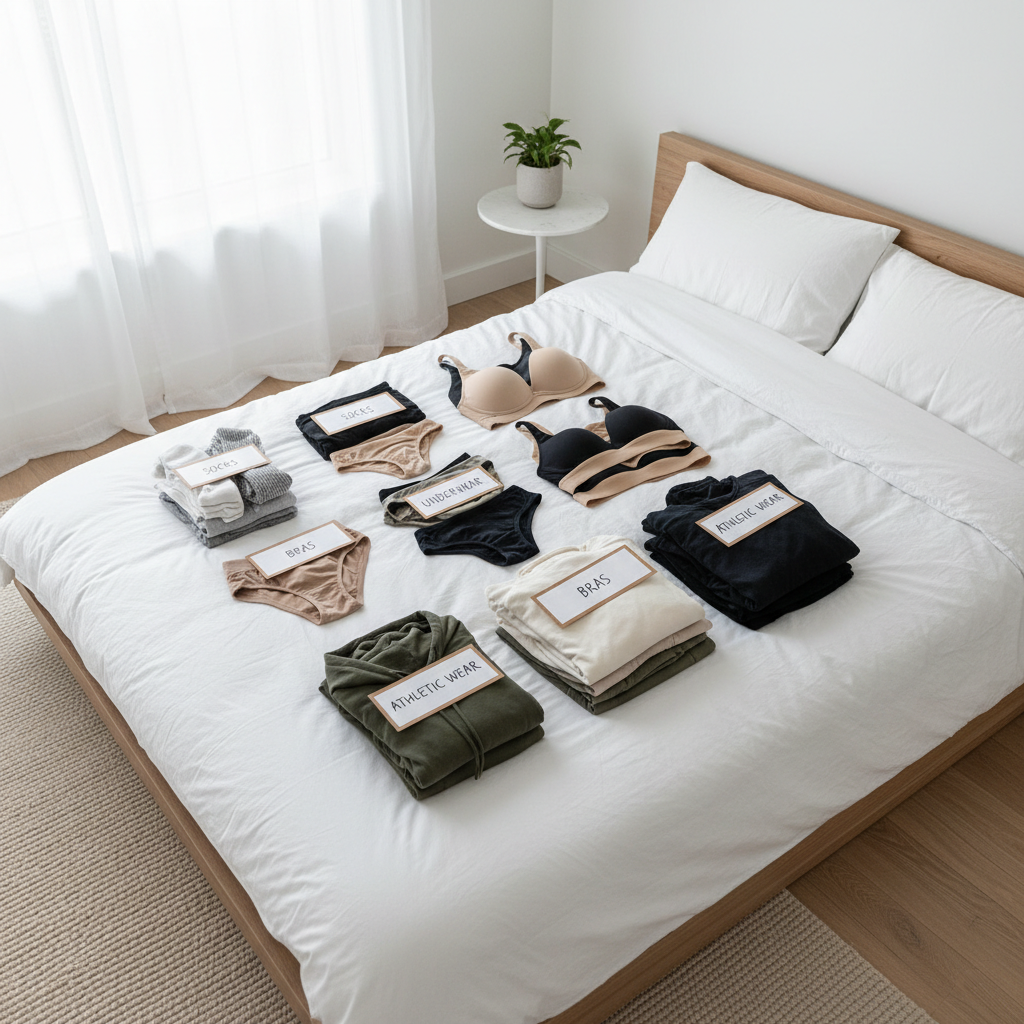
This is the cleanup that sticks, not the kind that looks perfect for a photo and then falls apart. Clear a bed or table, you need a staging surface.
Step 1: Empty and sort into “use-based” groups
Sort by how you live, not by what looks pretty. Many households do well with these buckets:
- Everyday socks
- Athletic socks
- Dress socks or special-occasion hosiery
- Underwear (daily)
- Shapewear or specialty items
- Bras, bralettes, sports bras
If you travel often or go to the gym regularly, give those items their own micro-zone, it prevents the “digging spiral.”
Step 2: Edit the volume with simple rules
You don’t need to count every pair, just make quick calls.
- Stretched elastic, thinning fabric, or uncomfortable fit goes first.
- Singles: keep a small “waiting” pouch for 2–3 weeks, then donate or recycle the remainder if the match never appears.
- Duplicates you never reach for: keep a small backup stack, release the rest.
If you’re unsure about underwear hygiene or skin irritation, it may help to check guidance from a healthcare professional. According to the American Academy of Dermatology Association, breathable fabrics and good laundering habits can matter for sensitive skin, so keep what feels comfortable and easy to clean.
Step 3: Clean the drawer and add boundaries
Wipe down the drawer, then add dividers or small bins. This part does most of the long-term work.
- Use 2–6 compartments per drawer depending on size, too many compartments becomes annoying.
- Choose organizers with straight sides so rows stay square and visible.
- If you’re using shoe boxes or repurposed containers, keep heights low so you can still grab items.
Folding and storing methods that stay neat (without being precious)
The best folding method is the one you’ll repeat on laundry day. Here are the options that work in real drawers.
Socks: pair-first, then store by shape
- Everyday/athletic socks: fold in half and tuck one cuff over the bundle, or roll loosely as a pair. Avoid tight “balling” if it overstretches cuffs.
- Dress socks: lay flat, fold in thirds, store vertically so patterns stay visible.
- No-show socks: keep in a shallow bin so they don’t slide underneath larger pairs.
Underwear: vertical file beats stacking
- Fold into a small rectangle and store upright like files, you see everything at once.
- If you prefer stacking, limit stacks to 6–8 items so you’re not constantly disturbing the pile.
Bras: protect shape, reduce tangles
- Molded cups: nest cups (one inside another) and line them side by side.
- Bralettes: fold into rectangles and store like underwear.
- Sports bras: fold once and stand upright, they’re bulky and do better as a row than a stack.
To how to organize socks and undergarments neatly in a way you can maintain, favor “stand up and see it” storage over deep piles, it cuts rummaging, and rummaging is what destroys order.
Choose the right organizer setup (with a simple comparison table)
If you’re shopping, don’t overthink brands, think function. The best organizer is the one that fits your drawer dimensions and your habits.
| Organizer type | Best for | Pros | Watch-outs |
|---|---|---|---|
| Adjustable drawer dividers | One drawer for multiple categories | Custom fit, sturdy boundaries | Can shift if not tensioned well |
| Small modular bins | Socks, underwear, accessories | Easy to reconfigure, cheap options | Too-deep bins hide items |
| Honeycomb/compartment inserts | People who want strict slots | Stops items from migrating | Can feel restrictive for bulkier items |
| Over-the-door pocket organizer | Overflow, small closets | Uses vertical space, quick access | Can look cluttered if overfilled |
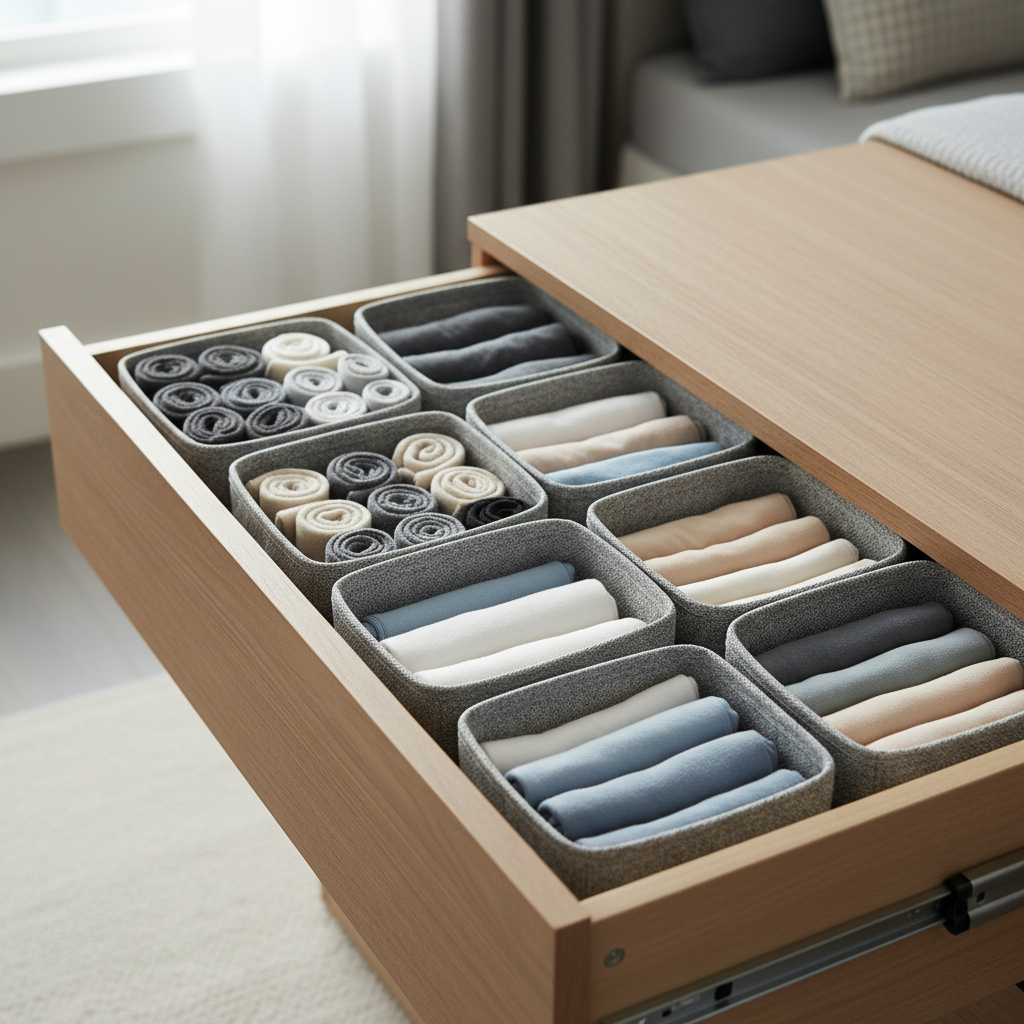
Make it maintainable: a weekly “two-minute reset” and laundry workflow
Most systems fail because laundry day is rushed. Maintenance needs to be shorter than the mess you’re trying to avoid.
Use a pairing habit that eliminates singles
- Keep a small tray or pouch labeled “Singles”, nothing else goes there.
- When folding laundry, match socks before they enter the drawer, if they’re unpaired, they wait.
Two-minute reset (once a week is usually enough)
- Stand items upright again, straighten one row at a time.
- Remove anything that doesn’t belong, hair ties, receipts, random lint roller sheets.
- If a compartment is overflowing, that’s a signal to edit volume, not to shove harder.
If you share a drawer with a partner or kids, label bins by person or by function. It feels slightly extra, but it prevents the “everything goes anywhere” problem.
Common mistakes that keep drawers messy
- Buying organizers before sorting, you end up organizing clutter instead of reducing it.
- Mixing clean and “worn but not dirty”, if you rewear items, give them a separate spot outside the main drawer.
- Over-filling compartments, packed bins look tidy until the first grab, then everything springs up.
- Keeping scratchy or ill-fitting basics, they take space and still won’t get used, so the drawer stays crowded.
How to organize socks and undergarments neatly often comes down to one boring truth: the drawer needs slack space. A little empty room is what keeps categories intact.
When it makes sense to get extra help
If you’ve tried a few systems and nothing sticks, it may not be a willpower issue, it may be a space-planning issue.
- You have very shallow drawers that fight vertical folding, a different storage location may work better.
- You’re managing accessibility needs, bending, grip strength, or vision concerns can change the ideal setup.
- Your laundry volume is tied to skin sensitivities or medical needs, you may want personalized guidance from a clinician or occupational therapist.
A professional organizer can also help if decision fatigue is the blocker. You don’t need someone forever, sometimes you just need a setup that fits your actual routines.
Conclusion: keep it visible, bounded, and easy to put away
If you want how to organize socks and undergarments neatly to feel effortless, focus on three moves: sort by real-life use, add dividers that create clear zones, and store items upright so you can see choices.
Pick one drawer to fix this week, set a timer for 30 minutes, and aim for “easy to maintain,” not “perfect.” Your future self, half-awake on a Monday, will notice the difference.
FAQ
How do I organize socks and undergarments neatly in a small dresser?
Use shallow bins and vertical folding so you can see everything at once, then reduce categories to the essentials you actually wear. Small drawers punish over-sorting.
Should I roll socks or fold them?
Either works if pairs stay together, but avoid tight balling that stretches cuffs. For dress socks, a flat fold stored vertically often looks cleaner and stays visible.
What’s the best way to deal with single socks?
Keep a dedicated “Singles” pouch for a short window, then clear it out regularly. If you let singles live in the main drawer, they spread chaos quickly.
How many pairs of socks should I keep?
It depends on laundry frequency and lifestyle, but a practical test is whether you can store them with a little breathing room. If the drawer is stuffed, you probably have more than you use.
How do you store bras without ruining the shape?
Nest molded-cup bras and line them up side by side, avoid flipping one cup inside out. Soft bras can be folded and stored upright like underwear.
Do drawer dividers really help, or is it just aesthetics?
They help because they create physical limits, and limits prevent “just toss it in” behavior from taking over. The aesthetic benefit is a side effect.
How can I keep my system from falling apart after laundry day?
Make the folding method simple enough that you do it when tired, and keep categories broad. A quick weekly reset beats a monthly reorganization every time.
If you’re trying to get a bedroom or closet back under control and you’d rather not guess which bins fit your drawer or how many compartments you need, a simple measurement-first plan and a basic “zones” layout can make the whole process feel much more manageable.