
Small home gym ideas for tiny spaces start working when you stop thinking “mini gym” means “mini results” and start treating your space like a flexible system, not a permanent room. You can get strong, improve conditioning, and stay consistent with a corner, a closet, or even the space between your couch and TV.
The real problem in small apartments is friction, equipment that’s annoying to move, loud workouts that stress neighbors, and storage that becomes clutter fast. When setup takes 10 minutes, workouts quietly disappear from your week.
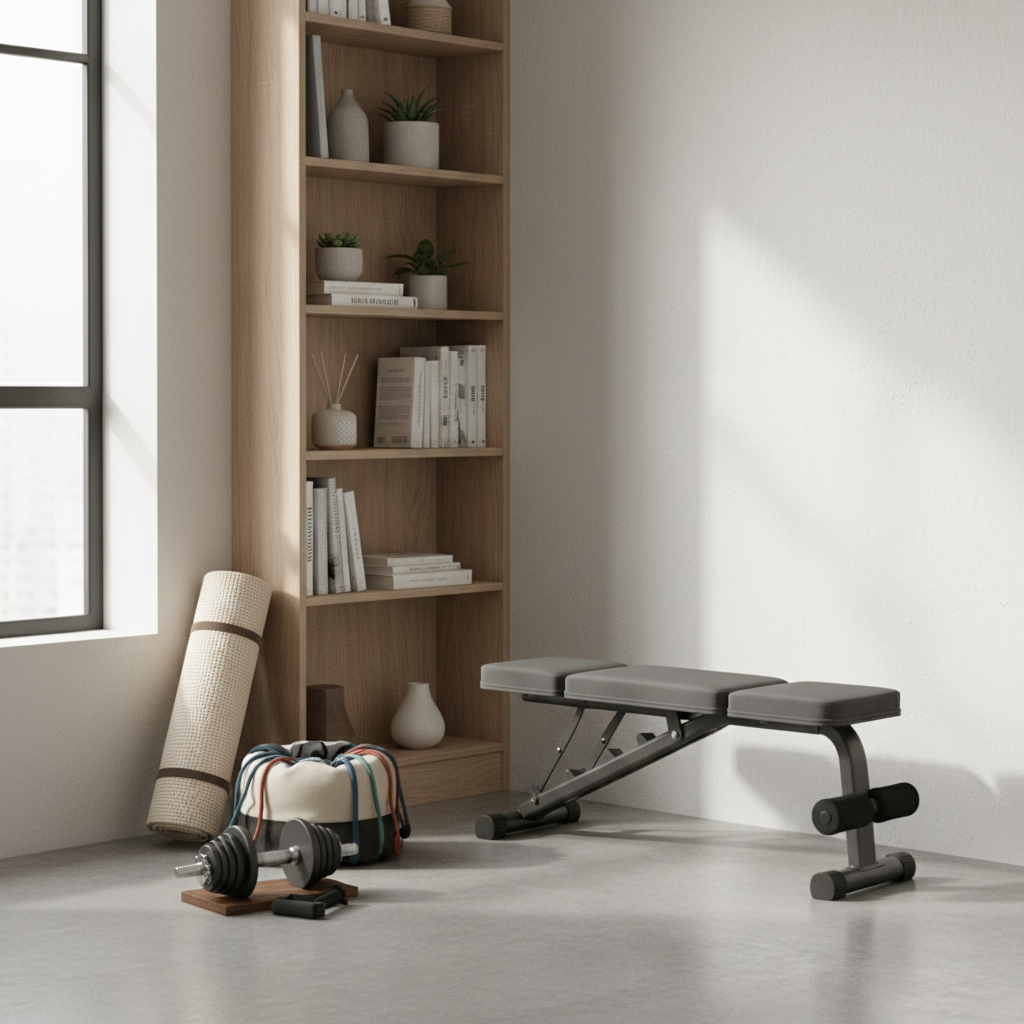
This guide focuses on what actually works in tiny spaces: layout tricks, quiet-friendly training, and gear that earns its footprint. You’ll also get a quick self-check so you don’t buy the wrong stuff, plus a simple plan you can run this week.
Start with your “micro-layout”: measure, zones, and traffic flow
Before you buy anything, you need a layout that respects how your home already functions. Most small-space gyms fail because equipment blocks doors, steals storage, or forces constant furniture shuffling.
Pick one primary zone (and one backup zone)
- Primary zone: where you can train 80% of the time, ideally near a wall for storage and stability.
- Backup zone: a quick alternative when the primary spot is taken, like a hallway, patio, or the foot of your bed.
As a practical baseline, many people find they can do most strength sessions in roughly a yoga-mat footprint plus some elbow room, but your movement choices matter, overhead presses and swings need more clearance.
Quiet matters more than you think
If you share walls or floors, noise becomes the hidden limiter. According to CDC guidance on physical activity, consistency is the long game, so your setup should make it easy to keep going without conflict. In practice, that means controlled reps, softer landings, and floor protection.
What to buy first: high-impact gear with low footprint
The best small-space equipment does at least two things well, and stores fast. If you’re hunting for small home gym ideas for tiny spaces, prioritize adjustable and multi-use items over single-purpose machines.
Core “tiny gym” kit (most people do fine here)
- Adjustable dumbbells or a pair of moderate dumbbells (if budget is tight).
- Resistance bands with a door anchor for rows, presses, and pulldown variations.
- Foldable bench or sturdy step for presses, split squats, step-ups.
- Exercise mat plus grippy sliders (or towels) for core and leg work.
- Jump rope alternative: a compact stepper, marching intervals, or shadow rope if you have downstairs neighbors.
If you already own one piece of cardio equipment, keep it only if it doesn’t crowd your training zone. In tiny spaces, one bulky item can “eat” your routine.
If you want one “upgrade” that still fits
- Adjustable kettlebell for hinges, carries, and conditioning without a rack.
- Pull-up bar only if your door frame is suitable and you can use it safely, when in doubt, skip it.
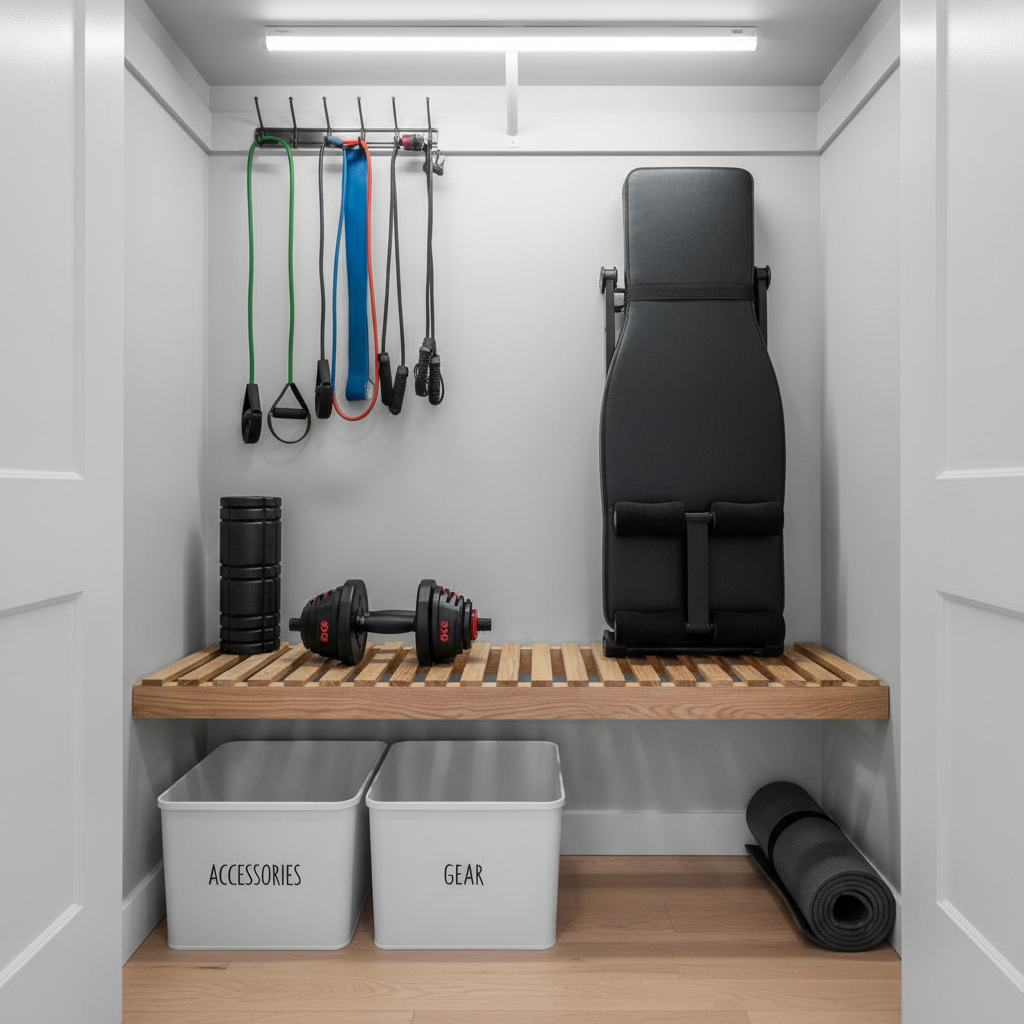
- Wall-mounted storage rail to keep bands, handles, and mats off the floor.
Quick self-check: which tiny-space gym type are you?
This is the part many people skip, then they buy gear that doesn’t match their home. Use this checklist to narrow your setup.
- “No-noise” home: you have downstairs neighbors or thin walls, you should bias toward controlled strength work, tempo reps, bands, and low-impact conditioning.
- “No-storage” home: closets are full, you need under-bed bins, over-door hooks, or furniture that doubles as storage.
- “Shared space” home: partner, kids, roommates, your setup must pack away in under 2 minutes, or it won’t last.
- “Ceiling-limited” home: fans, low ceilings, tight hallways, you’ll do better with floor presses, split squats, rows, deadlift patterns, and fewer overhead moves.
If two categories feel true, choose solutions that satisfy the stricter one, usually noise or storage.
Storage that doesn’t become clutter: make reset effortless
Tiny gyms fall apart when equipment lives on the floor. The goal is a “reset” you can do while cooling down, because that’s when you still have willpower.
Simple storage rules that hold up in real life
- One vertical surface: wall hooks, a pegboard, or an over-door organizer for bands and small accessories.
- One hidden bin: under-bed or under-sofa storage for mats, sliders, and light gear.
- One visible home: dumbbells or kettlebell in a corner tray so they look intentional, not abandoned.
Skip complicated systems unless you enjoy organizing. Most people need something forgiving, not perfect.
Quiet, effective workouts for tiny spaces (strength + conditioning)
You don’t need big moves to get a hard session. You need smart exercise selection and enough weekly volume. According to the American College of Sports Medicine (ACSM), resistance training is a key component of fitness for adults, and you can get meaningful benefits with properly programmed exercises even without a full gym.
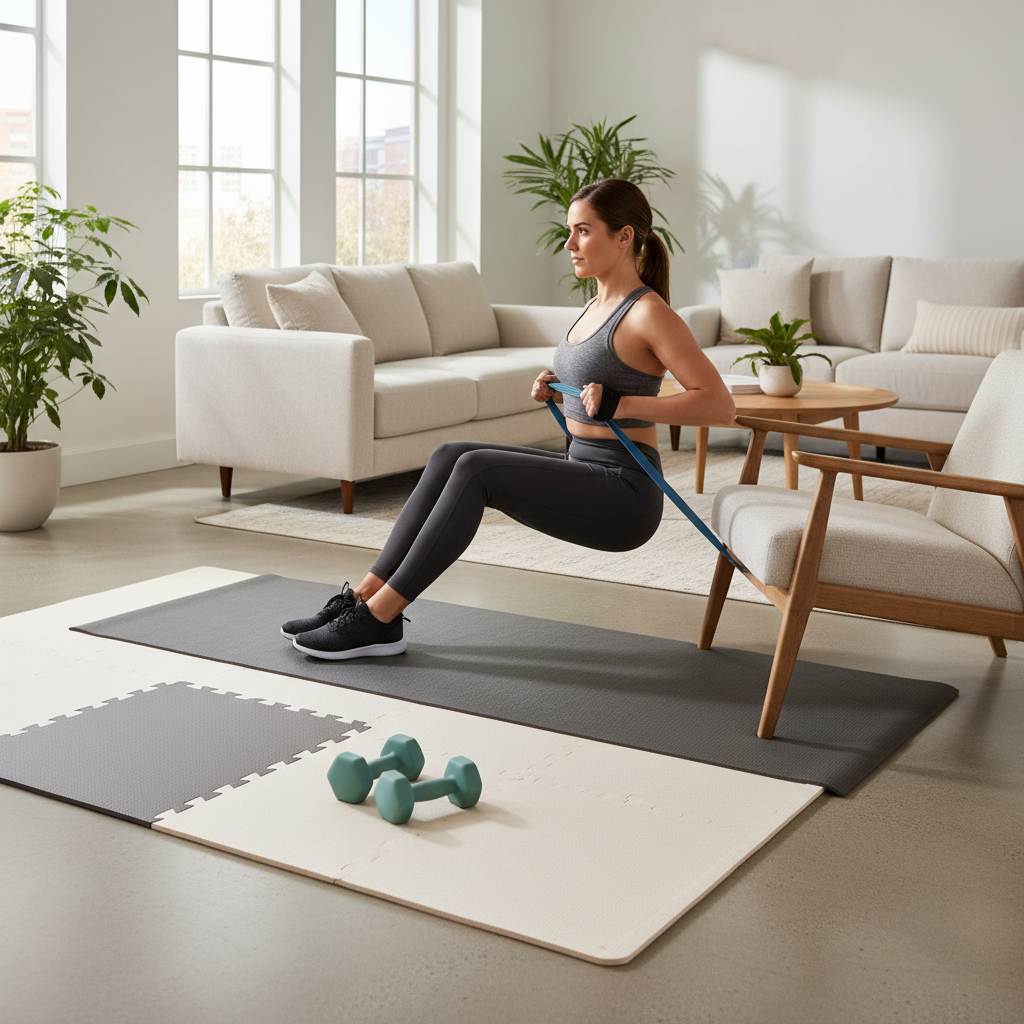
A quiet full-body session (30–40 minutes)
- Goblet squat or banded squat: 3 sets of 8–12
- DB Romanian deadlift or band hinge: 3 sets of 8–12
- Floor press or band press: 3 sets of 8–12
- One-arm row or band row: 3 sets of 10–15
- Split squat or step-up: 2–3 sets of 8–12 per side
- Carry (suitcase carry) or dead-bug: 2–3 rounds
Keep 1–3 reps “in the tank” most sets, especially if you’re new or returning. If you feel joint pain or dizziness, it’s smart to pause and consider checking with a qualified fitness professional or clinician.
Tiny-space conditioning without jumping
- Marching intervals with knee drive and arm swing
- Shadow boxing with controlled footwork
- Step-ups on a stable platform
- Tempo circuits: slower reps, shorter rest, same intensity without impact
Mini-plan you can follow this week (and adjust without overthinking)
If your schedule is messy, a “minimum effective routine” beats a perfect plan you never start. These small home gym ideas for tiny spaces work best when the routine feels almost too easy to begin.
Option A: 3 days per week (simple and sustainable)
- Day 1: full-body strength
- Day 2: conditioning + core (low impact)
- Day 3: full-body strength (swap variations)
Option B: 5 days per week (short sessions)
- 3 days strength, 2 days conditioning, keep sessions 20–30 minutes
Key point: track something small, reps, weight, or total rounds. Progress in a tiny gym is still progress, and it’s usually what keeps motivation alive.
Decision table: match your space to the right setup
If you’re stuck choosing between gear types, this quick table helps you decide without spiraling.
| Constraint | What to prioritize | What to avoid (often) |
|---|---|---|
| Downstairs neighbors | Thick mat, controlled strength, bands, step-ups | Jumping circuits, heavy drops, loud machines |
| No closet space | Adjustable dumbbells, wall hooks, under-bed bin | Multiple fixed dumbbell pairs, big benches |
| Very tight floor area | Band system, floor press, split squats, rows | Wide barbell movements, sprawling cable towers |
| Shared living room | Fast pack-away kit, one corner “home” for gear | Permanent setups that block walkways |
Common mistakes and safety notes (so you don’t waste money)
Most missteps come from buying for an “imaginary future routine” instead of what you can do in your current home, on a random Tuesday.
- Buying a huge machine first: it feels motivating, then it becomes a coat rack when it’s in the way.
- No floor protection: a good mat reduces noise and protects joints, and it can protect your deposit too.
- Too many tools, no plan: a small kit plus a repeatable routine almost always wins.
- Ignoring form because space is tight: awkward angles can increase strain, adjust the exercise instead of forcing it.
According to NIH, strength and physical activity support overall health, but individual needs vary. If you have a prior injury, heart condition, or you’re unsure what’s safe, it’s reasonable to consult a qualified healthcare professional before pushing intensity.
Conclusion: make it small, make it easy, make it yours
When people search small home gym ideas for tiny spaces, they’re usually hoping for a clever layout hack, but what really changes everything is reducing friction. Pick one training zone, buy a compact kit you’ll actually use, and set up storage so cleanup takes under two minutes.
If you want one action today, measure a mat-sized area and choose your first two tools, typically adjustable dumbbells and bands, then schedule three short sessions this week. You’ll learn more from doing that than from another month of researching gear.