
Modern minimalist decor ideas for beginners work best when you treat them less like a strict “all-white” rule, and more like a repeatable way to make decisions so your home feels calm, intentional, and easy to maintain.
If you have a room that feels messy even after you clean, or you keep buying “cute” pieces that never look right together, minimalism helps because it reduces variables: fewer colors, fewer materials, fewer competing focal points.
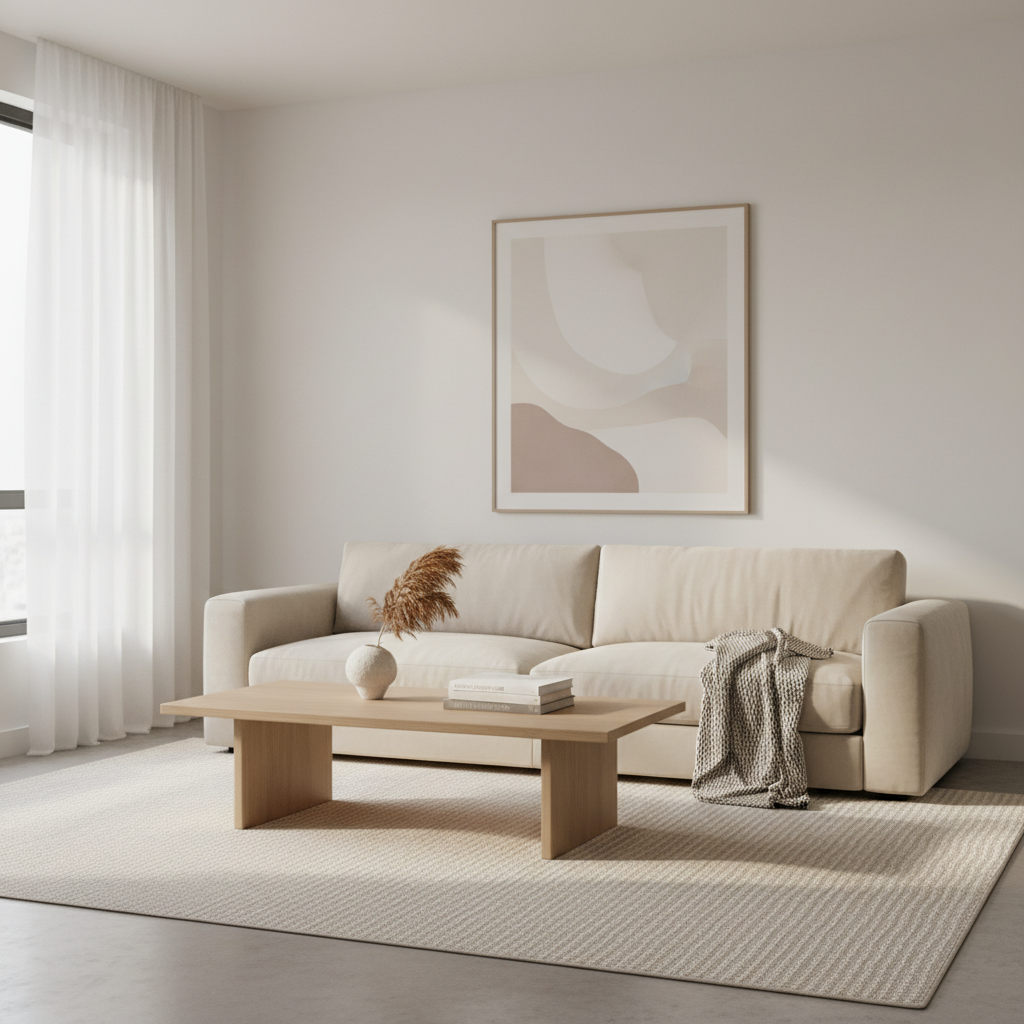
One common misunderstanding: minimalist does not mean empty or uncomfortable. In real homes, the goal is usually less visual noise, not zero personality. This guide focuses on practical moves you can do in phases, even if you rent and even if you already own “too much stuff.”
What “modern minimalist” really means in a real home
“Modern” is the part that brings clean lines, simple silhouettes, and a preference for function. “Minimalist” is the part that limits what you introduce, so the pieces you keep can actually breathe.
According to The American Institute of Architects (AIA)... design decisions that improve everyday usability tend to matter as much as aesthetics, and minimal layouts often start with circulation and function. In plain English, if you can walk through a room easily and surfaces are usable, you are already halfway there.
- Simple forms: furniture with straight or gently curved lines, minimal ornament.
- Controlled palette: a small set of colors repeated across the room.
- Intentional emptiness: leaving some open space on walls and surfaces on purpose.
- Texture over clutter: interest comes from materials (linen, wool, wood) rather than lots of objects.
Why beginner minimalist rooms fail (and how to avoid it)
Most “first tries” don’t fail because people pick the wrong sofa. They fail because the room has no hierarchy, too many small items, and no plan for storage, so clutter keeps returning.
- Buying decor before solving storage: baskets, cabinets, and closed storage often need to come first.
- Too many accent colors: three “accent” colors quickly becomes six when you add art, books, and throws.
- All neutrals, no depth: without contrast or texture, a room can look flat, not minimalist.
- Undersized rugs and art: small pieces create visual jitter. Fewer, larger elements read calmer.
If you want modern minimalist decor ideas for beginners that actually stick, focus on systems: where things live, what stays out, and what you stop buying.
A quick self-check: which minimalist “starting point” are you?
Pick the description that matches your situation, it changes what you should do next.
- I have clutter everywhere: you need a reset and a storage plan before styling.
- My room is “fine,” but not cohesive: you need a tighter palette and fewer competing materials.
- I rent and can’t renovate: you need reversible upgrades: lighting, textiles, layout, and removable wall treatments.
- I’m on a budget: you need to edit what you own, then buy fewer, better-impact items.
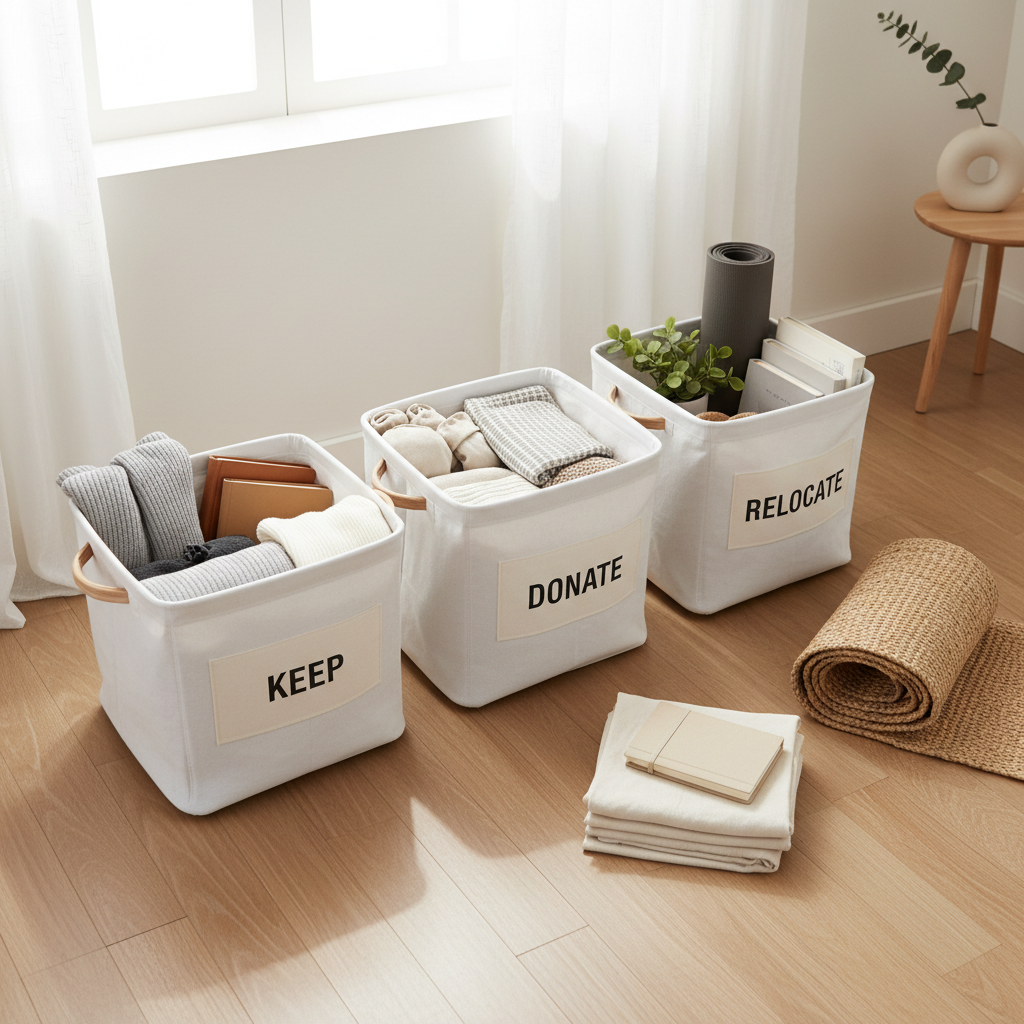
Be honest here. If you skip to “cute styling” while your cables, mail, and random tools have no home, the room will drift back to chaos within a week.
The beginner formula: 60% calm base, 30% function, 10% character
This is a useful mental model when you’re overwhelmed by options. You build a calm base, make the room work, then add just enough personality to feel like you live there.
60% calm base
- Wall color: warm white, soft greige, or a muted light tone you can repeat elsewhere.
- Large textiles: one rug, one curtain style, one bedding set in a tight palette.
- Big furniture: neutral upholstery and simple shapes (you can change the vibe later with accessories).
30% function
- Closed storage for “ugly but necessary” stuff: chargers, paperwork, pet supplies.
- Lighting that supports the room’s purpose: task lighting where you read or work.
- Clear pathways: avoid extra side tables just because there is space.
10% character
- One strong art piece or a pair that reads as a set.
- A plant with an intentional pot, not five tiny plants scattered around.
- A textured throw or handmade object that feels personal.
Modern minimalist decor ideas for beginners feel easier when you’re not trying to “decorate everything,” you’re trying to make the room legible.
Room-by-room ideas you can actually copy
Instead of random tips, here are copyable mini-plans. Pick one room, finish it, then move on.
Living room
- Anchor with a bigger rug so the seating area reads as one unit.
- Limit surfaces you must style: one coffee table, one media console, one shelf maximum to start.
- Use one “statement” item: oversized art, a floor lamp, or a sculptural chair.
Bedroom
- Make the bed the hero: crisp bedding, one throw, two pillows beyond your sleepers.
- Hide the small stuff: nightstands with drawers beat open shelves for beginners.
- Reduce visual clutter: fewer items on top of dressers, and keep cords out of sight.
Kitchen and dining
- Clear the countertops except for daily-use items, grouped neatly on one tray.
- Repeat one metal finish where you can (black, brushed nickel, brass), avoid mixing three finishes in one sightline.
- Simple centerpiece rule: one bowl, one vase, or nothing. It’s okay to choose nothing.
Entryway
- One drop zone: tray or shallow bowl for keys and wallet, otherwise it spreads.
- Hooks and a bench if you fight coats and bags, function beats “pretty.”
What to buy first (and what to stop buying): a practical table
If you’re new, you’ll get the biggest visual payoff from a few foundational items, not a cart full of small decor.
| Priority | Buy/Do | Why it works for minimalist beginners | Common mistake |
|---|---|---|---|
| High | Declutter + assign “homes” | Stops rebound clutter and makes styling possible | Decluttering without a storage plan |
| High | Rug (proper size) | Instant cohesion and calmer layout | Too small, looks like a floating mat |
| High | Lighting (floor/desk lamp) | Adds warmth and makes rooms feel finished | Cold bulbs or only overhead lighting |
| Medium | Closed storage (cabinet, baskets) | Hides necessary mess, reduces visual noise | Buying open shelves that require constant styling |
| Medium | One large art piece | Creates a focal point without clutter | Many small frames scattered across walls |
| Low | Small decor (candles, objects) | Only useful after the foundation looks calm | Impulse buying “filler” items |
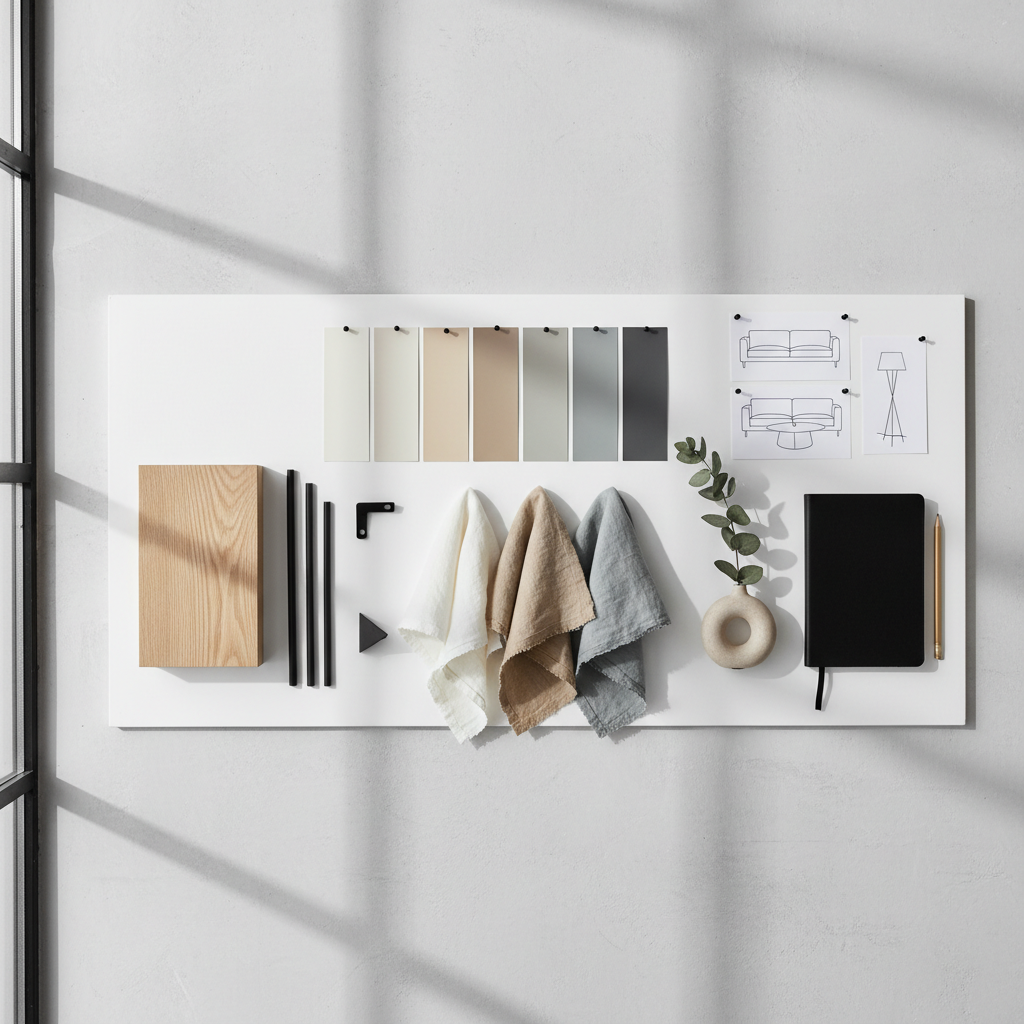
Key point: if you’re buying lots of small items because the room “still feels empty,” you probably need a larger anchor piece instead, like a rug, art, or a better lamp.
Step-by-step: a weekend minimalist refresh (no renovation required)
You can do this in two days without making it a life project. The trick is to finish one space, even if the rest of the home stays imperfect.
Day 1: Edit and reset
- Clear one room surface by surface, not “the whole room at once.”
- Make three piles: keep here, relocate, donate or discard.
- Wipe surfaces and put back only what has a job.
Day 2: Style with constraints
- Choose a three-color rule: base neutral, secondary neutral, one accent.
- Group objects in odd numbers only if it still looks calm, if it looks busy, go simpler.
- Use negative space: leave part of a shelf empty on purpose.
When people ask for modern minimalist decor ideas for beginners, this “edit first, style second” order is usually what makes it finally click.
Common pitfalls and safety notes (especially for renters and families)
- Over-minimalizing storage: if you have kids or pets, you may need more closed storage than Pinterest shows.
- Unstable furniture: tall bookcases and dressers can tip, so consider anchoring. According to U.S. Consumer Product Safety Commission (CPSC)... tip-over prevention matters for household safety, and families should consider appropriate anchoring methods. If you’re unsure, consult a professional installer or your landlord.
- Harsh lighting: minimalist rooms can feel cold under the wrong bulb, many households prefer warmer color temperatures for living spaces.
- Buying “minimalist” just because it is minimalist: if it doesn’t fit your routines, it becomes clutter anyway.
Conclusion: keep it simple, keep it livable
The best modern minimalist decor ideas for beginners usually look unexciting on paper: fewer colors, fewer objects, better storage, and one or two strong anchors. But that’s the point, you’re building a home that stays calm even on a busy week.
If you want a clean next step, pick one room and do two things this week: remove anything that has no “home,” then upgrade one high-impact item like lighting or a properly sized rug. Small, contained wins beat a whole-house overhaul.
Quick takeaways
- Edit before you decorate, otherwise clutter always returns.
- Go bigger, not busier with rugs, art, and lighting.
- Texture replaces clutter: linen, wool, wood, and matte metals add warmth without chaos.