
Kitchen cabinet organization for small spaces works best when you stop trying to “store everything” and start deciding what your cabinets must do for you every day. The goal is less digging, fewer duplicates, and a setup that stays tidy even when you’re busy.
If your kitchen feels cramped, the problem usually isn’t square footage, it’s access. Small cabinets hide items behind other items, shelves waste vertical space, and one messy “everything” area becomes a magnet for clutter.
This guide walks you through a practical system, quick declutter rules, and the organizers that actually help in tight kitchens. You’ll also get a simple reset routine, plus a few mistakes that quietly undo good organizing.
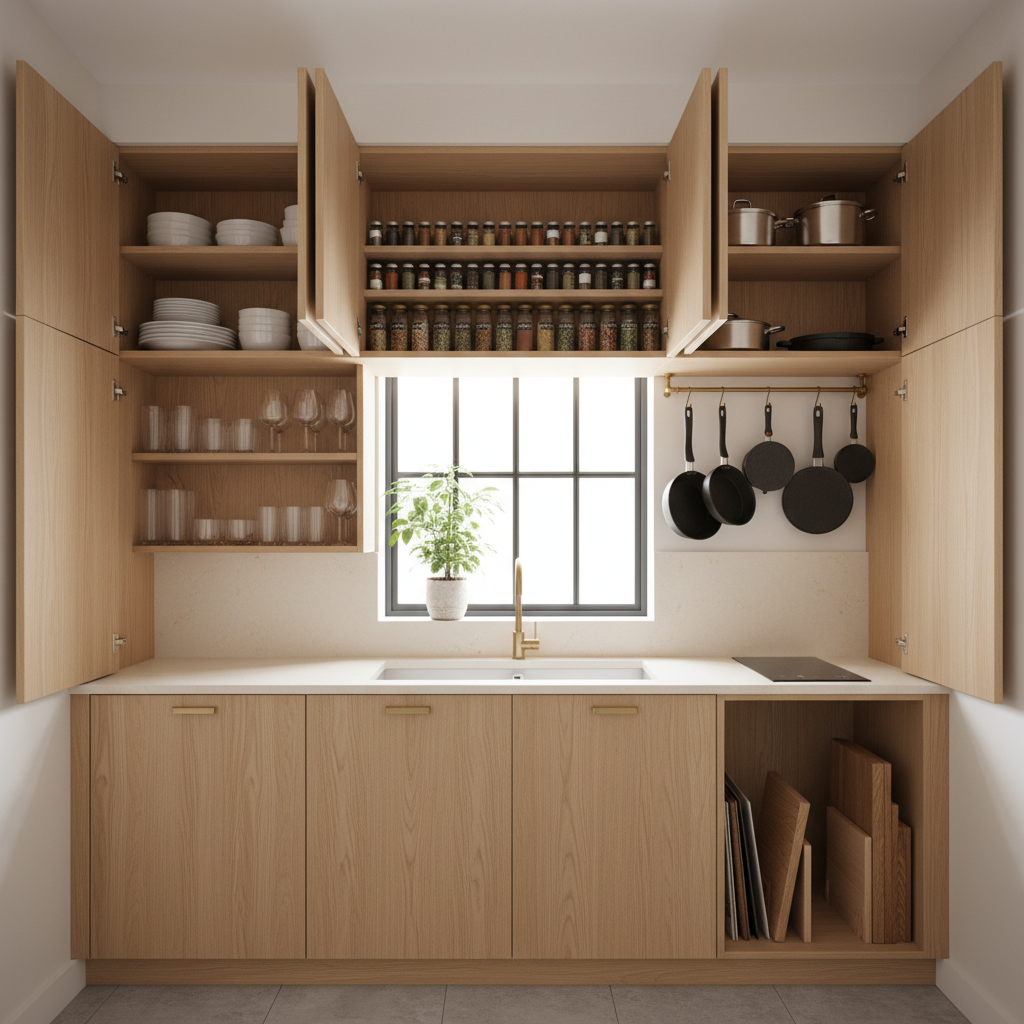
Start with function, not containers
The fastest way to waste money is buying bins before you know what you’re keeping. In small kitchens, a cabinet has to earn its spot by serving a clear job, like “everyday dishes” or “breakfast station.”
Try this quick cabinet map, you can sketch it on paper:
- Cooking zone: pans, oils, utensils, spices near the stove
- Prep zone: cutting boards, knives, mixing bowls near your main counter
- Clean-up zone: dish soap, towels, trash bags near the sink
- Everyday eating: plates, cups, lunch containers near the dishwasher path
- Backstock: rarely used items up high or deep corners
Once each cabinet has a “job,” decisions get easier. That extra set of glassware? It either supports the job or it moves out.
Why small-space cabinets get messy (common causes)
When people struggle with kitchen cabinet organization for small spaces, it’s usually one of these patterns, not “lack of willpower.”
- Too many categories in one shelf, so items stack and disappear
- No vertical strategy, tall air above plates and cans goes unused
- Deep shelves with no pull-out, so you overbuy because you can’t see what you have
- One overflow cabinet that becomes a dumping ground for everything awkward
- Mismatched containers that don’t nest, causing “lid chaos”
According to USDA’s FoodKeeper guidance, paying attention to food dates and storage practices helps reduce waste, which is a quiet benefit of better pantry visibility. In a small kitchen, visibility is half the battle.
A quick self-check to diagnose your setup
Answer these honestly, your “yes” answers tell you where to focus first.
- Do you regularly move 3+ items to reach what you need?
- Do you have duplicates because you couldn’t find the original?
- Do lids, bags, and wraps slide into a messy pile?
- Do you avoid one cabinet because it’s stressful to open?
- Do you store everyday items above eye level?
If you said yes to the first two, you need better access and clearer zones. If the wrap-and-lid problem hits, you need a containment plan, not more shelving.
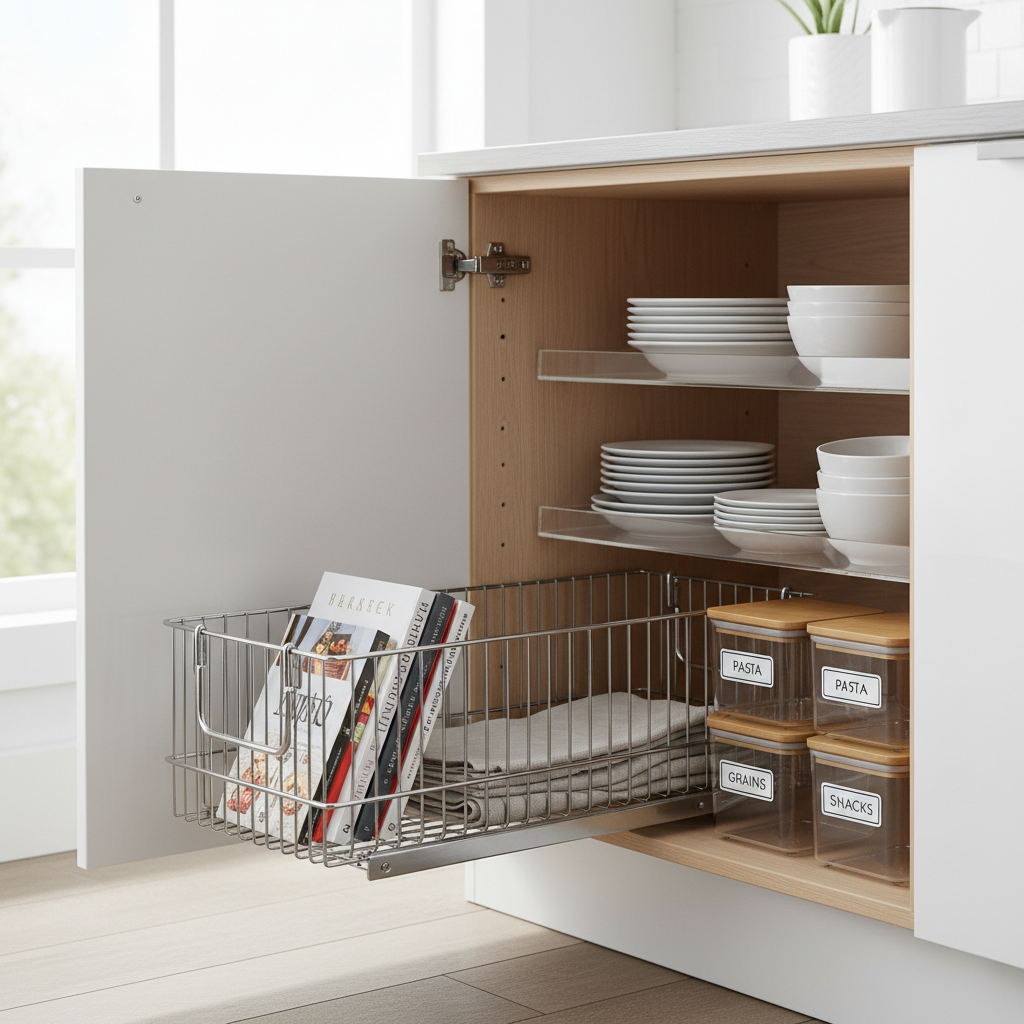
High-impact upgrades that work in tight cabinets
You don’t need a full renovation. A few targeted pieces solve most small-space friction, especially in standard US cabinets.
Use vertical space (without making stacks worse)
- Shelf risers for plates, mugs, or pantry items so you stop double-stacking
- Under-shelf baskets for napkins or snack bars in upper cabinets
- Stackable clear bins for packets and small pantry goods
Create “pull-out” behavior even if you can’t install drawers
- Lazy Susans for oils, sauces, vitamins, and small jars
- Handled bins for baking supplies, tea/coffee, or kids’ snacks
- Slide-out trays (adhesive or screw-in), great for deep base cabinets
Stop lid and wrap chaos
- Lid file organizers stored vertically, not in a heap
- Boxed wrap organizer (or a simple bin) so rolls don’t wander
- One container system per cabinet, ideally 1–2 shapes that nest
Small note: “clear” isn’t mandatory, but in small kitchens, seeing contents often prevents duplicate buying and expired items hiding in back.
Set up your cabinets step-by-step (a realistic weekend plan)
This is the part most people rush, then they wonder why it unravels. Go cabinet by cabinet, not “the whole kitchen at once.”
- Step 1: Empty one cabinet and wipe it down, keep items on the counter
- Step 2: Sort into zones based on how you cook, not how you wish you cooked
- Step 3: Edit, remove duplicates, expired food, and “I might use it” tools
- Step 4: Assign prime real estate to daily items at chest-to-eye level
- Step 5: Add organizers only where you see a specific problem
- Step 6: Label lightly, simple words like “snacks,” “baking,” “lunch”
For kitchen cabinet organization for small spaces, the “prime real estate” rule matters more than people expect. If you cook daily, your skillet shouldn’t live in the hardest spot.
What to organize where (quick reference table)
Use this as a starting point, then adjust for your own layout and habits.
| Cabinet area | Best for | Organizer that helps |
|---|---|---|
| Upper cabinets near sink/dishwasher | Plates, bowls, glasses | Shelf riser, mug hooks, plate rack |
| Upper cabinets near stove | Spices, oils, sauces (daily) | Lazy Susan, tiered spice step |
| Base cabinet near stove | Pots, pans, lids | Vertical lid organizer, pan divider |
| Deep base cabinet | Small appliances, backstock | Pull-out tray, handled bins |
| “Awkward” corner cabinet | Bulk items, mixing bowls | Lazy Susan, large bin to corral |
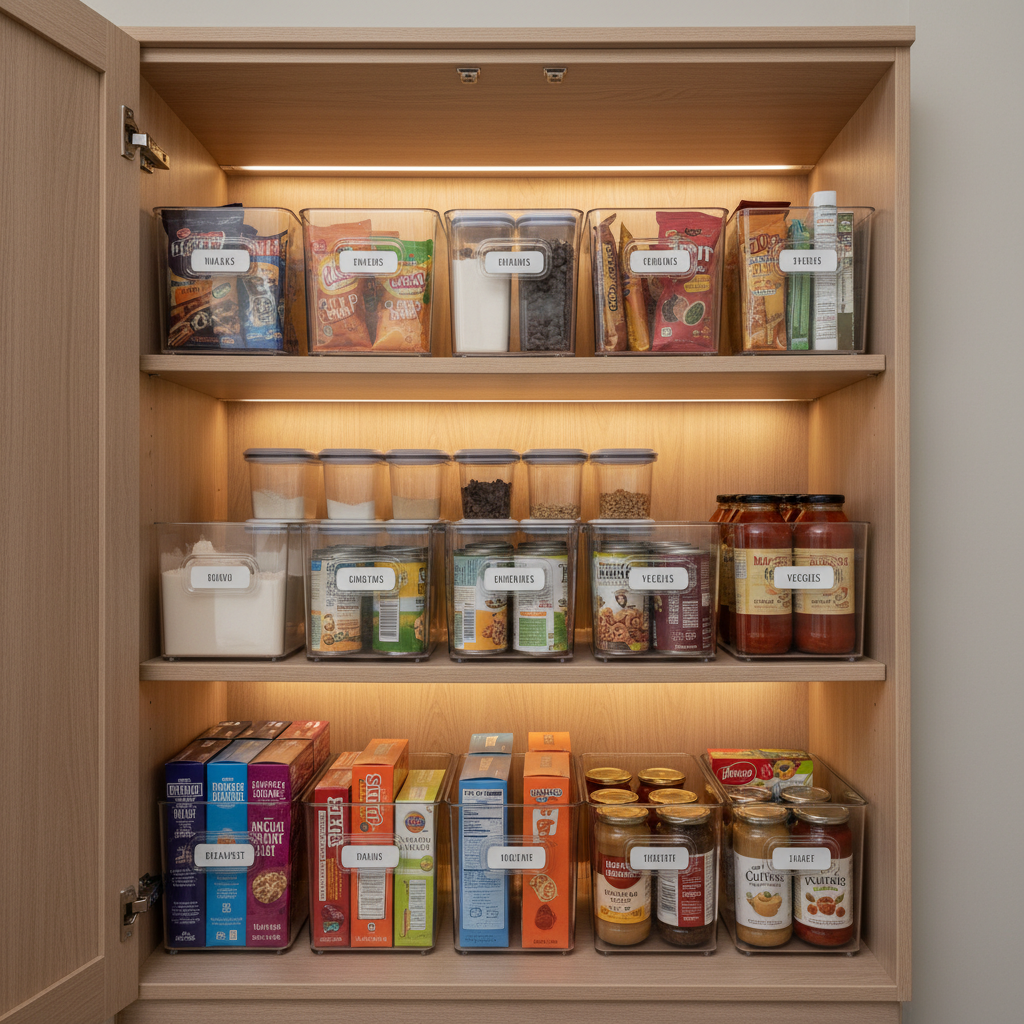
Keep it from sliding back: a 10-minute maintenance rhythm
Even the best setup fails if it requires perfection. What works in many homes is a tiny rhythm that catches drift early.
- Weekly (10 minutes): toss expired items, put strays back into zones, wipe one sticky shelf
- Monthly: review one problem cabinet, adjust categories that keep overflowing
- Seasonally: donate or store away rarely used serving pieces and gadgets
When you’re short on space, you’re also short on “mess tolerance.” A quick reset protects your calm more than it protects your cabinets.
Common mistakes that look organized but don’t help
Some choices photograph well and still make daily life harder.
- Over-decanting everything into matching jars, great until you forget refills or labels
- Storing heavy items up high, it’s inconvenient and can be unsafe, if you have concerns, consult a professional installer
- Too many micro-categories, six bins for six snack types usually collapses
- Ignoring reach, a small kitchen punishes layouts that force extra steps
- Keeping “aspirational” tools that block the items you actually use
According to CPSC safety information, preventing falls and handling heavy items carefully matters in the home. If your cabinet setup makes you climb, stretch, or twist with weight, it’s worth rethinking.
Conclusion: the small-space system that lasts
If you want kitchen cabinet organization for small spaces to stick, make your cabinets work like a tool, zones that match your habits, everyday items in easy reach, and a few organizers that improve access instead of adding complexity.
Two good next moves: pick one “stress cabinet” and fix only that this week, then add one visibility upgrade such as a lazy Susan or a handled bin. Small wins add up fast in a small kitchen.