
Rental friendly lighting ideas without hardwiring usually come down to one thing, getting “built-in” results with products that plug in, stick on, or sit on a surface, so you can leave without patching drywall or touching electrical wiring.
If you rent in the U.S., you already know the awkward part: many apartments have one sad overhead light, limited switched outlets, and lease rules that make any real electrical work a non-starter. The good news is the market caught up, there are now renter-safe options that feel intentional, not temporary.
This guide breaks down what works in real rooms, how to choose the right type of light for the job, and a few “don’t do this” notes that can save you from wall damage and flickery regret.
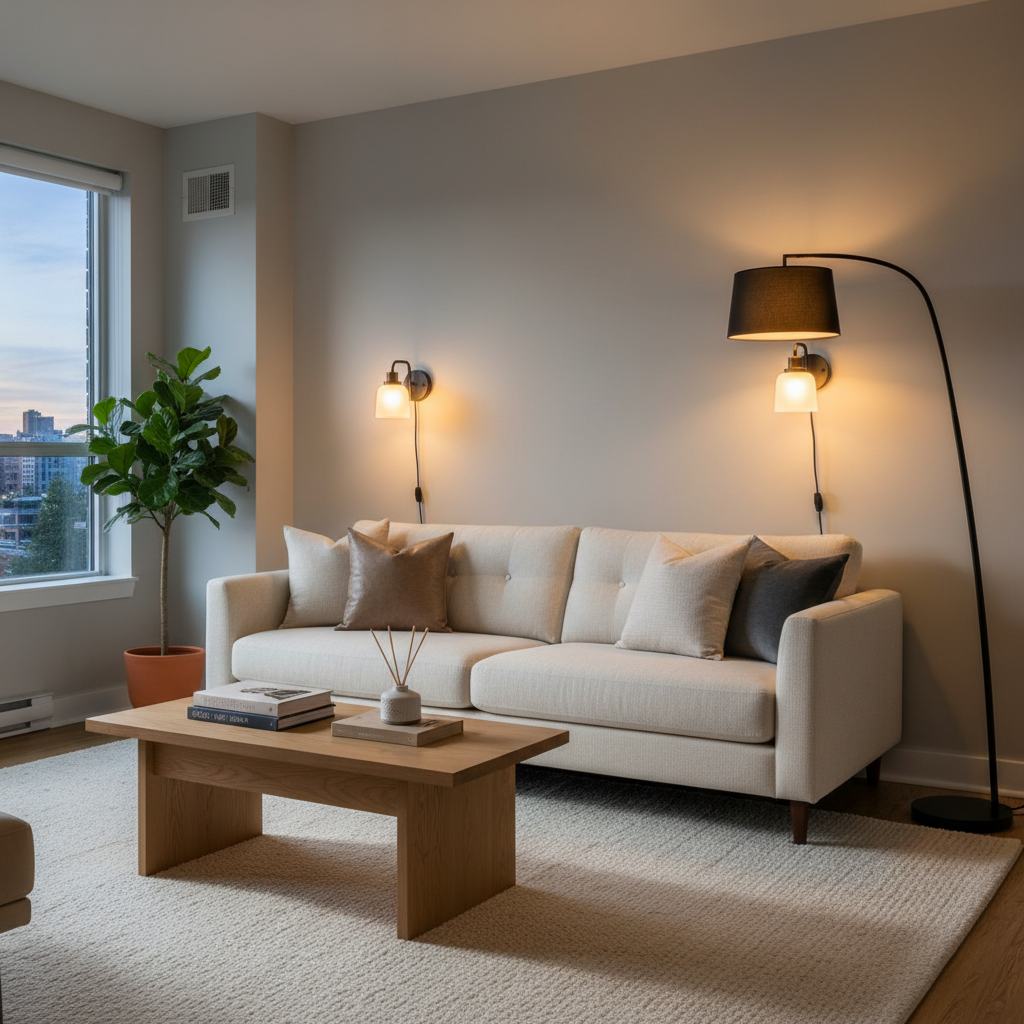
Start with a quick lighting plan (so you buy fewer things)
Before you shop, decide what you need the light to do. Most “bad lighting” is really a mismatch between the fixture and the purpose.
- Ambient lighting fills the room: floor lamps, plug-in ceiling fixtures, wall washers.
- Task lighting helps you do something: reading lamps, under-cabinet bars, vanity lights.
- Accent lighting adds mood: picture lights, LED strips, small uplights.
A solid rental setup usually layers at least two of the three. If you rely on one bright lamp to do everything, the space tends to look flat and harsh.
Key point: Aim for more light sources at lower brightness, rather than one high-powered bulb. It looks calmer and more “designed.”
Top rental-friendly lighting options (no hardwiring required)
Here are the approaches that tend to feel the most permanent, while staying renter-safe.
Plug-in wall sconces (the “built-in” look)
Plug-in sconces are one of the best rental friendly lighting ideas without hardwiring because they create that hotel-like wall glow, especially next to beds, sofas, or reading chairs.
- Look for versions with corded covers or pair with paintable cord channel so the wire disappears.
- Choose swivel heads for reading, or shades for softer ambient light.
- If you can’t drill, use manufacturer-rated adhesive mounting (and keep expectations realistic for heavier sconces).
Many renters hide the cord by running it straight down to an outlet behind furniture, then adding a slim cord cover along the baseboard.
Swag pendant lights (ceiling drama, zero wiring)
Swag pendants plug into an outlet and hang from a hook, letting you center light over a table or seating area even when the ceiling box is in the wrong place.
- Use a ceiling hook rated for the fixture weight (often a simple screw-in hook, but check your ceiling type).
- Choose warm bulbs and a shade that controls glare, especially in small dining areas.
- Manage the cord run neatly along the ceiling line and down a corner.
If your lease is strict about holes, look for lightweight pendants and removable hook solutions, but be honest, some ceilings and textures don’t play nice with adhesives.
Peel-and-stick puck lights (fast win for dark zones)
Puck lights are battery-powered and shine where you need them: closets, pantries, above shelves, inside cabinets. They’re not perfect, but they solve real problems quickly.
- Pick models with remote control or motion sensors for closets.
- Prefer rechargeable units if you hate replacing batteries.
- Use the included adhesive pads, and remove slowly to avoid paint lift.
They’re best as task or accent lighting, not the main light source in a room.
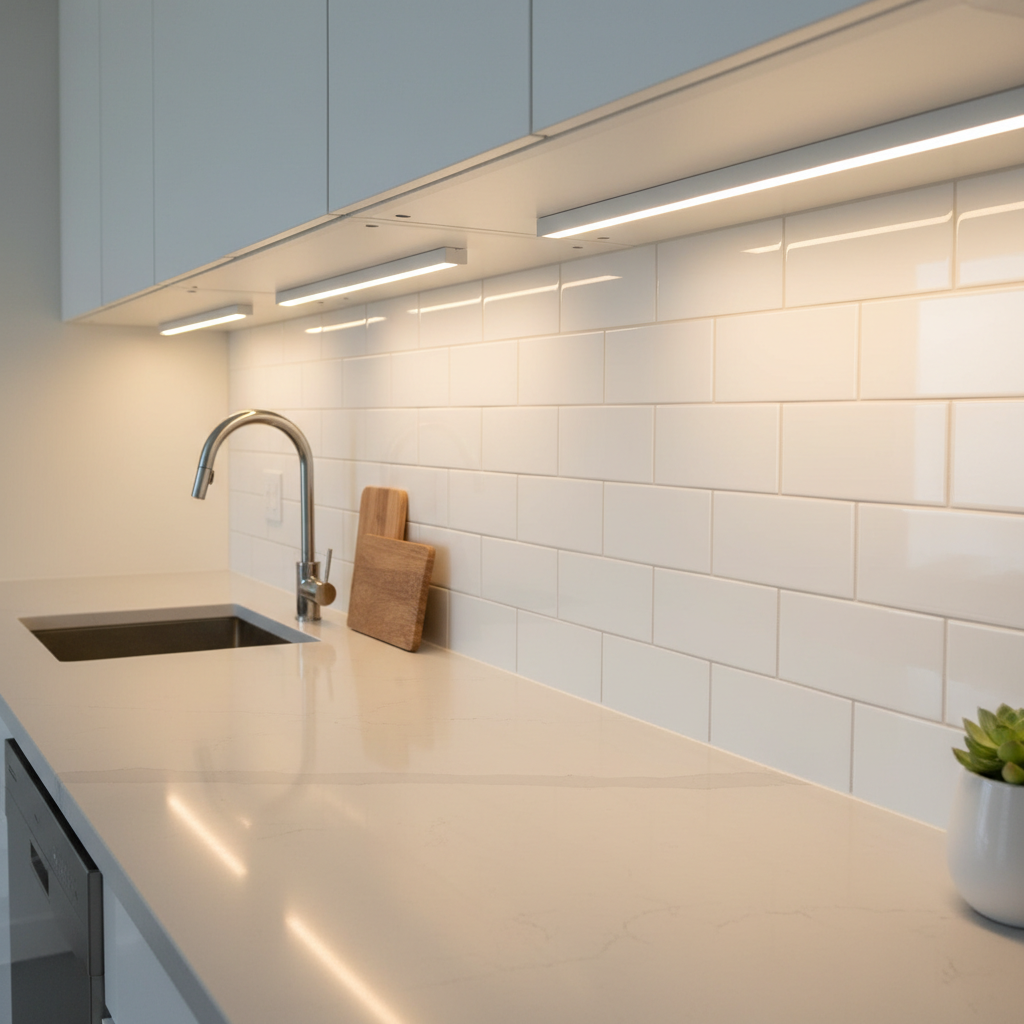
Under-cabinet LED bars and strips (kitchen and desk lifesaver)
Under-cabinet lighting can make a rental kitchen feel upgraded in one afternoon. Many kits are USB-powered or plug-in, with adhesive backing or small clips.
- Light bars look cleaner for task lighting on counters.
- LED strips bend around corners and work under shelves or behind monitors.
- Use a dimmer if the kit supports it, kitchens can look clinical when too bright.
According to UL Solutions, using certified lighting products and following manufacturer instructions helps reduce electrical and fire risk. Stick with reputable listings and avoid sketchy no-name power supplies.
Floor lamps that bounce light (better than “bare bulb” brightness)
If your room feels gloomy, a torchiere or uplight that bounces light off the ceiling often outperforms a table lamp. It also makes the ceiling feel higher.
- For living rooms: one uplight plus one shaded lamp near seating is a strong baseline.
- For bedrooms: add a warm bedside lamp and keep overhead lighting optional.
- For WFH corners: pair an adjustable task lamp with indirect ambient light to reduce harsh contrast.
Quick self-check: which lighting fix matches your situation?
If you’re unsure where to start, use this table to match the problem to a renter-safe solution.
| Common rental problem | Best no-hardwire solution | Why it works |
|---|---|---|
| Living room feels flat at night | Uplight floor lamp + plug-in sconce | Adds layers, reduces shadows |
| No ceiling light over dining table | Swag pendant light | Creates a centered focal point |
| Kitchen counters are dark | Under-cabinet LED bars | Direct task light where you prep |
| Closet or pantry is unusable | Motion sensor puck lights | Hands-free light with minimal install |
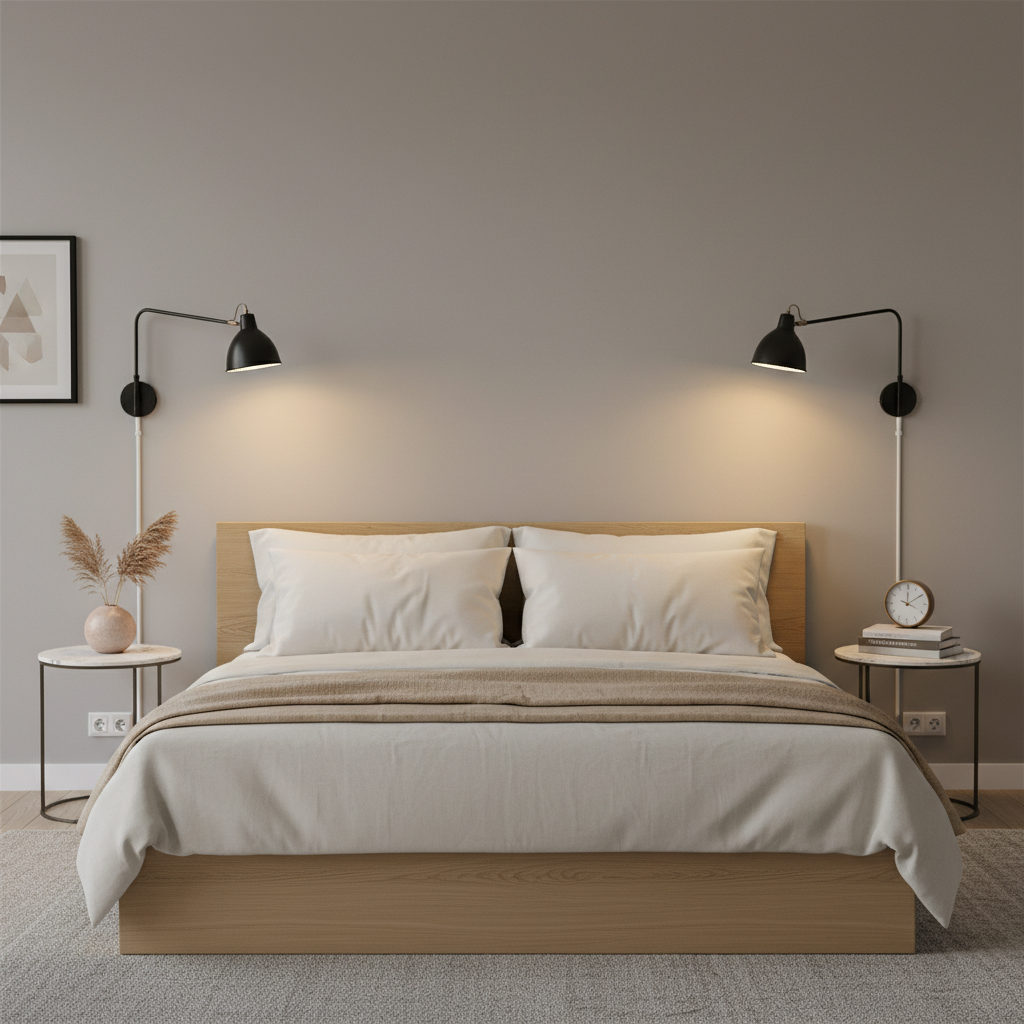
| Bedroom needs reading light | Plug-in swing-arm sconce | Puts light exactly where you need it |
Room-by-room setup ideas you can copy
Most people don’t need 10 new fixtures, they need 2–3 smart ones placed well. Here are setups that usually look intentional.
Bedroom
- Two plug-in sconces (or one sconce + one lamp) for symmetry without wiring.
- Warm bulbs and dimming, your brain reads that as “rest,” not “workspace.”
- Optional: LED strip behind headboard for soft backlight, kept very low.
Living room
- One uplight in a corner to lift ambient light.
- One task lamp near the couch, ideally shaded.
- One accent source like a picture light or small spotlight on a plant or art.
Kitchen
- Under-cabinet lights on the main prep run.
- One warm bulb in a table lamp on a shelf or console if you want the kitchen to feel less sterile at night.
Entryway
- A plug-in sconce or slim table lamp on a narrow console.
- A motion sensor night light near the floor if your entry is pitch-black.
How to install without drama (and remove cleanly later)
The install is where renters get burned, not by electricity, but by paint peel and ugly cord spaghetti.
Use the right “no damage” tools
- Removable adhesive strips for lightweight items and cable clips.
- Cord covers (raceways) to make plug-in lights look intentional.
- Smart plugs or inline switches when the fixture switch is awkward.
Removal tips that actually help
- Pull adhesive tabs slowly, parallel to the wall, not outward.
- If paint feels fragile, warm the adhesive slightly with a hair dryer on low, test gently.
- Clean residue with products safe for painted surfaces, and spot test first.
Wall materials vary a lot across U.S. rentals, glossy paint, flat paint, old drywall, textured walls, so what removes cleanly in one unit might lift paint in another. When you’re unsure, pick lighter fixtures and fewer adhesive points.
Safety, common mistakes, and when to ask for help
Non-hardwired doesn’t mean risk-free. Most issues come from overloaded outlets, cheap power bricks, and cords run where they get pinched.
- Don’t overload a single outlet with multiple high-wattage lamps and heaters on the same power strip.
- Avoid running cords under rugs where heat can build and damage can go unnoticed.
- Use bulbs that match fixture ratings, especially enclosed shades.
- Check if your building has rules about hooks, drilling, or modifications, leases vary.
According to the U.S. Consumer Product Safety Commission, extension cords are intended for temporary use, not permanent wiring substitutes, so keep cord management tidy and avoid daisy-chaining power strips.
If you see flickering tied to a specific outlet, warm outlets, burning smell, or breakers that trip after adding lights, stop using that circuit and contact your property manager or a licensed electrician. This is one of those situations where guessing is not worth it.
Key takeaways (so you can act today)
- Layer your light: combine ambient + task, then add accent if you want mood.
- Plug-in sconces and swag pendants deliver the most “built-in” look without hardwiring.
- Under-cabinet lighting is the quickest way to make a rental kitchen feel upgraded.
- Cord covers and smart plugs are the small extras that make everything look intentional.
If you pick one move, add a warm uplight in a corner and one focused task light where you sit most, the room usually changes immediately, and you can build from there without turning your rental into a weekend project spiral.
If you want a clean plan, sketch your room, note outlet locations, then choose two fixtures that solve your biggest pain point. That small bit of planning keeps the shopping cart from filling with random lights that never quite land.