
Best lazy susans for kitchen cabinets come down to one thing: matching the organizer to your cabinet shape, door style, and what you actually store, because the “wrong” pick usually spins fine but wastes space or bangs into hinges.
If you’ve ever had to unload half a corner cabinet to find a bottle of soy sauce, you already get the value, a good turntable turns dead space into usable storage and makes it easier to keep things tidy without trying too hard.
This guide helps you choose between round trays, kidney-shaped corner units, and pull-out “blind corner” systems, plus a quick measurement checklist, a comparison table, and setup tips so you don’t buy something that technically fits but feels awkward every day.
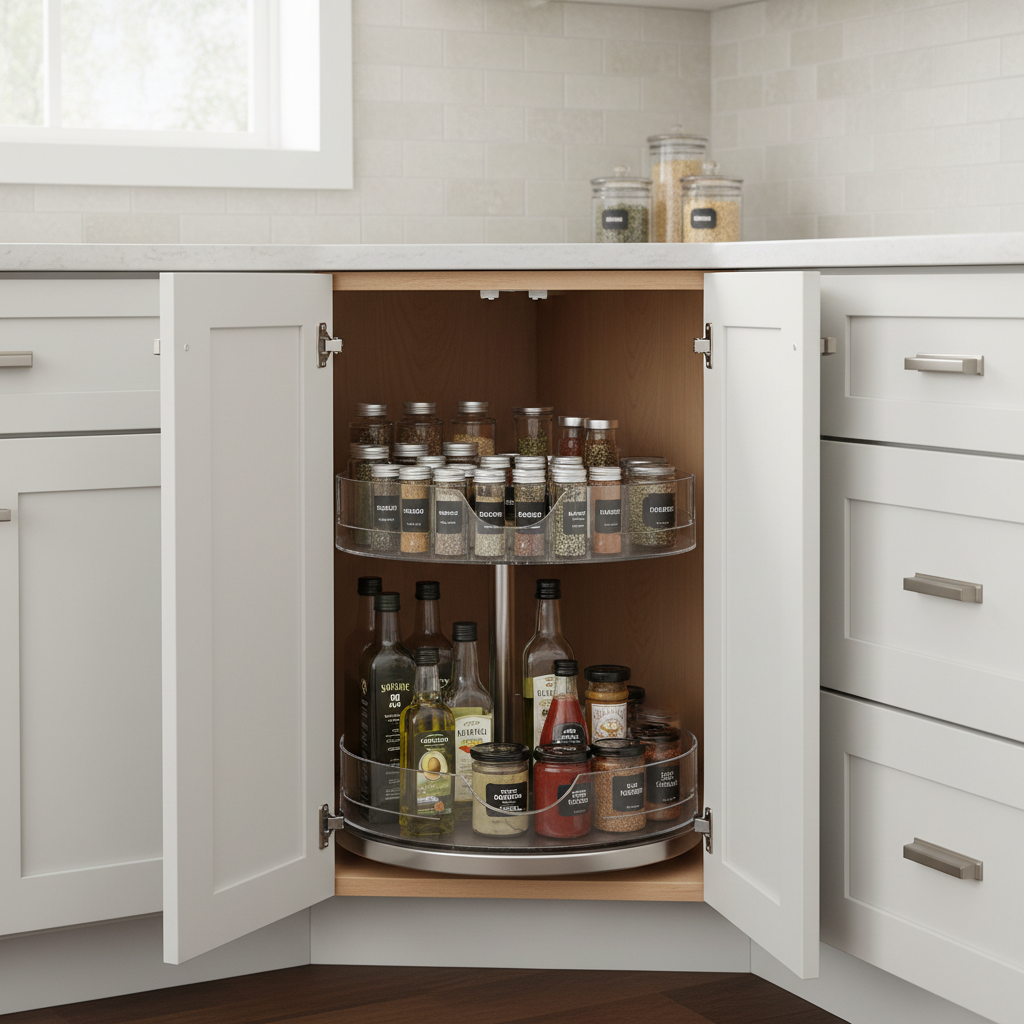
Quick picks: which lazy susan style fits your cabinet?
If you want the fastest path to the right choice, start with cabinet type. Most “bad buys” happen because people shop by diameter first, not by cabinet geometry and access.
- Standard base or pantry cabinet (rectangular): round turntable trays, 10–20 inches, single or two-tier.
- Corner cabinet with bi-fold or diagonal door: full-round or kidney-shaped corner lazy susans on a center pole.
- Blind corner cabinet (one door, deep hidden space): pull-out corner systems (not a classic spinner), usually more expensive but far more accessible.
- Upper cabinet: smaller trays with a raised rim, lighter loads, and extra attention to clearance.
Key takeaway: if you have a blind corner, a spinning tray often feels like a compromise, a pull-out system tends to make the space genuinely usable.
Comparison table: materials, durability, and best use
The “best” option depends on what you store, heavy cans need different hardware than snacks. Here’s a practical comparison you can use while shopping.
| Type | Best for | Pros | Watch-outs |
|---|---|---|---|
| Round turntable (single-tier) | Spices, oils, snacks | Affordable, easy install, flexible sizing | Can waste corner space, items tip without a rim |
| Round turntable (two-tier) | Pantry items, baking supplies | More vertical storage, keeps categories separated | Needs height clearance, top tier can block tall bottles |
| Kidney-shaped corner lazy susan | Corner base cabinets | Designed for corner access, better space use | Must match door/cabinet layout, install more involved |
| Full-round corner lazy susan | Diagonal corner cabinets | Maximum capacity, smooth rotation when aligned | Can collide with hinges if mis-sized |
| Pull-out blind-corner system | Blind corners with deep dead space | Best access, less “digging,” good for heavy cookware | Higher cost, installation precision matters |
| Material: plastic | Light to medium loads | Budget-friendly, easy to wipe | Can warp under heavy weight or heat exposure |
| Material: wood/bamboo | Pantry, countertop look | Warm look, decent grip | Needs dry storage, can stain with oils |
| Material: metal wire | Cans, bottles | Strong, airflow, often higher weight rating | Small items can slip through, check liner options |
Why cabinet lazy susans fail in real kitchens
Most complaints about “wobble,” “rubbing,” or “never using it” trace back to a few predictable issues, not necessarily product quality.
- Wrong diameter: too big and it hits hinges or the face frame, too small and it leaves a frustrating ring of wasted space.
- Not enough vertical clearance: shelves, plumbing, or the cabinet’s fixed rail blocks rotation, two-tier units get hit hardest.
- Weak bearing for the load: heavy cans and mixers need a sturdier bearing and a stable base, otherwise the tray drags and feels “sticky.”
- No rim or poor grip: bottles slide and tip, especially on smooth plastic.
- Corner mismatch: corner lazy susans require the right door/cabinet style, kidney vs full-round matters more than people expect.
According to NFPA, cooking is a leading cause of home fires, so storage that reduces clutter around the cooktop can help a kitchen feel safer, but placement still matters and flammables should be stored away from heat sources.
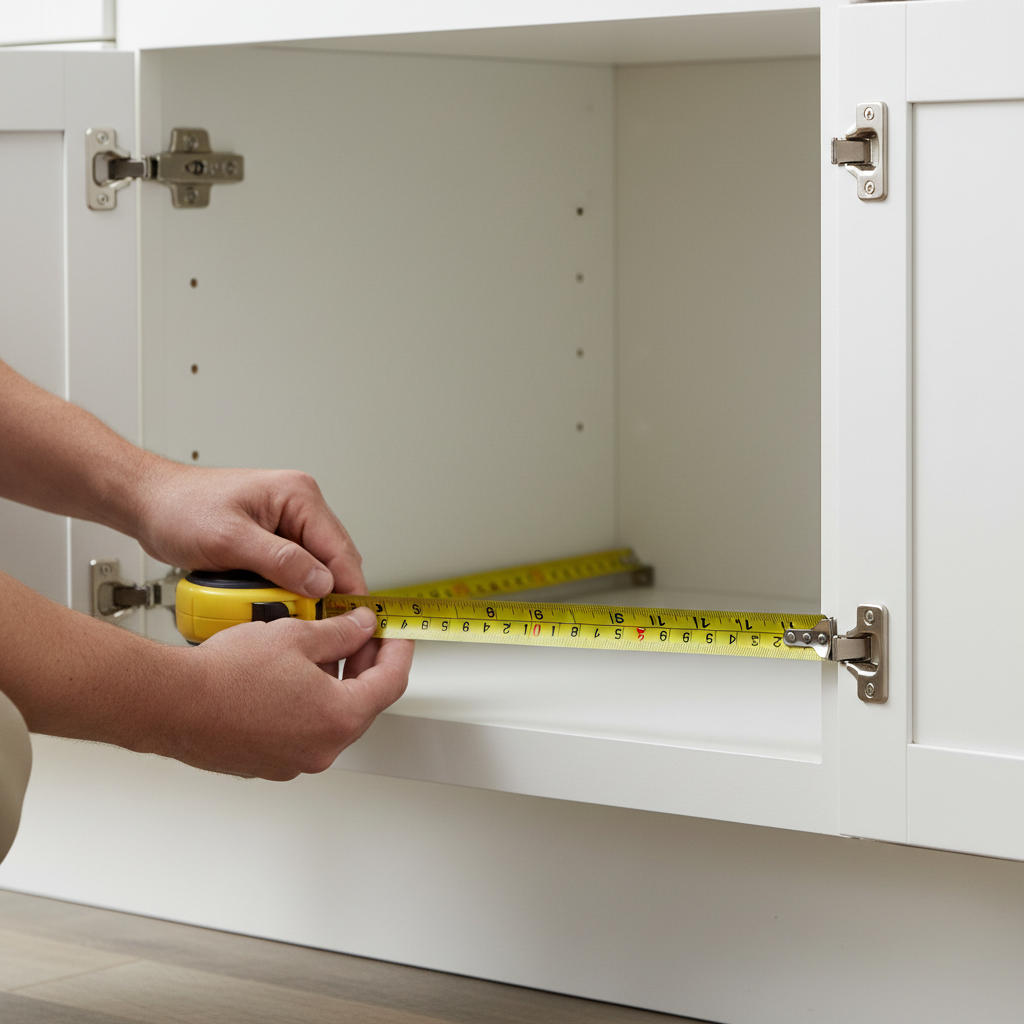
Self-check: measure and decide in 10 minutes
Before you shop, do this quick check. It saves returns and it also tells you whether you should buy a classic tray or a corner-specific system.
Cabinet type
- Is it a standard rectangular cabinet, a corner cabinet with a diagonal/bi-fold door, or a blind corner with a deep hidden section?
Measurements to take
- Interior width and depth: measure inside the frame, not the door opening.
- Door/hinge intrusion: open the door fully and note how far hinges protrude inward.
- Vertical clearance: floor-to-shelf, or floor-to-plumbing, especially under sinks.
- Reach test: can your hand comfortably reach the back corner? If not, consider pull-out hardware.
What you store (this changes the “best” pick)
- Tall bottles: prefer a single-tier with a rim or grippy liner.
- Small packets: prefer bins on a tray, or a turntable with higher sides.
- Heavy cookware: consider pull-out blind corner systems or heavy-duty corner units.
Best lazy susans for kitchen cabinets by use case
Instead of naming “one winner,” it’s more realistic to match use case to product type, that’s what holds up after the initial install.
1) Pantry and everyday cabinets: round tray with a raised rim
A round turntable with a lip is the easiest upgrade for most homes, it keeps oils, vinegars, and condiments from sliding off when you spin quickly.
- Look for non-slip surface or add a shelf liner.
- Choose diameter after you account for hinges and any interior molding.
- If you store glass bottles, a rim matters more than you think.
2) Corner base cabinets: kidney-shaped corner lazy susan
If your corner cabinet was designed for it, kidney-shaped units can feel like the cabinet “comes to you,” they swing out in a way round trays don’t.
- Confirm you have the right door style before buying.
- Check whether the kit supports height adjustment and has solid bearings.
- Plan what goes on each shelf, heavy items on the bottom tends to reduce wobble.
3) Blind corners: pull-out corner system
For many kitchens, this is the closest thing to fixing a blind corner for good. The shelves pull out and then slide over, so you stop sacrificing your back and patience.
- Measure the opening and the “dead” space carefully, these kits can be unforgiving.
- If you store appliances, verify weight limits and shelf dimensions.
- Expect a longer install, sometimes worth hiring help.
Installation tips that prevent wobble and wasted space
A lazy susan can be perfectly fine on paper and still annoy you daily if it isn’t installed or loaded well. These are the small fixes that usually matter most.
- Center it visually, then test-spin: don’t screw anything down until you spin with the door open and closed.
- Leave breathing room: a small clearance gap beats a “perfect fit” that rubs when humidity shifts wood.
- Use liners selectively: liners add grip, but thick liners can catch on rims or reduce usable height.
- Category bins beat chaos: put packets and small jars in a bin on the tray, otherwise you’ll be re-sorting constantly.
- Don’t overload corners: if the tray drags, lighten the load before blaming the bearing.
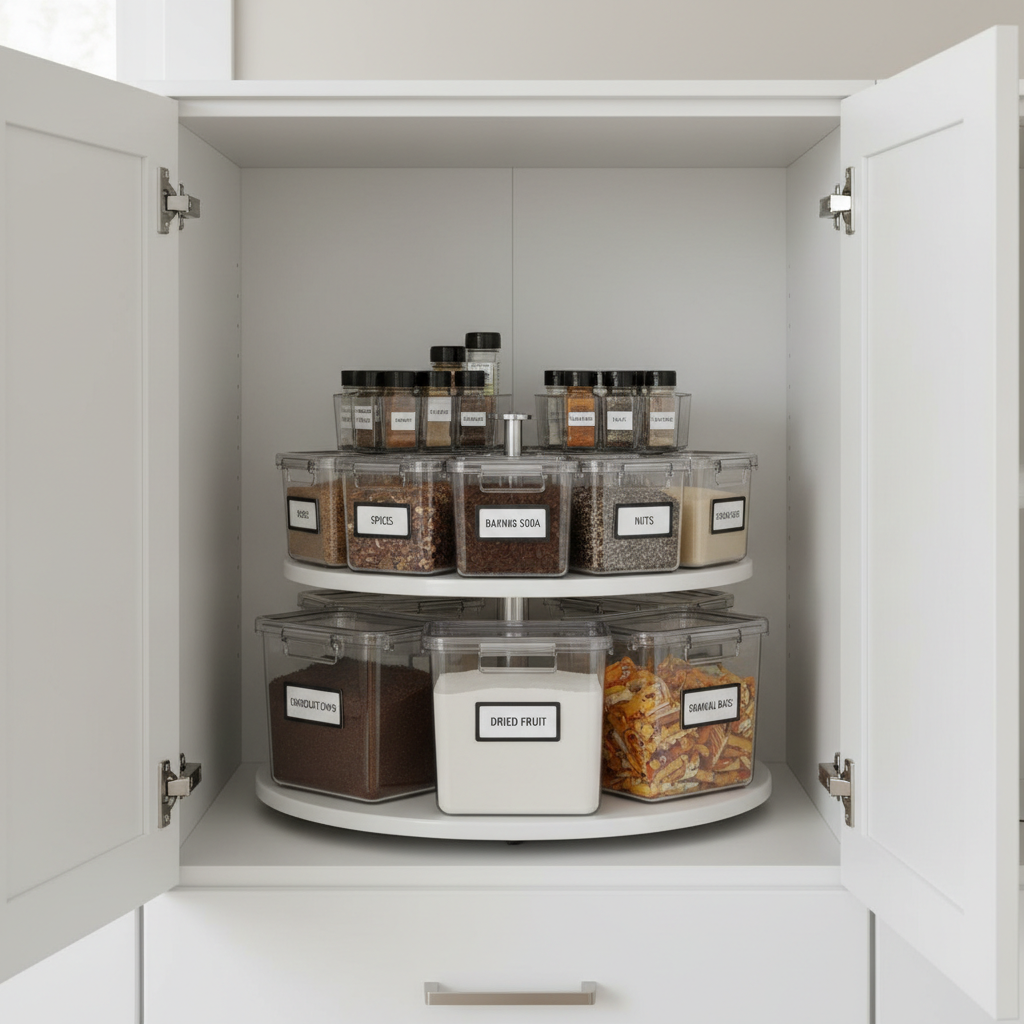
Common mistakes to avoid (what people regret buying)
When people say they tried the best lazy susans for kitchen cabinets and “it still didn’t work,” it’s usually one of these scenarios.
- Buying a huge diameter for a small door opening: you may fit it inside, but you can’t load it comfortably.
- Ignoring cabinet frame style: face-frame cabinets can reduce usable interior space more than expected.
- Putting a spinner under the sink without thinking: plumbing can block rotation, and leaks can damage wood or bamboo.
- Assuming corner and blind corner are the same: they look similar from outside, but storage hardware differs.
- Choosing looks over function: pretty wood trays are nice, but oil drips and moisture can be a real headache.
According to NKBA, kitchen planning should prioritize accessibility and safe workflow, so if your cabinet layout forces awkward reaching or unstable stacking, it’s usually worth switching to a solution that improves access rather than adding more layers.
Practical buying checklist (take this shopping)
If you want one short list to keep you honest, this is it. It also helps you compare products quickly without getting lost in marketing terms.
- Cabinet match: standard, corner, or blind corner, and door style confirmed.
- Diameter/shape: fits interior space and you can load it through the opening.
- Height clearance: especially for two-tier and under-sink installs.
- Bearing quality: smooth spin under load, less wobble risk.
- Rim/grip: raised edge or non-slip surface for bottles and glass.
- Cleaning reality: can you wipe it quickly, and will the material stain?
- Return policy: not glamorous, but it matters if sizing ends up off.
Conclusion: what to buy next, based on your cabinet
Choosing the best lazy susans for kitchen cabinets gets simple once you stop chasing a universal “top pick” and start matching hardware to the cabinet you already have. For standard cabinets, a rimmed round tray handles daily pantry clutter with minimal effort, for corner cabinets designed around a spinner, kidney-shaped or full-round units use space better, and for blind corners, pull-out systems usually deliver the biggest quality-of-life jump.
If you do one thing today, measure your interior width, depth, and hinge intrusion, then pick the smallest size that still feels roomy when loading through the door. If you’re still unsure between a corner spinner and a pull-out solution, sketch what you store and how often you reach for it, that usually makes the decision obvious.