
Nursery organization ideas for baby usually sound cute on Pinterest, but in real life you need something that works at 2 a.m., one-handed, and without turning every change into a scavenger hunt. The goal is simple, keep the essentials visible, reachable, and easy to reset.
Most nurseries get messy for predictable reasons, too many “maybe items,” not enough dedicated zones, and storage that looks good but hides what you need. The fixes are not complicated, but they do require a little honesty about your routines.
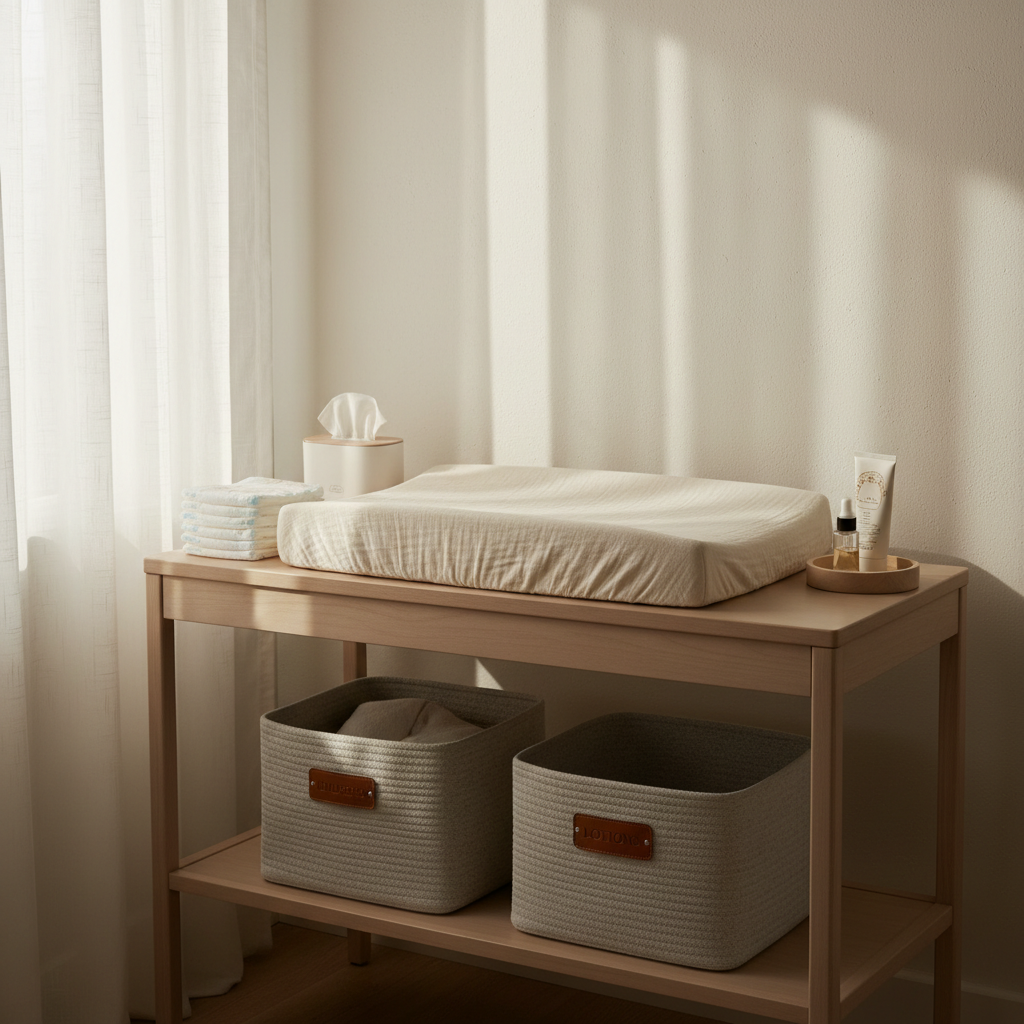
Below is a practical setup that prioritizes speed, safety, and flexibility. You’ll get quick checks to diagnose what’s causing your clutter, room-by-room style ideas, and a few “save your sanity” habits that keep things tidy without constant effort.
Start with the “grab-and-go” zones (what you touch daily)
If you only organize one thing, organize what you touch every day. In most homes that’s diapers, wipes, clothes changes, feeding supplies, and burp cloths. When these items live in different corners, the room feels messy even if everything technically has a place.
Try building three core zones, each with a small, limited set of items:
- Changing zone: diapers, wipes, cream, disposable bags, 2–3 spare outfits, burp cloths
- Sleep zone: swaddles/sleep sacks, pacifiers, white-noise remote, spare sheet
- Feeding/soothing zone: bibs, bottles (if used), nursing pads, pump parts (if used), a small “calm kit”
Keep each zone stocked for one day, not one month. Bulk storage can live elsewhere, because “bulk near the baby” often becomes “bulk everywhere.”
Why nurseries get cluttered (and what to fix first)
In many cases, the mess comes from a few repeat patterns, not from a lack of bins. If you spot your pattern, you can stop organizing the wrong thing.
- Too many categories: you sort by brand, size, season, and “maybe,” then nothing gets put away.
- Hidden storage overload: deep drawers and lidded boxes look tidy but slow you down, so items pile up on top.
- No reset path: you can take items out quickly, but putting them back takes decisions you don’t have time for.
- Hand-me-down overflow: clothes and gear arrive in batches and never get edited.
My editorial take: prioritize speed over perfection. A nursery that “photographs well” but takes five steps to complete a diaper change will drift into chaos fast.
A quick self-check: what kind of organizer do you need?
Use this checklist to decide whether you need better containers, fewer items, or a better layout. You may be tempted to buy more storage, but sometimes the correct move is removing half of what’s in the room.
- If you can’t find essentials: you need open-top bins, labels, and fewer “misc” piles.
- If you have duplicates everywhere: you need one “home base” per item type and a small backup stash.
- If drawers explode: you need dividers and simpler folding, or switch to binning by type.
- If laundry never lands: you need a hamper where you actually undress the baby.
- If you dread restocking: you need a weekly restock list taped inside a cabinet door.
Once you know your friction points, the nursery organization ideas for baby essentials become more obvious, because you’re solving a daily problem, not decorating.
Storage ideas that hold up in real life (dresser, closet, and wall space)
Dresser: treat it like a “supply cabinet,” not a wardrobe
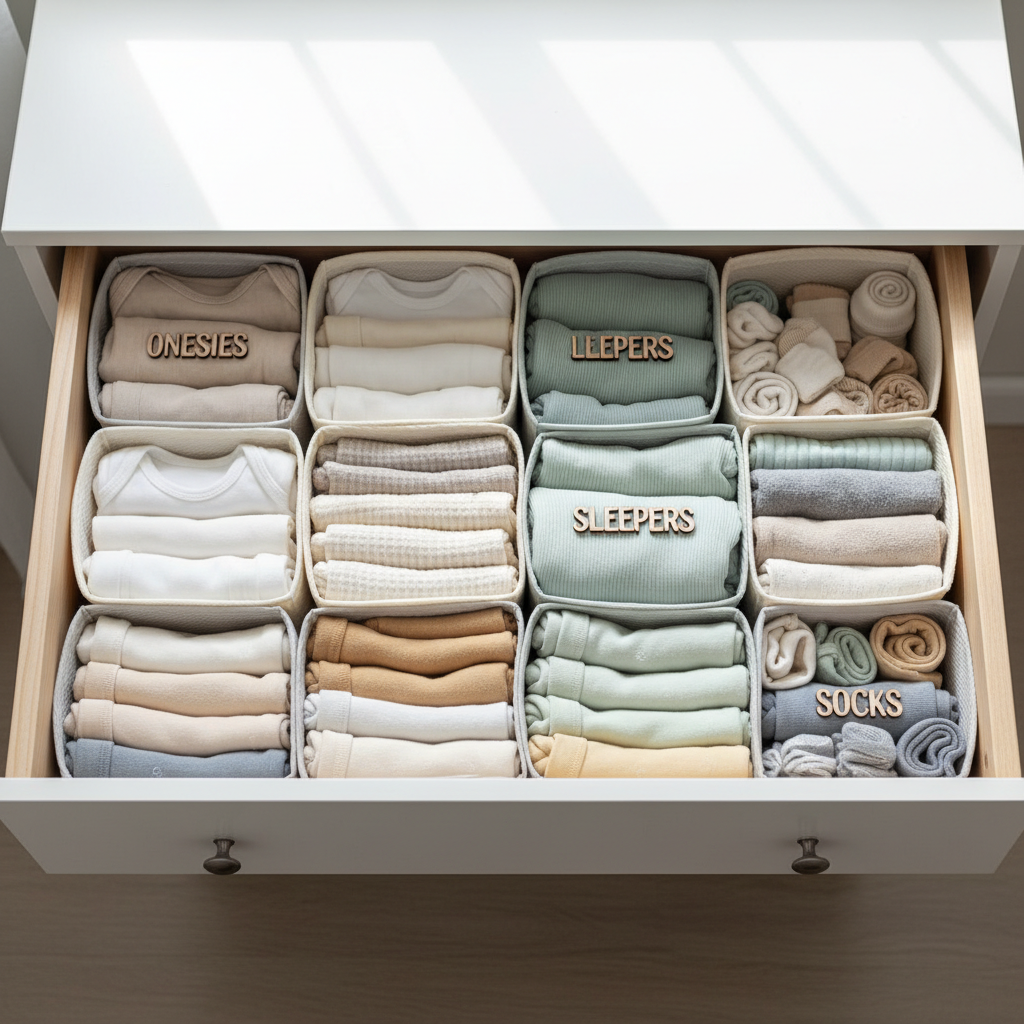
The dresser often becomes the command center, especially if it’s near the changing pad. Use shallow organization inside drawers so you can toss items back without refolding everything.
- Top drawer: diapers/wipes refills, creams, nail file, thermometer, hairbrush
- Middle drawers: clothes by type (onesies, sleepers), not by outfit
- Bottom drawer: spare sheets, swaddles, sleep sacks
Key point: if you’re folding tiny items and it never lasts, switch to “file folding” or simple bins. The best system is the one you’ll keep using.
Closet: keep “now” at eye level and “later” up high
Closets get out of control when newborn sizes, 6–9 months, and “gift outfits” all compete. Separate by time.
- Eye level: current size clothes, daily outerwear, sleep sacks
- Top shelf: next size up, seasonal backups, unopened boxes
- Floor: a single bin for returns/donations so it doesn’t linger on the chair
If you want labels, keep them simple: “0–3,” “3–6,” “next,” “donate.” Over-labeling can backfire when you’re tired.
Wall space: use it for light items you reach often
Floating shelves and peg rails can help, but avoid storing heavy items overhead. According to the U.S. Consumer Product Safety Commission (CPSC), furniture tip-overs are a serious hazard, so it’s smart to anchor dressers and keep heavier storage low.
- Hooks for sleep sacks, swaddles, or a diaper bag
- A small shelf for books and a sound machine
- A slim wall caddy for lotions and brush if your dresser top is crowded
Practical “reset” routines (the part most people skip)
Organization fails when the reset takes too long. Make your reset nearly automatic, with fewer decisions.
- One-minute nightly sweep: toss dirty clothes into the hamper, return creams/wipes to the bin, stack 3 diapers.
- Weekly restock: refill diapers/wipes, rotate clothes size, add two spare crib sheets.
- Monthly edit: remove items you’re not using, move too-small clothes to a labeled bin.
Put a short restock list inside a drawer. When your brain feels full, a checklist is relief.
Safety and sanity: organizing around sleep and changing
Some nursery organization ideas for baby essentials overlap with safety. You don’t need to panic about it, but you do want to remove obvious risks.
- Changing area: keep supplies within arm’s reach so you’re not turning away; if you’re unsure about safe changing practices, ask your pediatrician.
- Cords and small items: keep chargers, hair ties, and tiny accessories out of reach and ideally in a lidded container.
- Night lighting: choose a dim, warm light so you can see without fully waking everyone.
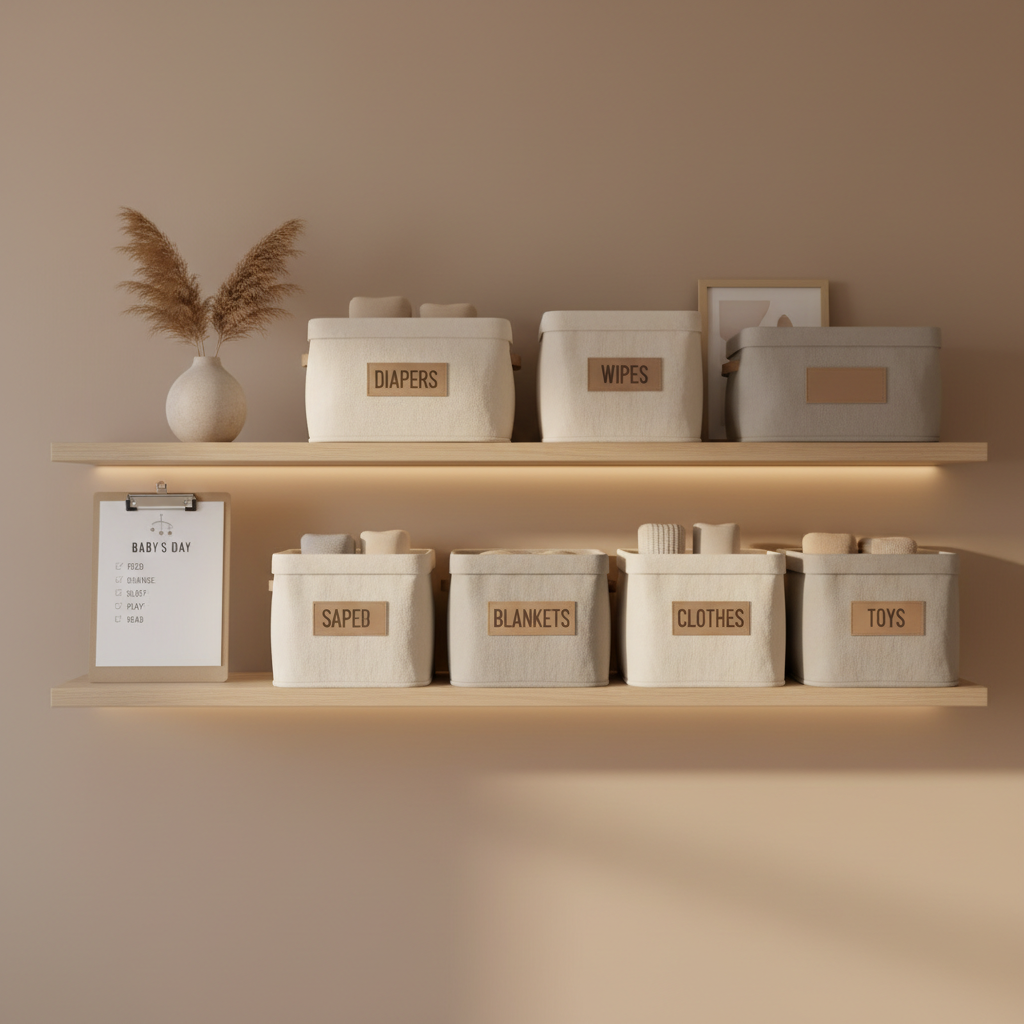
Also, be careful with “open basket everywhere” styling. It looks airy, but it can become a dust-and-clutter magnet unless each basket has a narrow purpose.
A simple setup plan you can follow this weekend (with a quick table)
If you want a clean reset without overthinking, do this in two passes: reduce, then assign homes. Many people flip that order and end up with prettier clutter.
Step-by-step
- Pull everything out of the changing area and dresser top, wipe it down, then only return daily items.
- Create a “not sure” box and park it outside the nursery; revisit in a week.
- Set up three bins at the changing station: diapers, wipes, care (cream, thermometer, nail file).
- Sort clothes by type and current size, then store “next size” in a labeled bin.
- Pick one overflow spot for bulky items, not three.
Quick reference table: what to store where
| Baby essential | Best storage spot | Container that works | Common mistake |
|---|---|---|---|
| Diapers & wipes | Changing zone, within reach | Open bin + small backup behind | Storing bulk packs on top of the dresser |
| Clothes (current size) | Dresser drawers | Dividers or soft bins | Sorting by outfits that never stay together |
| Sleep items | Top/middle drawer or shelf | One basket labeled “sleep” | Mixing swaddles with random blankets |
| Bath & care | Bathroom or a lidded nursery bin | Handled caddy | Spreading items across multiple rooms |
| Paperwork & keepsakes | High shelf / closet bin | Document folder + labeled box | Letting it pile on the changing surface |
Key takeaways: keep daily essentials open and close, store bulk out of sight, and design a reset you can do when you’re tired. If you only apply one nursery organization idea for baby essentials, make it the “zones” approach, it reduces both clutter and decision fatigue.
Pick one area today, usually the changing station, and make it fast and calm. Then move to the dresser. You’ll feel the difference immediately, even if the closet waits until next weekend.
FAQ
What are the most important nursery organization ideas for baby essentials?
Start with zones: changing, sleep, feeding/soothing. When each zone has a small set of items and a clear container, you stop creating piles “just for now.”
How do I organize baby clothes so drawers don’t explode?
Sort by type and current size, then use dividers or bins so items can be dropped back in quickly. If folding becomes a constant fight, use simple rolling or file-style folding and accept a little imperfection.
Should I keep bulk diapers and wipes in the nursery?
Usually a small backup in the room is enough. Bulk cases can take over your surfaces, so storing them in a closet or nearby hallway often keeps the nursery calmer while still being practical.
How do I organize a small nursery with limited closet space?
Use the dresser as your main storage, then add one high shelf for “next size” and seasonal items. A slim over-the-door organizer can help, but keep it for light items so it doesn’t become a catch-all.
What’s a realistic cleaning and restock routine for new parents?
A one-minute nightly reset plus a weekly restock works for many households. The trick is making the reset mindless, same bins, same homes, no decisions.
Are open baskets safe around babies?
They can be fine for soft items, but avoid leaving small objects, cords, or anything that could be a choking hazard within reach. If you’re unsure what’s appropriate for your child’s stage, a pediatrician can help with safety guidance.
How do I stop accumulating baby items I don’t use?
Create a single donation/return bin and schedule a monthly edit. If an item hasn’t been touched in a few weeks and doesn’t fit your routine, it probably belongs out of the room.
If you’re trying to set up nursery organization ideas for baby essentials and you want it to feel simple, not like a never-ending project, focus on one “high-traffic” zone at a time and choose containers that match how you actually move through the day, not how you wish you did.