
How to style a console table in entryway usually comes down to two things: getting the scale right, then styling with intention so it looks welcoming without turning into a catch-all pile.
If your entryway feels unfinished, it’s often because the console table is either under-styled (bare and awkward) or over-styled (pretty but unusable). The sweet spot is a setup that holds real-life stuff, keys, mail, sunglasses, dog leash, while still looking pulled together.
This guide gives you a few reliable “editor-proof” formulas, plus a quick checklist to diagnose what’s off in your space, and a simple table you can copy based on your entry size and storage needs.
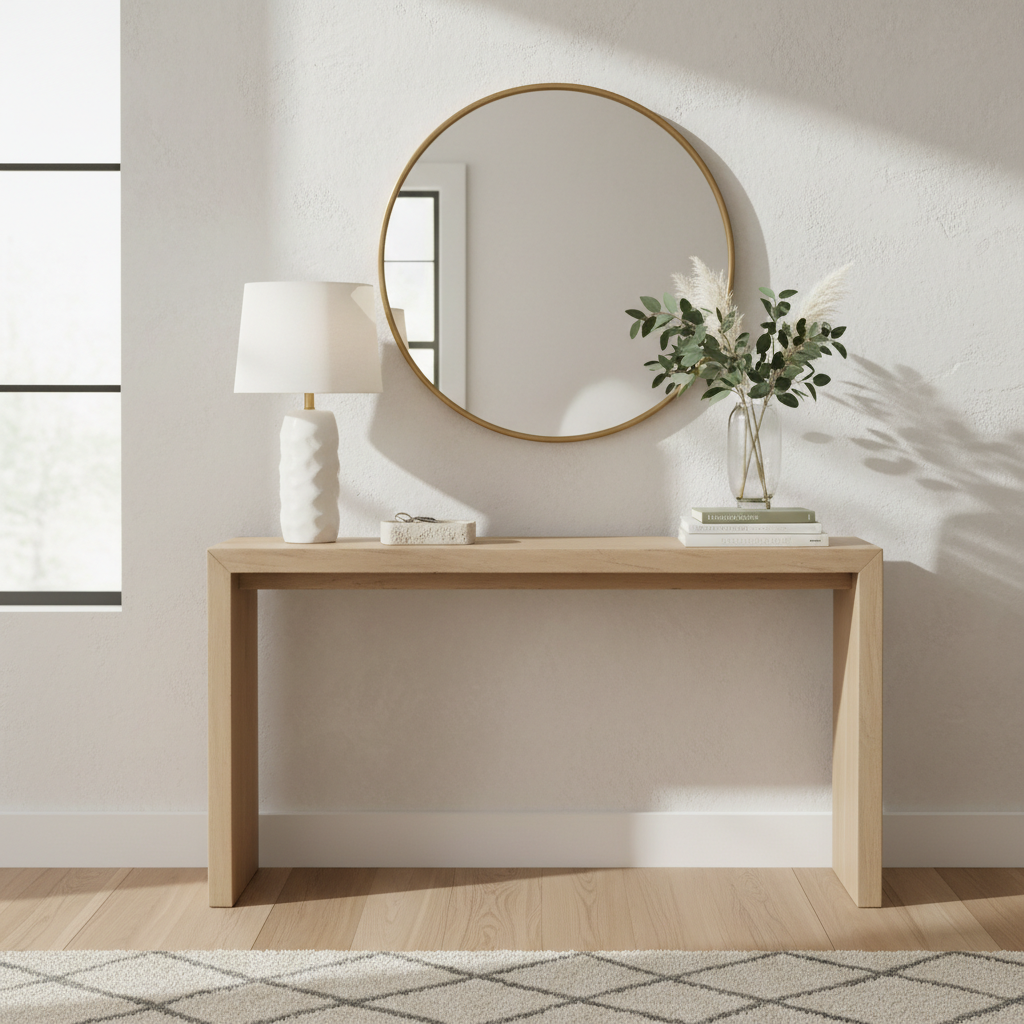
Start with the non-negotiables: size, placement, and walking space
Before décor, check whether the console is working as furniture. A beautiful vignette can’t fix a table that blocks the door swing or forces people to sidestep.
- Depth: Many entryways do best with a slimmer table, often around 10–14 inches deep, so the walkway stays comfortable.
- Height: Console height commonly looks right when it lands near your doorknob height, and when wall art or mirror starts a few inches above the tabletop.
- Centering: If there’s a wall feature (sconce, window, or art), align the table to that, not always to the entire wall.
- Door clearance: Open the door fully and confirm nothing gets clipped, including baskets and lampshades.
According to ADA National Network guidance on accessible routes, keeping clear passage in frequently used paths matters for comfort and accessibility, even in homes where you’re not designing to a formal code.
Quick self-check: why your entry console looks “off”
If you’ve been searching how to style a console table in entryway because yours never looks finished, you’re usually dealing with one of these issues.
- Everything is the same height: A flat skyline reads boring fast.
- No anchor: Without a mirror or art, the table feels like it’s floating.
- Too many tiny items: Lots of small objects turn into visual noise.
- Not enough function: If keys and mail have no “home,” clutter will win.
- Scale mismatch: A large lamp on a narrow table (or tiny art over a long console) creates imbalance.
Pick the one that feels most true, then style to solve that specific problem. That’s the part people skip, they buy more décor instead of fixing the root issue.
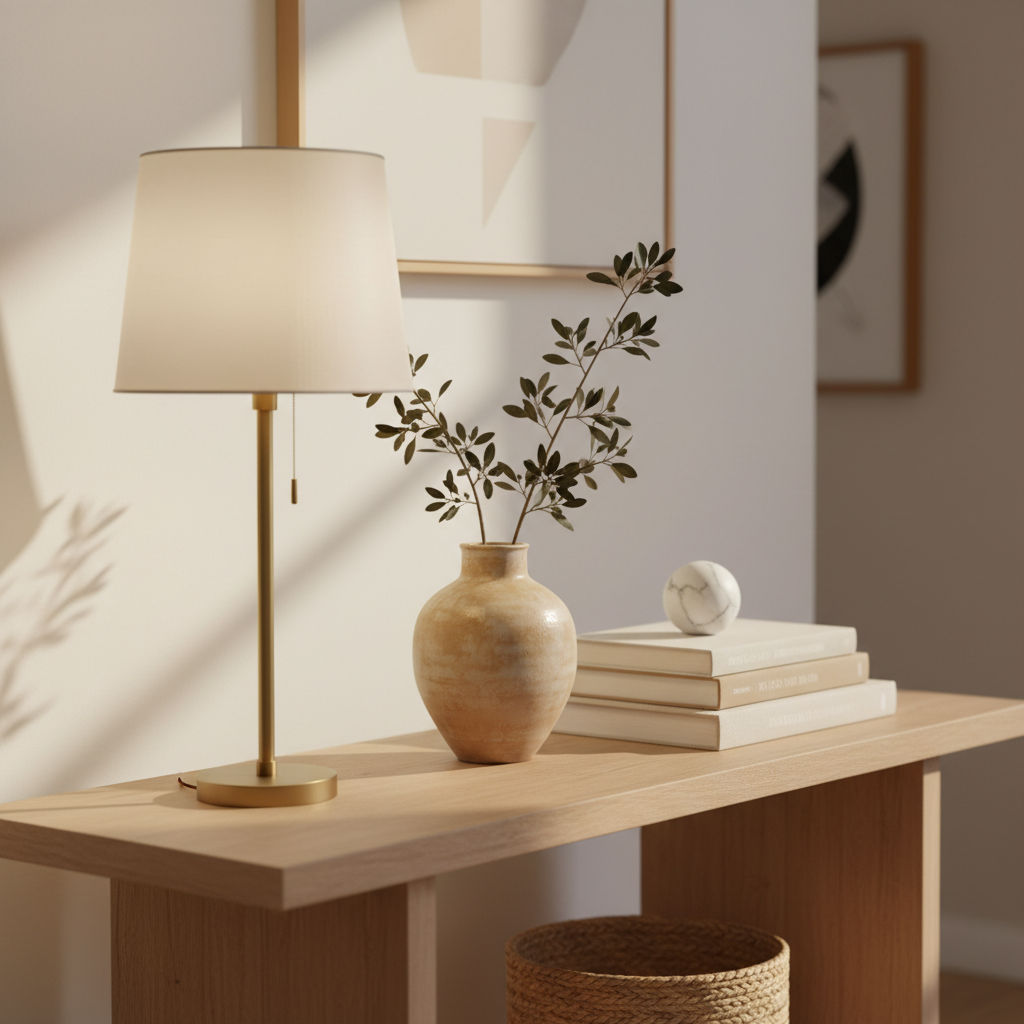
Use a simple styling formula (that still looks personal)
When you want a console to look styled but not precious, formulas help. Not because your home should look staged, but because your eye likes structure.
The “Anchor + Light + Life + Catchall” formula
- Anchor: mirror or art that fills about 2/3 to 3/4 of the console width
- Light: lamp or sconce for warmth at night
- Life: greenery, branches, or a bowl of seasonal produce (yes, it works)
- Catchall: tray or bowl that limits the clutter zone
This setup is friendly for real entryways because it bakes in function, not just looks.
The “Three-Height” formula for a balanced tabletop
- Tall: lamp, tall vase, or framed art leaning against the wall
- Medium: candle, sculpture, medium vase, or plant
- Low: tray, shallow bowl, book stack
Try to keep pieces in groups, and let one item be the clear “hero.” The rest supports it.
Make it functional: what actually belongs on an entry console
The fastest way to keep styling intact is to decide what your household really drops at the door. Then give those items a container that looks intentional.
- Keys: small tray, lidded box, or a dish that’s heavy enough not to slide
- Mail: vertical sorter, slim basket, or one designated folder
- Sunglasses: shallow bowl or a box with compartments
- Dog gear: a basket underneath, plus one hook nearby if you have wall space
- Hand sanitizer: decant into a nicer pump bottle if you care about visuals
Keep one open spot. A console with no landing zone tends to become annoying in daily use, which defeats the purpose of styling it.
Choose décor with the right scale (and stop buying “filler”)
Most entry consoles look cluttered because the décor is too small, too many, or too random. Bigger pieces can actually feel calmer because they reduce the number of objects your eye has to process.
- Mirror size: if it’s tiny, the console looks like a dressing table, not an entry moment
- Lamp size: a lamp that’s too short disappears, a slightly taller lamp reads intentional
- Art placement: if hanging, keep it low enough to relate to the table, not floating near the ceiling
If you’re trying how to style a console table in entryway on a budget, spend your effort on one strong anchor (mirror/art) and one strong light. Then fill in with books, a tray, and greenery.
Room-by-room cheat sheet (with a table you can copy)
Entryways vary a lot, apartment vestibule, open-plan foyer, narrow hallway. Use this as a practical starting point, then adjust based on traffic and storage needs.
| Entryway type | What to prioritize | Styling combo that works | Easy “function win” |
|---|---|---|---|
| Narrow hallway entry | Clear walkway | Thin console + round mirror + slim lamp | Wall hooks next to table |
| Small apartment entry | Hidden storage | Console with drawers + tray + small plant | One basket under for shoes |
| Open foyer | Visual impact | Long console + large art + two lamps (symmetry) | Oversized bowl for daily drop zone |
| Family-heavy entry | Clutter control | Durable lamp + big tray + labeled bins below | Dedicated “incoming mail” basket |
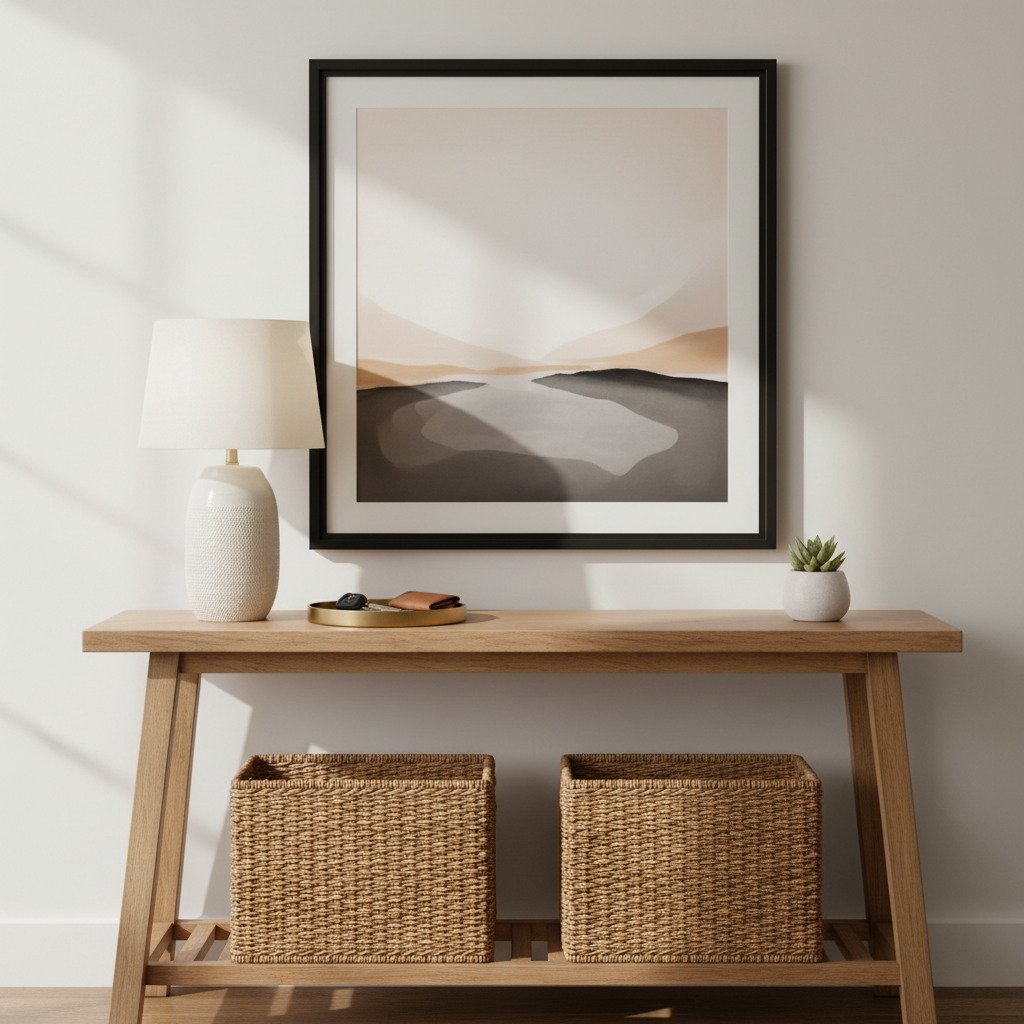
Step-by-step: a 15-minute reset that keeps working all week
If your console looks good for one day and messy the next, the fix is usually a reset routine plus fewer, better containers.
- Clear the surface completely and wipe it down, you’re resetting the “visual baseline.”
- Add your anchor (mirror/art) first so you stop guessing scale.
- Place the lamp on the side closest to an outlet, forcing it elsewhere often creates awkward wiring.
- Create one catchall zone with a tray or bowl, and commit to it.
- Add one organic element (greenery/branches) for softness.
- Edit to 5–7 items max on top, not counting the anchor and lamp.
Key takeaway: styling stays intact when daily-use items get a container and you limit “miscellaneous” to one defined spot.
Mistakes to avoid (the ones that waste time and money)
- Too many candles and tiny vases: they read like clutter in an entryway, even if they’re cute.
- No lighting: a console without a warm lamp can feel cold at night, especially in winter months.
- Shiny tray, slippery table: keys slide, tray migrates, you get annoyed, then you stop using it.
- Ignoring safety: if you have kids or pets, heavy mirrors, glass vases, or tippy lamps may be risky, consider securing items and consult a professional installer if needed.
According to CPSC (U.S. Consumer Product Safety Commission) guidance on furniture tip-over prevention, anchoring unstable furniture and keeping heavier items low can reduce tip-over risk in many households.
Conclusion: a styled entry console should feel calm, not complicated
When how to style a console table in entryway finally clicks, it’s because you’re not “decorating,” you’re setting up a tiny system: an anchor for presence, a light for warmth, a catchall for reality, and a few pieces that add texture.
Pick one formula from above, do the 15-minute reset, then live with it for a week before buying anything new. If it still looks messy, that’s usually a signal you need better containers, not more décor.
Action idea: tonight, set a tray for keys and a basket for mail, then remove two small objects that don’t serve function or impact.
Key points to remember
- Scale beats quantity: fewer larger pieces often look more polished.
- One catchall zone prevents the “entry pile.”
- Light matters for a welcoming feel after dark.
- Function is part of style in a real entryway.