
Small balcony garden ideas for apartments work best when you treat your space like a tiny outdoor room, pick plants that match your light, and use vertical height instead of floor area.
If your balcony feels too small for “real” gardening, you’re not alone. Most apartment balconies come with trade-offs: harsh sun or deep shade, strong wind corridors, strict building rules, and not much storage for soil and tools. The good news is that those same constraints can actually simplify decisions, you only need a few smart systems.
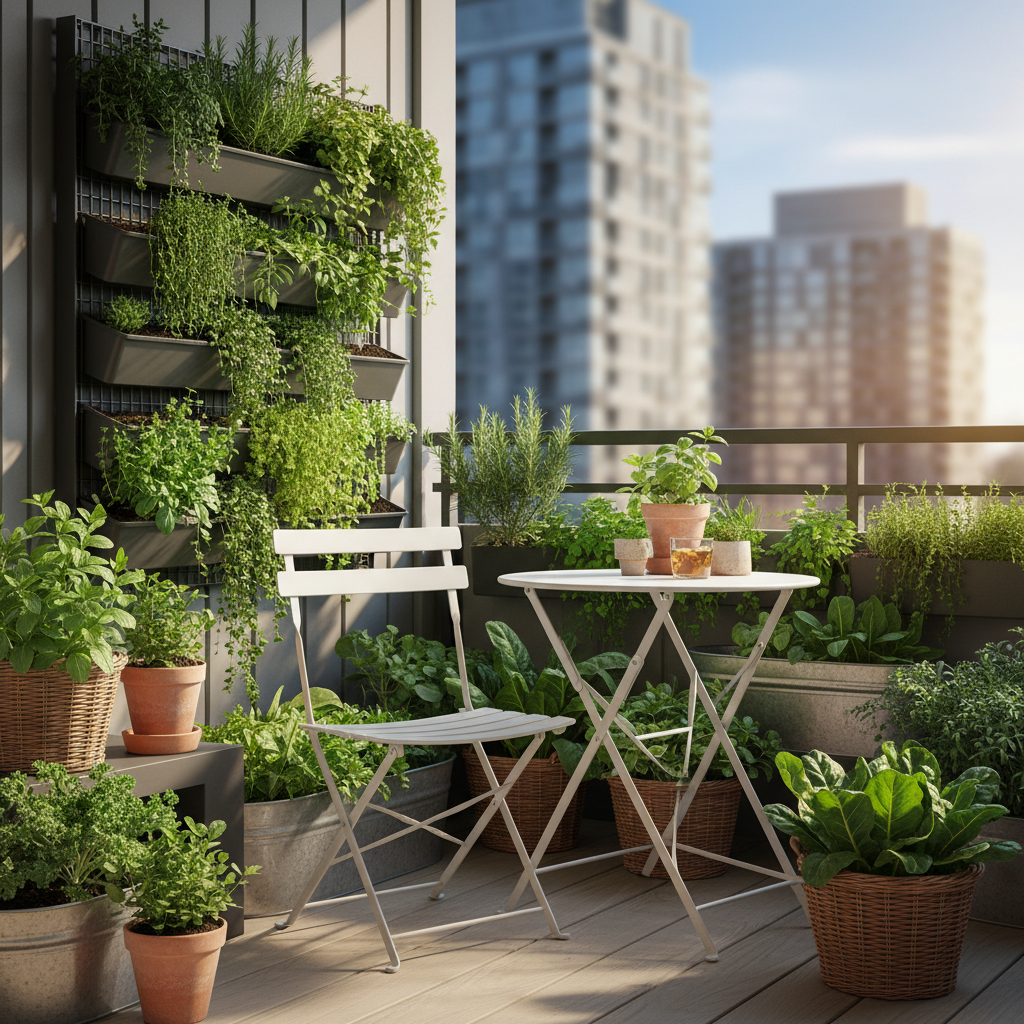
This guide gives you practical layouts, plant choices, and renter-friendly setup tips. You’ll also get a quick self-check so you can stop guessing and start building a balcony garden that stays alive past week three.
Start with the “balcony reality check” (light, wind, rules)
Small balcony garden ideas for apartments usually fail for one boring reason: the plan ignores what the balcony actually does all day. Spend five minutes on these checks and you save weeks of frustration.
- Sun exposure: Note direct sun hours. Morning sun often feels gentler; afternoon sun can roast containers fast.
- Wind: High floors and corners dry soil quickly and snap stems, even when the temperature feels mild.
- Water access: No spigot means you’ll want lighter pots, a watering can you like using, and saucers to catch drips.
- Weight + drainage rules: Many buildings limit heavy planters and hate runoff. When in doubt, ask management.
- Pets + kids: Some common ornamentals can be toxic if chewed. If that’s your situation, check with a veterinarian or a plant toxicity resource.
According to USDA guidance on plant hardiness zones, outdoor plant performance depends on local climate. On a balcony, microclimate matters too: reflected heat from walls and wind exposure can push plants outside their “normal” comfort zone.
Pick a layout that matches how you actually live
Before buying pots, decide what you want the balcony to do. A beautiful jungle that blocks your door gets old fast, so anchor your plan around movement and access.
Three apartment-friendly balcony garden layouts
- The walkway layout: Plants line one side, leaving a clear path. Great for narrow balconies.
- The corner garden: One concentrated plant zone plus a small chair. Easy to maintain, feels intentional.
- The rail + vertical layout: Planters on the railing plus a wall trellis or shelf unit, minimal floor use.
Key point: Leave at least one “no-plant zone” for standing, watering, and turning around without knocking pots over.
Container choices that make small spaces easier (not heavier)
In small balcony garden ideas for apartments, containers do more than hold soil, they set your watering schedule, your cleanup effort, and whether you annoy your downstairs neighbor.
Go-to container options:
- Self-watering planters: Helpful if you travel or forget, but still check moisture weekly.
- Fabric grow bags: Lightweight and breathable, great for herbs and tomatoes; use a tray to manage runoff.
- Window boxes/rail planters: Big visual impact, minimal footprint. Confirm safe mounting and weight limits.
- Stacked/vertical planters: Best for greens and herbs, less ideal for large fruiting plants.
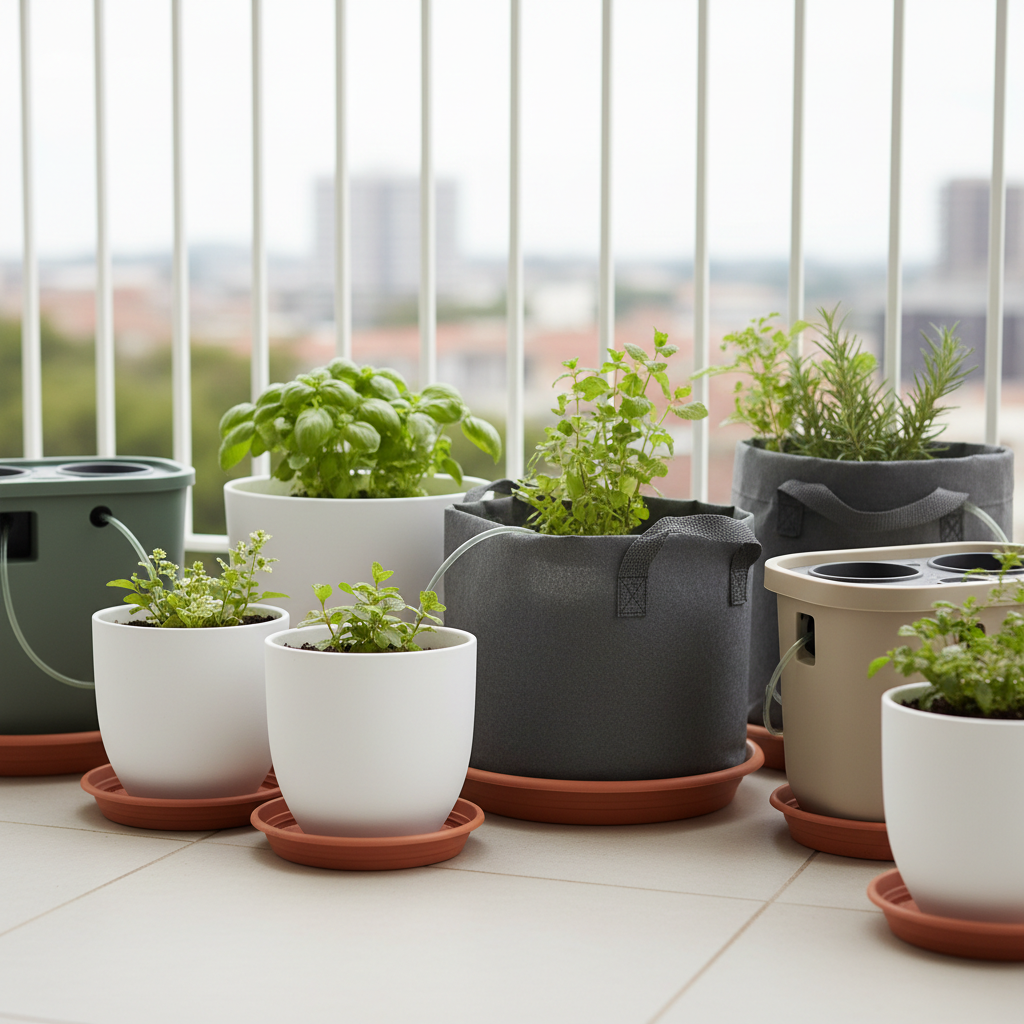
Drainage reality: Most plants dislike soggy roots. Use pots with drainage holes plus a saucer or tray, and empty standing water after storms if mosquitoes are common in your area.
Plant ideas by balcony condition (so you stop gambling)
Plant selection is where small balcony garden ideas for apartments either become effortless or become a weekly rescue mission. Match plants to light and wind first, aesthetic second.
If you get 6+ hours of direct sun
- Herbs: basil, rosemary, thyme (let the top inch dry between watering)
- Edibles: cherry tomatoes, peppers, strawberries (bigger pots help with heat swings)
- Flowers: marigolds, zinnias, geraniums (often tolerate sun and heat well)
If you get bright shade or 2–4 hours sun
- Herbs: mint in its own pot, parsley, cilantro (bolts in heat, so partial sun can help)
- Greens: lettuce mixes, arugula, spinach (usually happier without harsh afternoon sun)
- Ornamentals: coleus, begonias (color without needing full sun)
If it’s mostly shade
- Ornamentals: ferns, peace lily outdoors only when temps allow, some hostas (check local conditions)
- Edibles (limited): chives, some leafy greens may still perform with bright ambient light
Windy balcony tip: Choose sturdier, flexible-stem plants, use heavier outer pots for stability, and add a simple screen (bamboo, outdoor curtain) if building rules allow.
A quick planning table: what to grow, what you need, what to watch
Use this as a shortcut when you’re standing in the garden aisle trying to remember everything.
| Goal | Good plant picks | Container suggestion | Common issue to plan for |
|---|---|---|---|
| Fresh cooking herbs | Basil, thyme, chives, parsley | 6–10 in pots or a long window box | Overwatering herbs in low light |
| Salad greens | Lettuce, arugula, spinach | Wide, shallow planter with tray | Heat stress in direct afternoon sun |
| Privacy + greenery | Climbing vine (non-invasive), tall grasses | Tall rectangular planter + trellis | Wind toppling a tall setup |
| Color all season | Geraniums, begonias, marigolds | Rail planters + mixed pots | Uneven watering across many small pots |
Step-by-step: set up a low-maintenance balcony garden in one afternoon
This is the part most people want: a simple order of operations that prevents the classic “I bought plants and now I’m stuck” spiral.
- 1) Measure first: Door swing, walking width, railing height, and any HOA/building restrictions.
- 2) Choose 1–2 container types: Fewer formats means easier watering and cleaner visuals.
- 3) Add drip trays and a watering plan: If runoff is sensitive, prioritize saucers and a small mat under the plant zone.
- 4) Use quality potting mix: Avoid digging up random soil. Potting mix drains better and weighs less.
- 5) Group by water needs: Put thirstier plants together, drought-tolerant herbs together.
- 6) Leave a “maintenance lane”: Make sure you can reach every pot without moving three others.
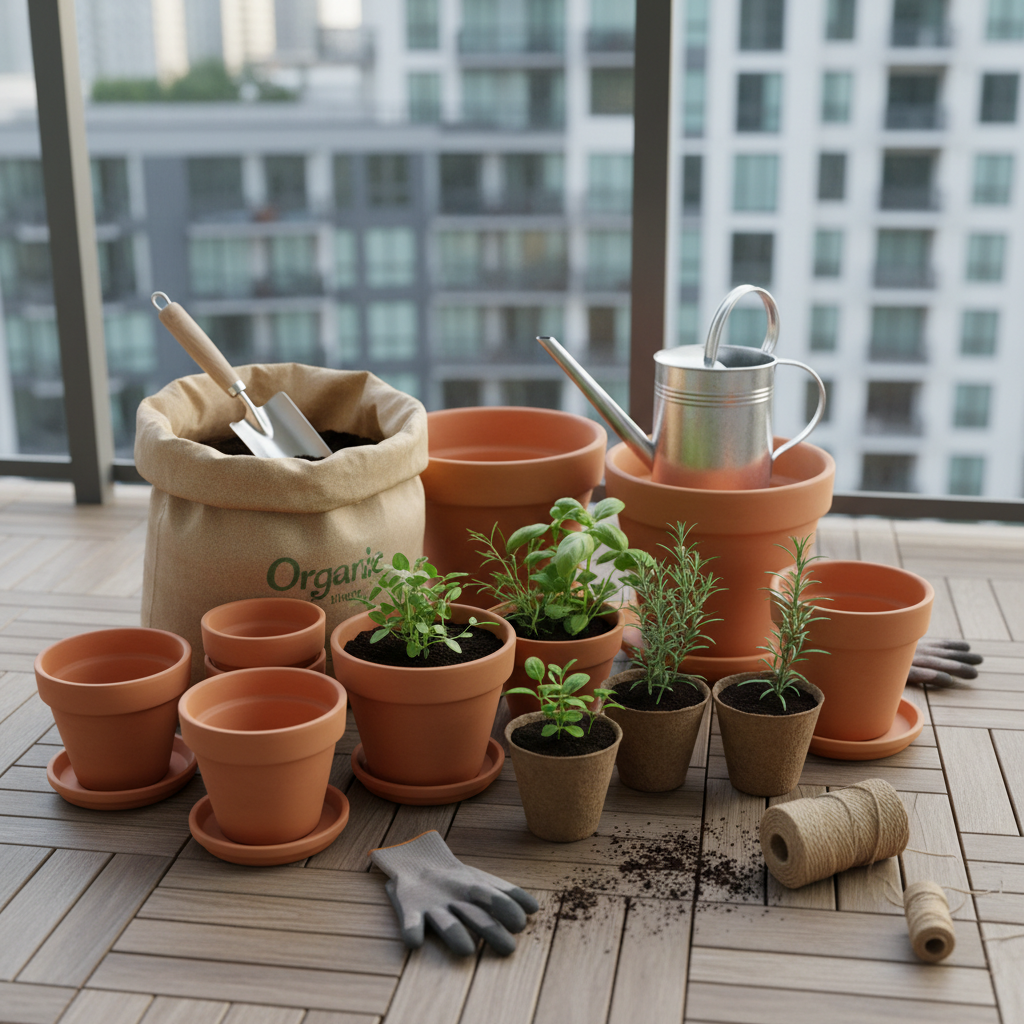
Small but high impact add-ons: a slim potting bench or storage box that doubles as seating, plant labels you can read, and a little hook for pruners so they don’t disappear.
Common mistakes that quietly kill balcony plants
A lot of “brown thumb” stories are really just balcony physics. Fix these, and most plants become far more forgiving.
- Too-small pots for fruiting plants: Tomatoes and peppers often need more soil volume than people expect.
- Ignoring heat from walls and railings: South- and west-facing surfaces can cook roots in dark plastic pots.
- Watering on a schedule, not by soil: Check moisture with a finger. Top inch dry is a decent cue for many plants.
- Mixing incompatible plants in one container: Mint and rosemary in the same pot is a classic mismatch.
- Over-fertilizing: More feed rarely fixes poor light. It can burn roots, so follow label directions.
According to EPA guidance on pesticide safety, chemical controls should be used carefully and according to the label. On a small balcony, it’s often safer to start with non-chemical steps like rinsing pests off, removing affected leaves, or using insecticidal soap as directed.
When it’s time to get help (or switch strategies)
If you’ve tried a few cycles and plants keep failing, it may not be you. Some balconies are extreme environments, and it’s okay to pivot.
- Persistent pest outbreaks: Consider a local nursery for region-specific advice, they usually know what’s spreading.
- Suspected mold or water damage: Talk to building management, and if you’re concerned about health impacts, consider consulting a qualified professional.
- Unclear building rules: Ask before mounting rail planters or adding privacy screens, fines are a fast way to stop gardening entirely.
- Very low light: Swap to shade-tolerant ornamentals, or consider a small indoor herb setup near a bright window.
Key takeaways (so you can act today)
Small balcony garden ideas for apartments work when you match plants to your light, control water and runoff, and choose a layout you can maintain without moving furniture every time.
- Measure and map your balcony before buying anything.
- Pick plants by condition (sun, shade, wind), not by impulse.
- Standardize containers to simplify watering and keep the space tidy.
- Build in drainage control with trays and a clear watering routine.
If you want a simple next step, pick one goal (herbs, privacy, or color), buy containers for that goal, then add plants that match your light this week, you can expand once the first set thrives.