
Best kitchen gadgets for small kitchens are the ones that reduce clutter, do more than one job, and earn their spot every week, not just once when you feel ambitious on a Sunday.
If your counters feel crowded, it’s rarely because you “need more storage.” Usually it’s because a few bulky, single-use tools are hogging the most valuable real estate in the room: your working space. A small kitchen can cook just as well as a big one, but it can’t tolerate dead weight.
This guide focuses on practical picks that fit typical U.S. apartments and condos, plus a quick way to decide what to buy (and what to skip). You’ll also get a small comparison table, a setup plan, and a few safety notes that matter when you’re stacking, folding, and storing everything tightly.
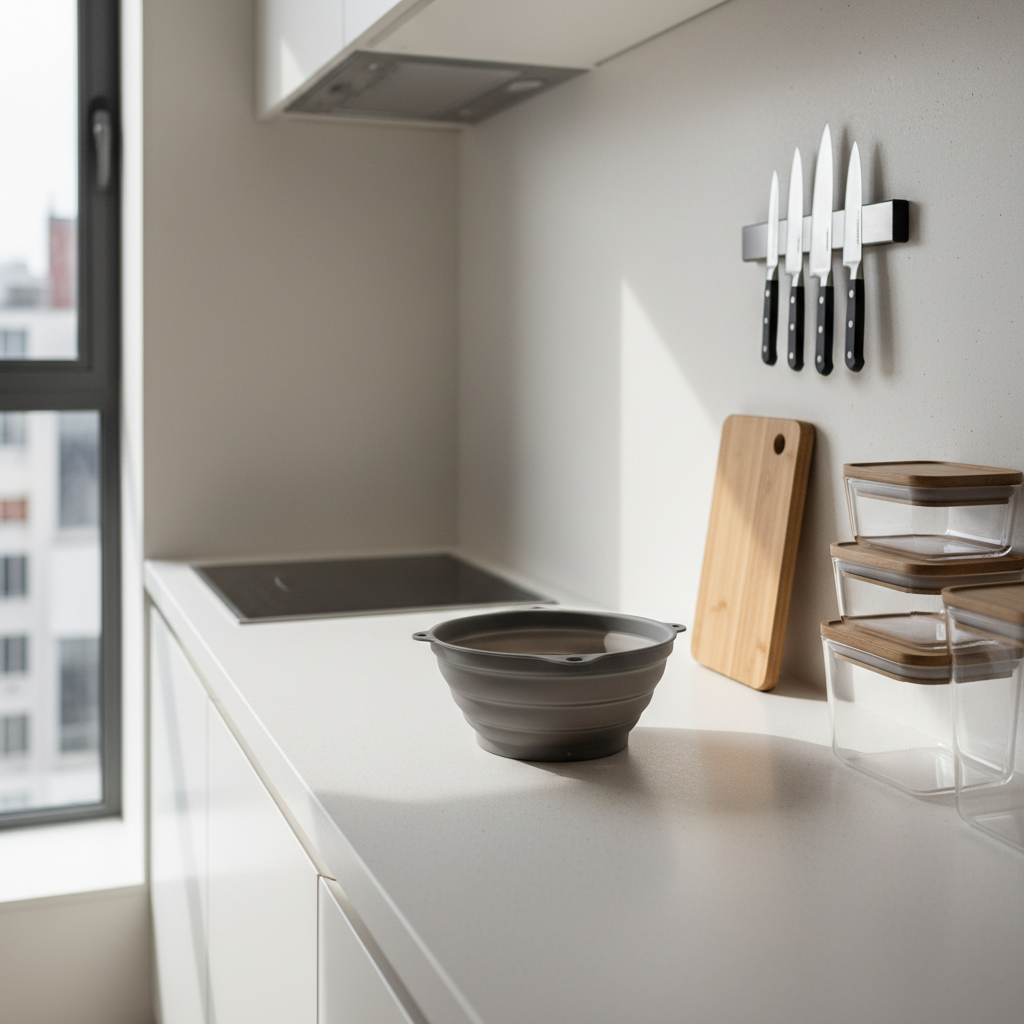
What makes a gadget “small-kitchen friendly” (and what doesn’t)
A lot of products claim to be “compact,” but in real life the winners share a few traits: they store flat, replace multiple tools, or move easily from drawer to counter to sink without needing a dedicated parking spot.
- Multifunction beats multi-attachments: a tool with one strong use-case (plus a bonus) usually works better than a base unit with six rarely-used parts.
- Vertical storage-ready: anything that can hang, stack, nest, or slide into a narrow slot tends to survive long-term.
- Fast cleanup: if it’s annoying to wash, it won’t get used, and then it becomes clutter.
- Stable on small surfaces: in tight kitchens, a tool that skids or tips becomes a daily frustration.
According to the U.S. Fire Administration, cooking is a leading cause of home fires, so in cramped layouts, prioritize gadgets that keep cords controlled, reduce grease splatter, and don’t encourage risky balancing acts on a crowded stove.
A quick shortlist: best kitchen gadgets for small kitchens by job
Instead of listing “50 must-haves,” here’s a tighter set that covers most everyday cooking without eating your cabinets. If you cook occasionally, you can start with just a few and expand after you notice real pain points.
Prep and chopping
- Slim, non-slip cutting board (often with juice groove): easier to store upright, safer on small counters.
- Bench scraper: doubles as dough tool, veggie scooper, and quick counter cleaner.
- Compact microplane: zest, garlic, hard cheese, ginger, and it stores flat.
Cooking and heat
- Silicone-tipped tongs: one tool for flipping, tossing, serving, and they hang easily.
- Splatter screen: a small-kitchen hero if your stove sits near cabinets or a narrow walkway.
- Instant-read thermometer: reduces “cut and check” mess, especially for chicken, fish, and reheats.
Storage and organization
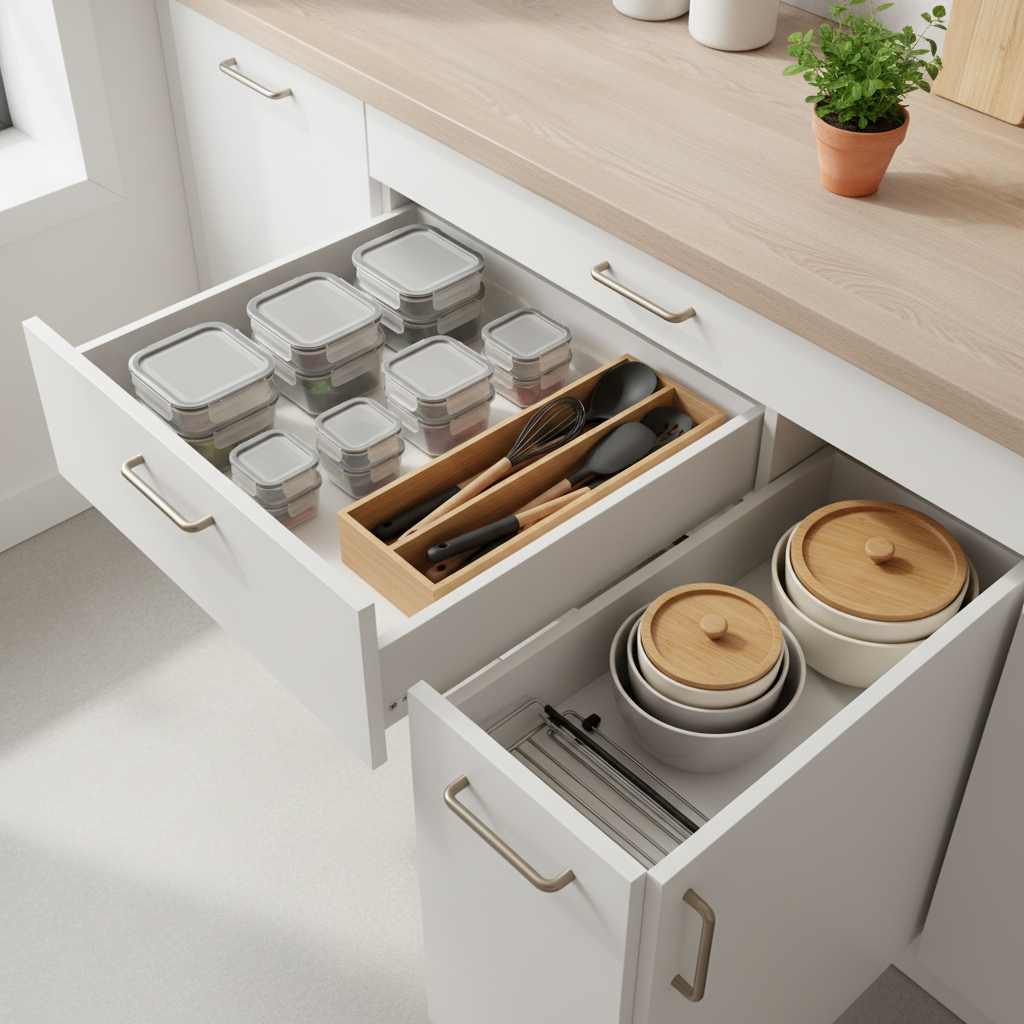
- Nesting mixing bowls with lids: mix, store, and serve without extra containers.
- Stackable, rectangular food containers: space-efficient compared with round sets.
- Magnetic rack or wall rail (for knives or utensils): frees drawers, but only if your wall setup makes sense.
Comparison table: pick the right tool for your space
If you’re deciding between categories, this table helps you choose what delivers value without turning into “one more thing” in the back of a cabinet.
| Need | Best compact pick | Why it works in a small kitchen | Common downside |
|---|---|---|---|
| Quick weeknight prep | Bench scraper + slim cutting board | Stores flat, reduces trips from board to pan | Requires a little habit-building |
| Less countertop clutter | Wall rail or magnetic rack | Moves tools off the counter, easy access | Needs safe installation and layout |
| Fewer dishes | Nesting bowls with lids | Prep + store in one set, stacks cleanly | Lids can be annoying to match |
| Safer cooking in tight space | Splatter screen + thermometer | Less mess, fewer overcooking do-overs | Thermometers need occasional battery |
| Small sink, limited drying area | Collapsible colander | Folds down, fits shallow drawers | Some models feel less rigid |
Buy-this-not-that: avoid the space-eaters
Many people searching for best kitchen gadgets for small kitchens end up buying “mini versions” of big appliances. Sometimes that’s fine, but often it’s just a smaller object that still needs dedicated storage.
- Buy: a compact immersion blender. Not that: a full blender if you only make occasional smoothies.
- Buy: a stovetop kettle that stores on a hook or in a narrow spot. Not that: a bulky electric kettle if outlets are scarce and the base lives on the counter.
- Buy: a foldable dish rack or roll-up drying rack. Not that: a giant countertop rack that never moves.
- Buy: a microplane and sharp chef’s knife. Not that: a large electric chopper that’s hard to wash and noisy.
One more honest rule: if a gadget only helps with a meal you make once a month, it probably shouldn’t take up daily space.
Self-check: which small-kitchen problem are you actually trying to fix?
This part saves money. Before you add anything to cart, pick the problem you feel most often, then match it to one or two tools.
- “I run out of counter space while cooking” → prioritize a slim cutting board, bench scraper, and a wall rail for tools.
- “My drawers are chaos” → add a simple drawer organizer and switch to stackable rectangular containers.
- “Cleanup takes forever” → choose dishwasher-safe, fewer-parts tools; avoid gadgets with tiny crevices.
- “I hate cooking because it feels messy” → splatter screen, nesting bowls, and a trash/compost setup within arm’s reach.
- “I keep buying ingredients and forgetting them” → clear containers and a basic fridge bin system usually beat more appliances.
If two problems tie, solve the one that affects safety or daily stress first. The rest becomes easier once your workflow feels calmer.
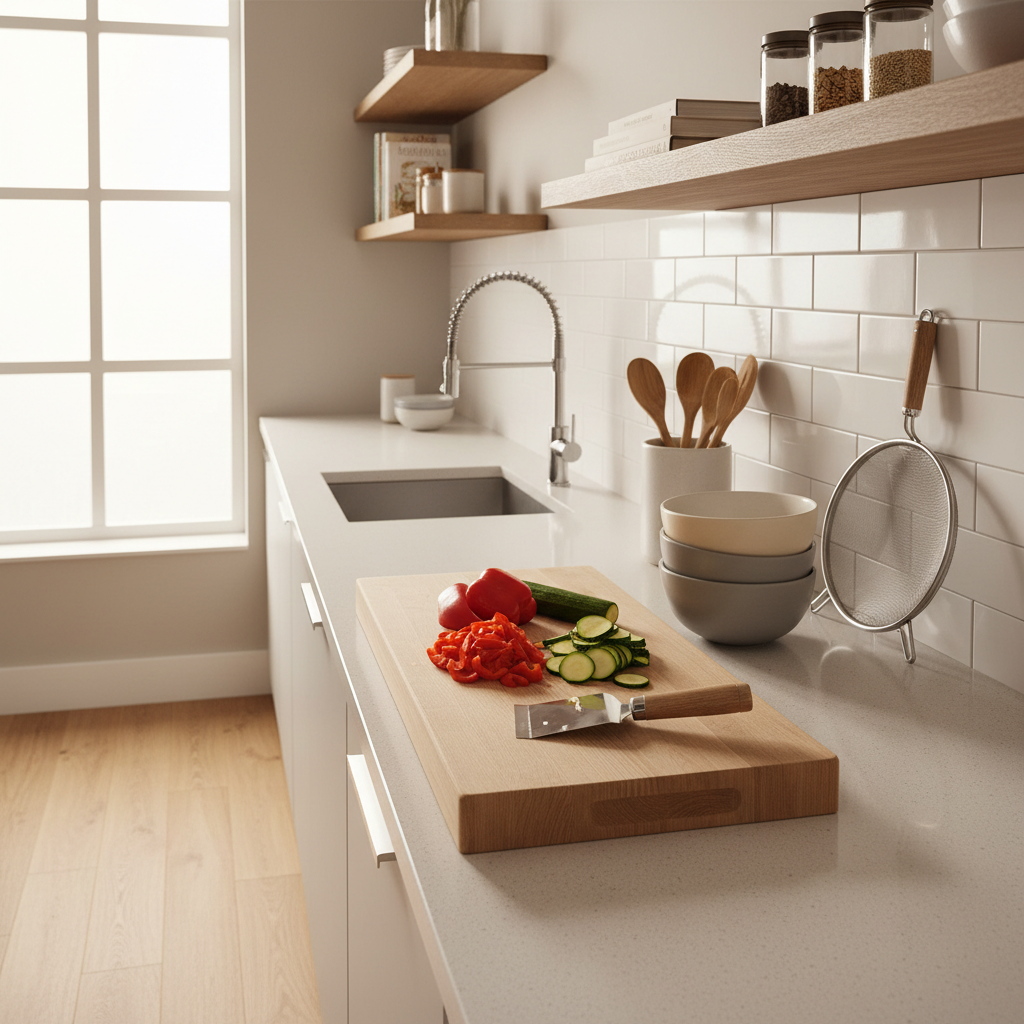
How to set up a “tiny kitchen kit” (practical steps)
You don’t need a full makeover. A small reset, done once, keeps your best tools accessible and everything else out of your way.
Step 1: Create two zones, even if they’re small
- Prep zone: cutting board, knife, scraper, salt, and one mixing bowl.
- Cook zone: tongs, spatula, thermometer, splatter screen.
If an item doesn’t live in one of these zones, it needs a clear reason to stay.
Step 2: Store by frequency, not by category
- Daily tools go within arm’s reach of the stove or prep area.
- Weekly tools can go higher or deeper, but still in a single “home.”
- Rare tools should be boxed together, so they don’t spill into daily space.
Step 3: Standardize containers
In many kitchens, mismatched containers waste more space than pots and pans. Pick one footprint and build around it, even if you keep a few specialty sizes.
Safety and durability notes (small spaces make this matter more)
When storage is tight, it’s tempting to stack heavy items high, hang things wherever, and route cords across corners. That’s where annoying little accidents happen.
- Wall-mounted storage: use appropriate anchors for your wall type; if you rent, check lease rules and consider no-drill options with realistic load limits.
- Heat and cords: keep appliance cords away from burners, and avoid plugging high-watt devices into questionable power strips. If you’re unsure, an electrician can advise.
- Knives: if you use a magnetic strip, make sure it’s strong enough and mounted securely, especially with kids or pets around.
- Non-slip matters: boards and mats that slide on small counters increase cut risk, so add a damp towel underneath or pick non-slip models.
According to USDA Food Safety and Inspection Service, using a food thermometer helps verify safe internal temperatures; in tight kitchens it also cuts down on extra handling and re-cooking.
Key takeaways (so you can shop without overthinking)
- Favor flat, stackable, and hangable tools over “mini appliances” with big storage needs.
- Choose cleanup-friendly gadgets, fewer parts usually means more use.
- Fix one pain point at a time, your kitchen stays usable during upgrades.
- Build around workflow, not a wishlist, prep and cook zones beat random organizing.
Once you pick a few truly useful items, the phrase best kitchen gadgets for small kitchens stops being a search query and starts being your everyday setup.
Conclusion: keep it small, but make it intentional
A small kitchen doesn’t need more stuff, it needs better decisions. If you take anything from this list, let it be this: buy tools that store easily, get used weekly, and make cooking feel simpler rather than more “equipped.”
Action plan for this week: choose one clutter culprit to remove, then add one space-smart replacement that covers the same job with less storage. Repeat only after you cook a few times and confirm it really helps.
If you need a fast starting point, begin with a slim cutting board, a bench scraper, and stackable containers, those three upgrades tend to change day-to-day cooking the most without demanding extra space.