
how to organize cleaning products by frequency use comes down to one idea: keep what you reach for most where you naturally clean, and push everything else out of your day-to-day path.
If your sprays, wipes, and refills live in three different closets, you end up buying duplicates, leaving half-finished bottles around, and spending more time hunting than cleaning. That’s not a “you” problem, it’s usually a storage logic problem.
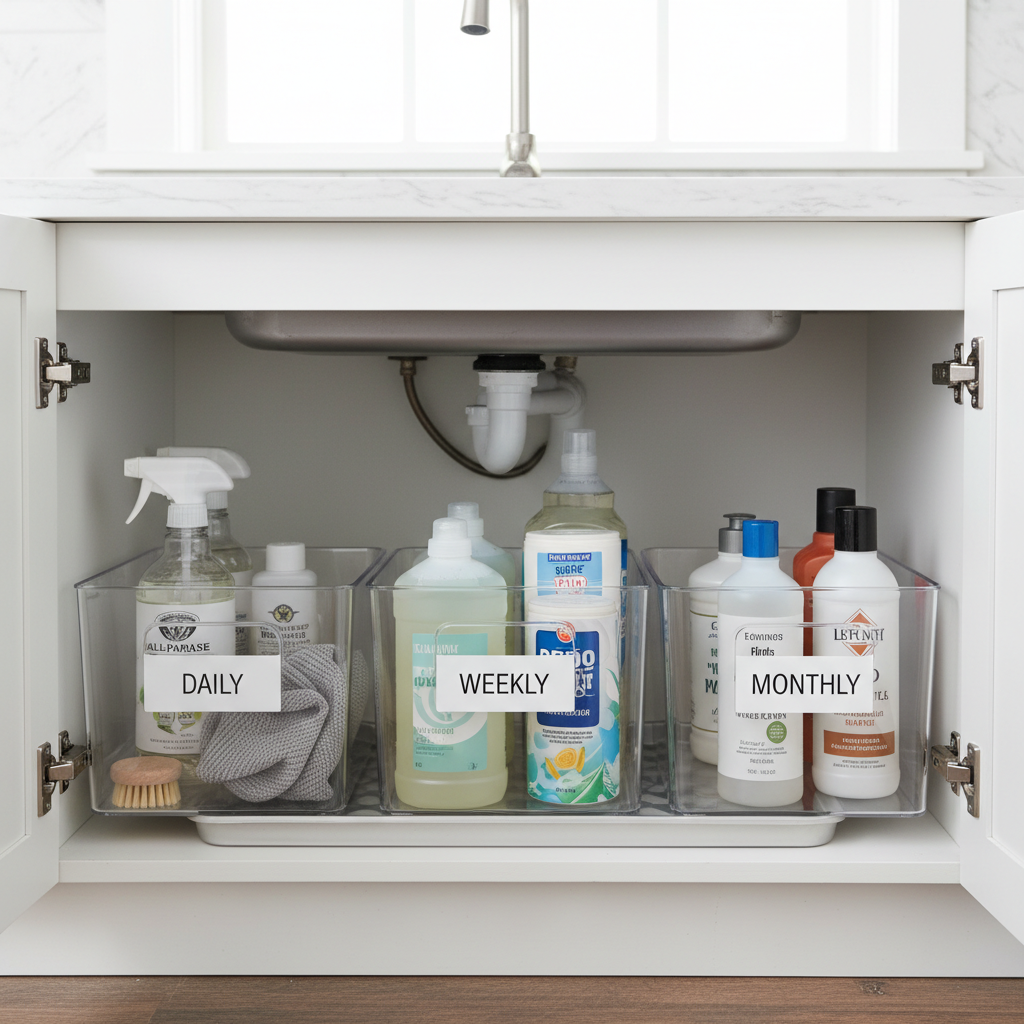
This guide focuses on a practical frequency-based system, not perfection. You’ll sort by how often you use each product, match that to where you use it, then add a few low-effort tools so the system keeps working after the first weekend.
Start with frequency zones (not “types”)
Most people begin by grouping “all bathroom stuff” or “all glass cleaners.” It feels tidy, but it breaks down when your most-used items are buried behind things you touch once a month.
Instead, build three simple zones based on real life:
- Daily/always: wipes, dish spray, counter spray, hand soap refills you grab constantly
- Weekly/regular: toilet cleaner, tub spray, floor cleaner, stainless polish you use on a schedule
- Monthly/seasonal: grout brush, limescale remover, baseboard tools, specialty products, backups
You can add a fourth zone if you want: “rare but urgent” (pet accidents, stain remover, drain tools). Those items don’t get used often, but when you need them, you need them fast.
Quick self-check: which situation are you in?
Before you buy bins, figure out what’s actually making your space feel messy. This 2-minute check usually tells you where to focus.
- You have duplicates (two glass sprays, three disinfectants): storage is hiding what you own
- You avoid cleaning because setup feels annoying: your daily/weekly items are too far away
- Stuff migrates to counters and tubs: you lack a “landing spot” near the action
- Cabinets feel unsafe with kids/pets: you need a safer zone layout, not just prettier bins
- You clean in bursts (big weekend resets): your weekly zone should be portable
Once you know your pattern, organizing by frequency use becomes less about labels and more about removing friction.
Assign a “home base” for each zone in your house
Now match the zones to where they should live. The goal: daily items within arm’s reach, weekly items one step away, monthly items out of the prime real estate.
Here’s a common setup that works in many U.S. homes and apartments:
| Zone | Where it should live | Why it works |
|---|---|---|
| Daily/always | Under the kitchen sink or a small caddy near kitchen/bath | Fast access, less countertop clutter |
| Weekly/regular | Linen closet shelf, bathroom cabinet, or a grab-and-go tote | Close enough to use, not in the way |
| Monthly/seasonal | Top shelf, garage bin, or a labeled backup box | Protects prime space for items you touch often |
| Rare but urgent | Hall closet door bin or a clearly labeled “SOS” caddy | Easy to grab when time matters |
Small homes can still do this. You’re not creating more storage, you’re giving storage a job.
Practical setup: containers that keep the system alive
This is the part people overcomplicate. You typically need only a few container types, and they should match your habits.
- 1 small daily caddy: holds your most-used sprays/wipes so they don’t sprawl
- 1 weekly tote: a handled bin you can carry room-to-room
- 1 backup bin: for refills, bulk sizes, and “not yet opened” items
- Optional door rack: for tall bottles if under-sink space is tight
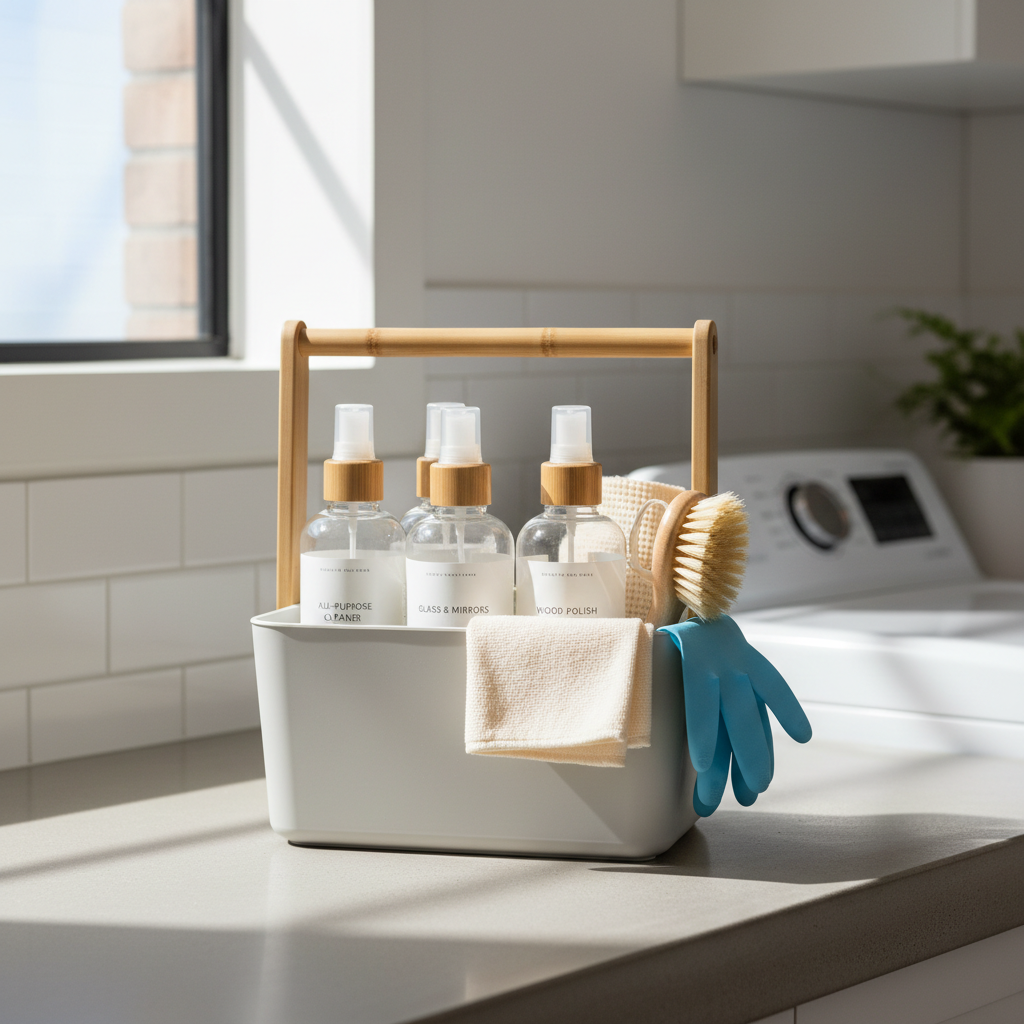
A good rule: if you can’t lift the tote with one hand, it’s too heavy and you’ll stop using it. That’s when products drift back to the floor or the bathtub edge.
Labeling helps, but keep it human. “Bathroom weekly” beats a long list. And if multiple people clean, labels reduce the slow chaos of “where does this go?”
Step-by-step: organize cleaning products by usage frequency in one afternoon
1) Pull everything into one visible pile
Yes, it gets messy for a bit. But it’s the quickest way to spot duplicates, expired products, and half-empty bottles you don’t like using.
2) Sort by how often you truly use it
Be honest. If the stainless spray “should” be weekly but you use it once a month, put it in monthly. The whole point of how to organize cleaning products by frequency use is matching storage to reality.
3) Create your zones on the floor first
- Daily/always pile
- Weekly/regular pile
- Monthly/seasonal pile
- Rare but urgent pile (optional)
4) Decide what gets duplicated (and what doesn’t)
Some duplication is useful, like a small bathroom cleaner in each bathroom. But duplicates in the same closet usually signal you’re overbuying.
- Good duplication: a toilet brush per bathroom, a small wipe pack upstairs and downstairs
- Questionable duplication: multiple all-purpose sprays “because you couldn’t find the other one”
5) Put products into containers, then containers into homes
Containers make it easier to take the whole category out, wipe the shelf, then return everything without reshuffling.
6) Add one tiny maintenance rule
Pick one rule that fits your energy:
- One-in, one-out for backups
- Sunday reset: return stray bottles to the weekly tote
- Refill line: when you open the last backup, add it to your shopping list
Safety and common mistakes that waste time
Cleaning storage isn’t just aesthetics. It affects safety, especially with kids, pets, or anyone sensitive to fumes.
- Mixing products: avoid storing chemicals in a way that encourages “DIY combining.” According to CDC, mixing bleach with ammonia can create toxic gases, so it’s safer to keep products clearly separated and labeled.
- Overstuffing under-sink cabinets: leaks go unnoticed, and you end up with sticky shelves and rust rings.
- Keeping daily items too hidden: if it takes effort to grab, you will postpone small cleanups until they become big ones.
- Storing in extreme heat: garages get hot in many states; some products may degrade or leak, check the label and consider indoor storage for sensitive items.
If you have asthma, allergies, or you’re unsure about chemical compatibility, it’s reasonable to ask a medical professional for personalized guidance and to follow manufacturer instructions closely.
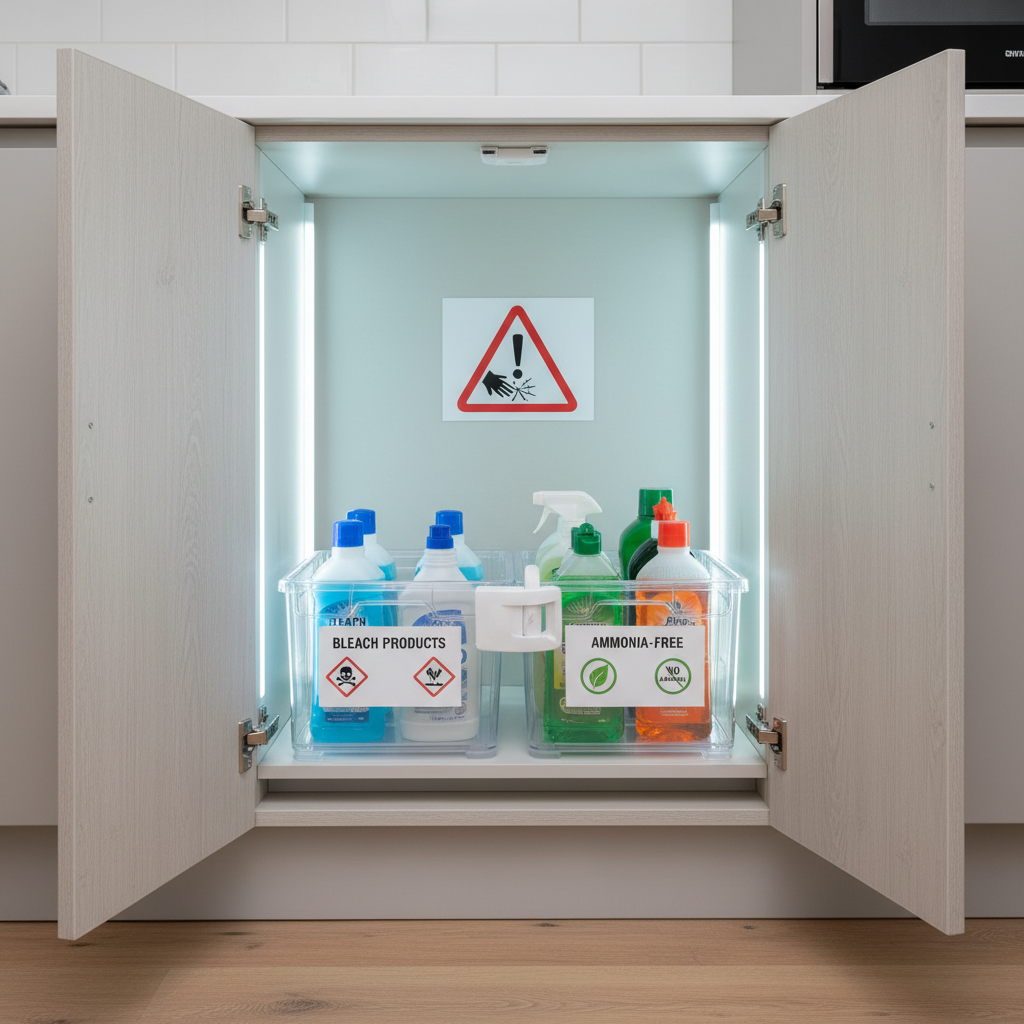
One more mistake I see: buying organizers before sorting. If you purchase a set of bins first, you tend to force your products to fit the bins, not your routine.
Key takeaways (so you can actually stick with it)
- Frequency beats category for day-to-day usability.
- Daily items belong near the rooms where you wipe, spray, and rinse.
- A weekly tote is often the difference between “organized” and “stays organized.”
- Backups should live together, labeled, and limited.
- Safety matters, separate products that could be dangerous if mixed.
Wrap-up: a simple next move
If you only do one thing today, pick a daily zone and make it easy to grab with one small caddy. Once that friction drops, the rest of how to organize cleaning products by frequency use tends to fall into place without a huge overhaul.
Set a 20-minute timer this week, pull every cleaner into one pile, and sort into daily, weekly, monthly. You’ll know pretty quickly what needs a better “home base,” and what can move out of your prime cabinet space.
FAQ
- How do I organize cleaning products if I clean “as needed” instead of on a schedule?
Use the same frequency zones, but define them by trigger, not calendar. Daily means “spills and quick wipe-downs,” weekly means “when the bathroom looks rough,” monthly means “deep tasks you avoid.” - What if I have multiple bathrooms, should I duplicate products?
Usually yes for a few basics, because it reduces friction. Keep a small set in each bathroom, then store backups centrally so you don’t overbuy. - Where should I store cleaning supplies in a small apartment with no closets?
Under-sink space plus a portable tote often works. Put daily items under the kitchen sink, keep weekly items in a handled bin, and store monthly items in a labeled box on a high shelf. - How can I keep my under-sink area from turning into a mess again?
Limit that space to daily use plus one small backup bin. When the shelf is “anything goes,” it becomes the dumping ground for every random bottle. - Is it okay to store cleaning products in the garage?
Sometimes, but heat and freezing temperatures can affect many products. Check labels for storage guidance, and keep anything you use often inside so it doesn’t become “out of sight, out of use.” - What’s the easiest way to label without making it look like a warehouse?
Use a few broad labels such as “Daily,” “Bathroom Weekly,” and “Backups.” The simpler the label, the more likely everyone in the house follows it. - How often should I re-check my system?
A quick scan every month or two usually works, especially after big purchases or seasonal cleaning. If you keep buying duplicates, it’s a sign your backups aren’t visible enough.
If you’re trying to simplify your whole home routine, a frequency-based setup is a great starting point because it cuts down decision fatigue, if you’d rather not think about where things go each time, build one daily caddy and one weekly tote and let those two containers do most of the work.