
Best decorative string lights for bedroom walls usually come down to two things: the vibe you want (soft, romantic, playful, minimalist) and the way you plan to hang them (damage-free or more permanent). If you buy lights before deciding those two, you often end up with sagging lines, harsh “dorm-room” glare, or a setup that keeps falling down at 2 a.m.
This matters more than people think because string lights aren’t just “decor”, they become part of your nightly lighting routine. The wrong color temperature can feel cold, the wrong brightness can disrupt wind-down time, and the wrong mounting can chip paint or peel drywall paper.
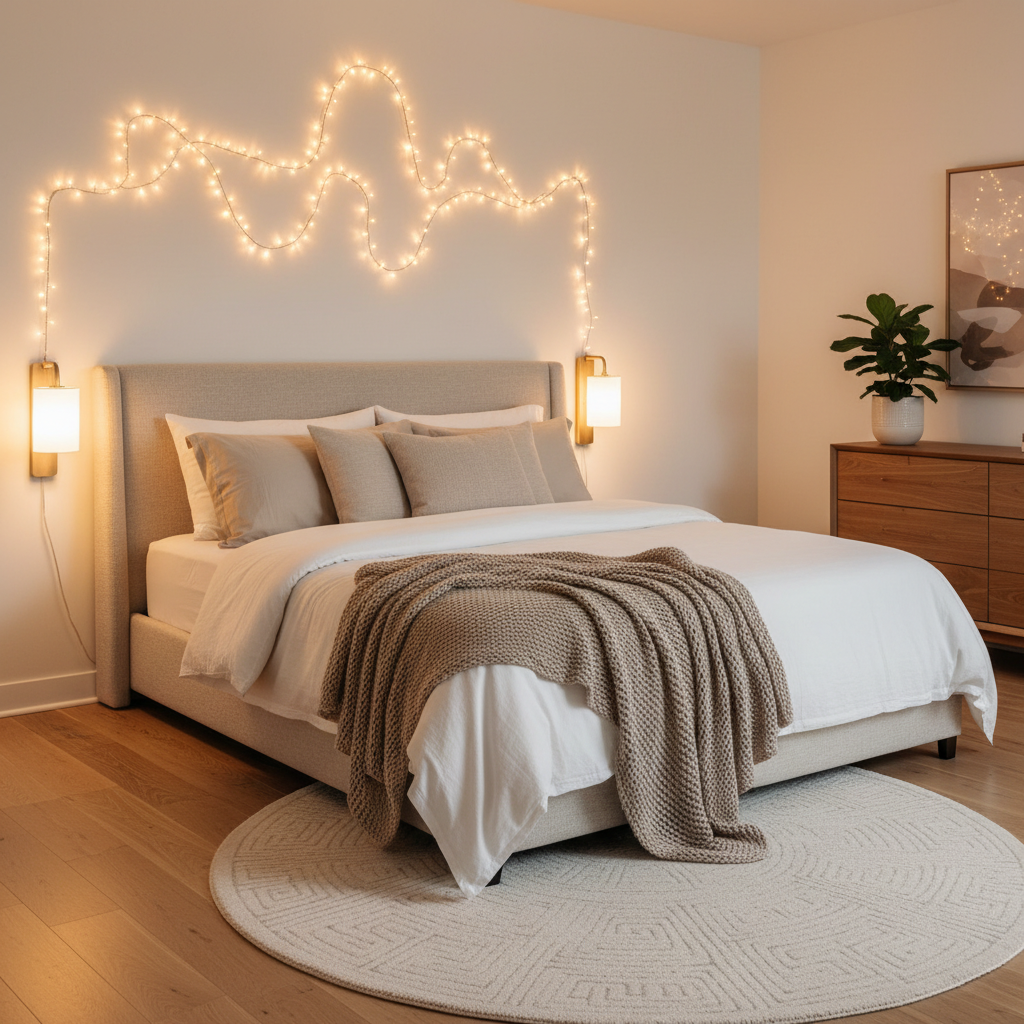
Below, I’ll help you pick the right style, avoid common setup mistakes, and match the lights to your room and walls without turning it into a weekend-long project.
What “best” really means for bedroom wall string lights
Most shoppers search for the “best” option, but in real bedrooms, “best” depends on constraints: your wall type, outlet placement, sensitivity to light at night, and whether you’re renting.
- Comfort light, not task light: bedroom walls look best with low-to-medium brightness and warm or neutral white.
- Low hassle mounting: adhesive hooks, clear clips, or lightweight strands usually win for painted drywall.
- Control options: dimmer, timer, remote, or app control matters more than fancy shapes.
- Power approach: USB and plug-in are consistent; battery works for short runs or occasional use.
According to the U.S. Consumer Product Safety Commission (CPSC), decorative lights should be used as intended and kept in good condition to reduce safety risks, which is a polite way of saying: avoid cheap cords that get hot, and stop using frayed strands.
Quick comparison table: types of decorative string lights for walls
If you’re stuck choosing, use this to narrow fast. You can still make any style look good, but the “best decorative string lights for bedroom walls” often start with the right category.
| Type | Best for | Look | Watch-outs |
|---|---|---|---|
| Micro LED (wire fairy lights) | Soft glow, draped patterns | Delicate, airy | Can tangle; needs many anchor points |
| Globe/Bulb string lights (mini bulbs) | Statement wall lines | Bold, cozy | Heavier; adhesives may fail on textured paint |
| Curtain lights | Full wall sparkle behind bed | Hotel-like, dreamy | Needs strong top mounting and tidy cable routing |
| Neon-style LED rope (flex) | Shapes, outlines, modern accents | Clean, graphic | Can look too bright without dimming |
| Photo clip string lights | Memory wall + warm light | Personal, casual | Extra weight from photos can cause droop |
How to choose the right color, brightness, and wire style
This is where most “meh” setups start: the lights technically work, but the tone feels wrong at night.
Color temperature (warm vs cool)
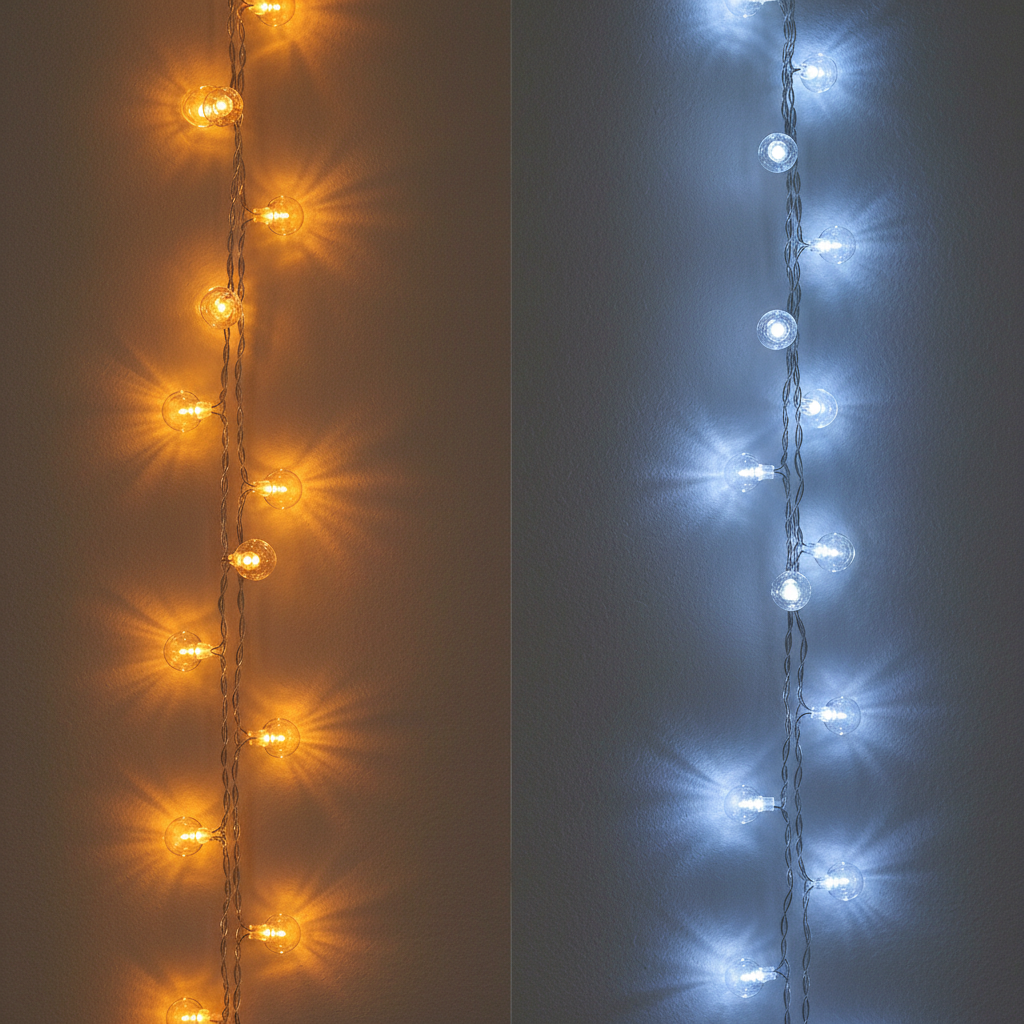
- Warm white usually feels cozier for winding down and pairs well with beige, wood, terracotta, or warm grays.
- Neutral white can work in modern rooms with crisp whites and black accents, especially if you still want a clean look.
- Cool white tends to read “holiday” or “workshop” on bedroom walls unless you’re going for an icy aesthetic.
According to the American Medical Association (AMA), exposure to bright blue-rich light at night can affect circadian rhythms, so if you’re sensitive to sleep disruption, choose warmer tones and use dimming.
Brightness and control
- Dimmable beats “super bright” almost every time for bedrooms.
- Look for multiple modes only if you’ll use them; otherwise it becomes button-mashing.
- Timer is underrated, it prevents lights running all night by accident.
Wire color and visibility
- Clear/silver wire blends on light walls and looks airy.
- Green wire can be noticeable indoors unless you’re wrapping plants or a vine garland.
- White wire can disappear on white walls but stands out on dark paint.
Self-check: which setup fits your room?
If you want a quick answer without overthinking, pick the first line that matches your reality.
- I rent and I’m worried about paint: micro LED + clear removable clips, or curtain lights with strong removable hooks at the top only.
- My walls are textured (orange peel/heavy paint): lighter strands, more anchor points, and avoid relying on one big adhesive strip.
- I want a headboard “halo” look: warm micro LEDs in a gentle arch, or mini globe lights spaced evenly.
- I want full-wall impact fast: curtain lights behind the bed, plus a timer.
- I hate visible cords: USB-powered strand routed behind the bed, with cable clips hiding the drop line.
- I’m sensitive to light at night: dimmable warm white, avoid direct line-of-sight near pillow height.
If two options fit, choose the one with simpler mounting. The “best decorative string lights for bedroom walls” are the ones you can keep up without constant re-sticking and re-leveling.
Installation steps that actually look clean (and stay up)
Good wall lighting is mostly layout and cable discipline. The lights are the easy part.
Step 1: Map the pattern before you stick anything
- Use painter’s tape to mark key points: corners, centerline above bed, drop points.
- Plug the strand in and test the brightness at night, not just in daytime.
Step 2: Choose mounting hardware for your wall surface
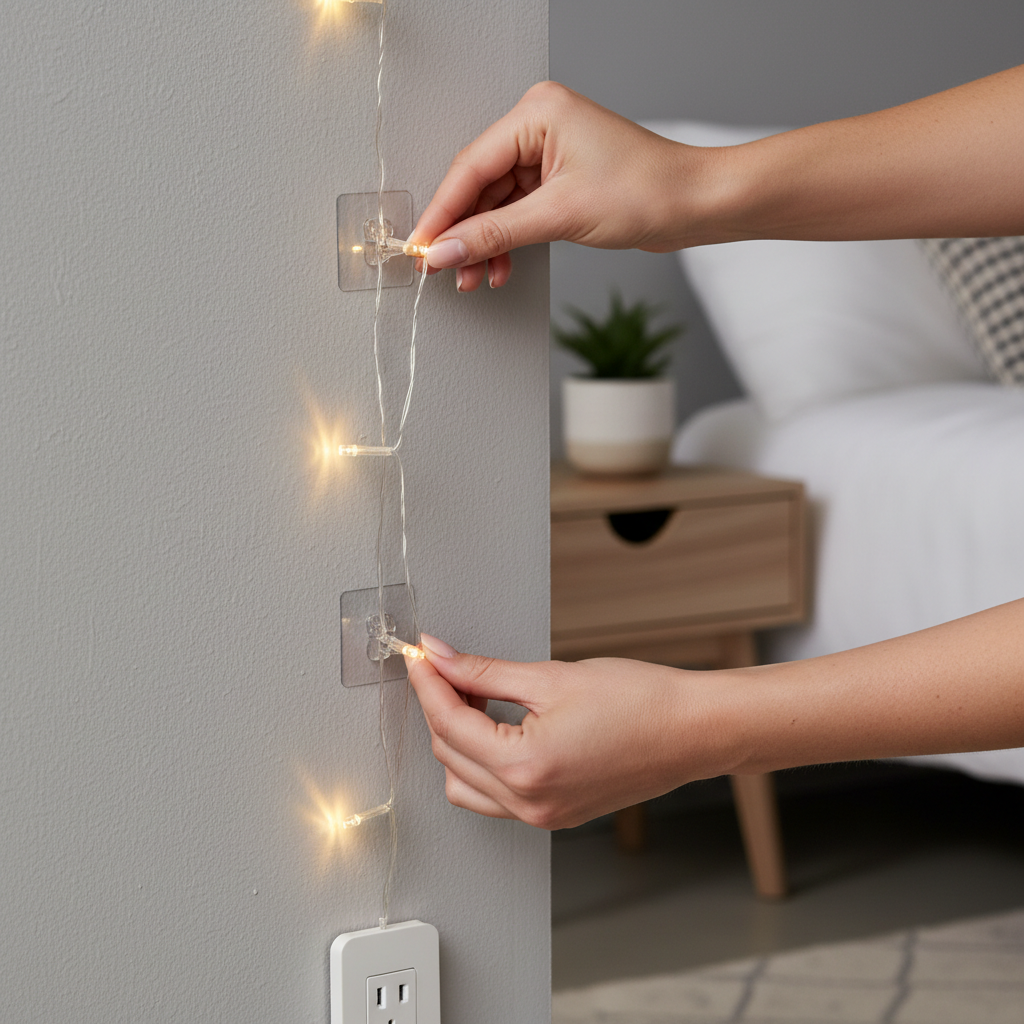
- Painted drywall (smooth): clear adhesive clips or removable hooks often work well.
- Textured walls: more clips, closer spacing, and lighter strands help prevent sag.
- Brick/wood: you may need specialized clips or small fasteners; if you’re unsure, consider asking a handyman so you don’t crack brick or split trim.
Step 3: Keep tension gentle
- Don’t “guitar-string” the strand tight, slight slack looks more intentional and reduces adhesive stress.
- Anchor every 12–24 inches for micro LEDs, closer if you’re shaping waves or letters.
Step 4: Hide the power drop
- Run the cord down a corner seam, behind a curtain edge, or along furniture lines.
- Use cable clips so the cord looks like it belongs, not like an afterthought.
Common mistakes that make bedroom string lights look cheap
These are small choices, but they’re usually why a setup looks cluttered in photos and in real life.
- Too cool, too bright: you get glare instead of glow, especially against white paint.
- Random spacing: uneven bulb distance makes “lines” look accidental; measure once, then clip.
- One anchor point doing all the work: adhesives fail, and the whole strand droops overnight.
- Visible tangles and crossovers: take five minutes to untwist; it changes everything.
- Ignoring reflections: mirrors and glossy frames can bounce light right into your eyes.
If you’re updating an existing setup, don’t rush to buy new lights. Often the fix is re-spacing clips, adding two extra anchors, and dialing brightness down.
Safety and upkeep: what to do (and what to skip)
Most bedroom wall installs are low risk, but there are a few habits worth keeping, especially if the lights run for hours.
- Check heat: LEDs usually stay cool, but power adapters can warm up; keep them in open air, not under bedding.
- Use rated products: look for recognized safety marks on packaging, and follow the manufacturer’s instructions.
- Avoid pinching cords: tight door frames and bed frames can damage insulation over time.
- Turn off when away: a timer helps, and it’s one less thing to think about.
According to the National Fire Protection Association (NFPA), safe use of electrical cords and lighting includes avoiding damaged cords and improper placement; if anything smells hot, flickers, or crackles, stop using it and consider replacing the strand.
Putting it together: a simple “buying checklist”
If you want a no-drama purchase, keep this short list open while you shop.
- Warm or neutral white, unless you have a clear cool-toned theme
- Dimming or multiple brightness levels
- Enough length for your pattern plus 10–20% slack
- Power plan that matches your outlet situation (USB/plug/battery)
- Mounting plan you’re comfortable removing later
Key takeaway: the best decorative string lights for bedroom walls are rarely the fanciest, they’re the ones you can mount cleanly, control easily, and live with every night.
Conclusion: a better-looking wall in one evening
If you’re choosing tonight, go warm white, pick a dimmable option, and plan the pattern before you peel any adhesive. That combination fixes most regrets people have with bedroom wall lights.
Your next move can be simple: measure the wall area you want to cover, decide whether you want a “line,” a “curtain,” or a “halo,” then buy the strand length that gives you a little slack. The rest is just neat clipping.
FAQ
What are the best decorative string lights for bedroom walls if I’m renting?
Lightweight micro LEDs with clear removable clips are usually the safest bet for painted drywall. Test one clip in a hidden spot first, because paint quality varies from apartment to apartment.
Are curtain lights too bright for a bedroom wall?
They can be, especially if the LEDs face outward at eye level. If you like the look, choose warm white and use dimming or place them behind a sheer curtain to soften the points of light.
How do I stop string lights from sagging on the wall?
Add more anchor points and reduce tension. People often try to pull the strand tight, but gentle slack plus closer clip spacing holds better and looks more intentional.
What length should I buy for a wall above a queen bed?
It depends on your pattern, but many setups need more than you think because of curves and drops. Measure the planned path with a tape measure (or string), then add extra length so the cord isn’t stretched.
Warm white or cool white for a cozy bedroom aesthetic?
Warm white tends to read cozier on walls and is easier on the eyes at night. Cool white can work in a very modern, high-contrast room, but it’s less forgiving.
Can I leave string lights on all night?
Many LED sets are designed for extended use, but it’s still smart to use a timer and follow the manufacturer’s guidance. If you notice heat, flicker, or adapter warmth that seems excessive, stop using the lights and consider a different set.
What’s the cleanest way to hide the cord to the outlet?
Route it down a corner or behind furniture edges and secure it with cable clips so it stays flat. A USB-powered set can also help if you’re using a power bank or a discreet USB adapter.
If you’re trying to make your bedroom feel calmer without repainting or buying new furniture, string lights are a surprisingly efficient upgrade, and if you’d rather not guess, start with a warm, dimmable strand plus clear clips and build the pattern slowly until it feels right.