
How to organize holiday decorations comes down to two things most homes struggle with: keeping fragile items safe and making next year’s setup fast instead of stressful. If your “holiday bin” turns into a tangled mix of lights, half-crushed bows, and mystery ornaments, you’re not alone.
This is one of those chores that pays you back all season long. When decorations are sorted, protected, and labeled in a way that matches how you actually decorate, you spend less time hunting and more time enjoying the holiday.
And quick note before we get tactical: you don’t need fancy containers or a Pinterest-perfect wall of matching bins. You need a repeatable system you can maintain, even when you’re tired after taking everything down.
Start with a quick “reset”: sort by holiday and by setup zone
The biggest mistake is sorting only by holiday (Christmas, Halloween, etc.) and ignoring where items go. You’ll still open five boxes to find “the front porch stuff.” Instead, sort in two passes.
Pass 1: Holiday buckets
- Christmas / Hanukkah / winter
- Halloween
- Thanksgiving / fall
- Spring / Easter
- Party supplies and non-seasonal decor (often sneaks in)
Pass 2: Zones you decorate
- Exterior: porch, yard, door, garage-facing items
- Main living area: tree, mantel, shelves, coffee table
- Kitchen/dining: table decor, serving pieces, linens
- Kids: craft ornaments, classroom stuff, special bins
If you only do one zone split, make it “tree” vs “not tree.” That single decision removes a lot of digging later.
A fast self-check: what kind of decoration clutter do you have?
Before buying containers, figure out what’s actually causing the mess. Different problems need different fixes, and most people have a mix.
- Fragile-heavy: lots of glass ornaments, ceramic villages, heirlooms
- Volume-heavy: big inflatables, wreaths, oversized garlands
- Small-parts chaos: hooks, ornament caps, batteries, command strips
- Lights nightmare: multiple strands, extension cords, timers, adapters
- Sentimental overflow: you keep everything because it “might be used”
Circle your top two. Your storage plan should prioritize those first, and let the rest be “good enough.”
Choose containers that match your space (not your wishlist)
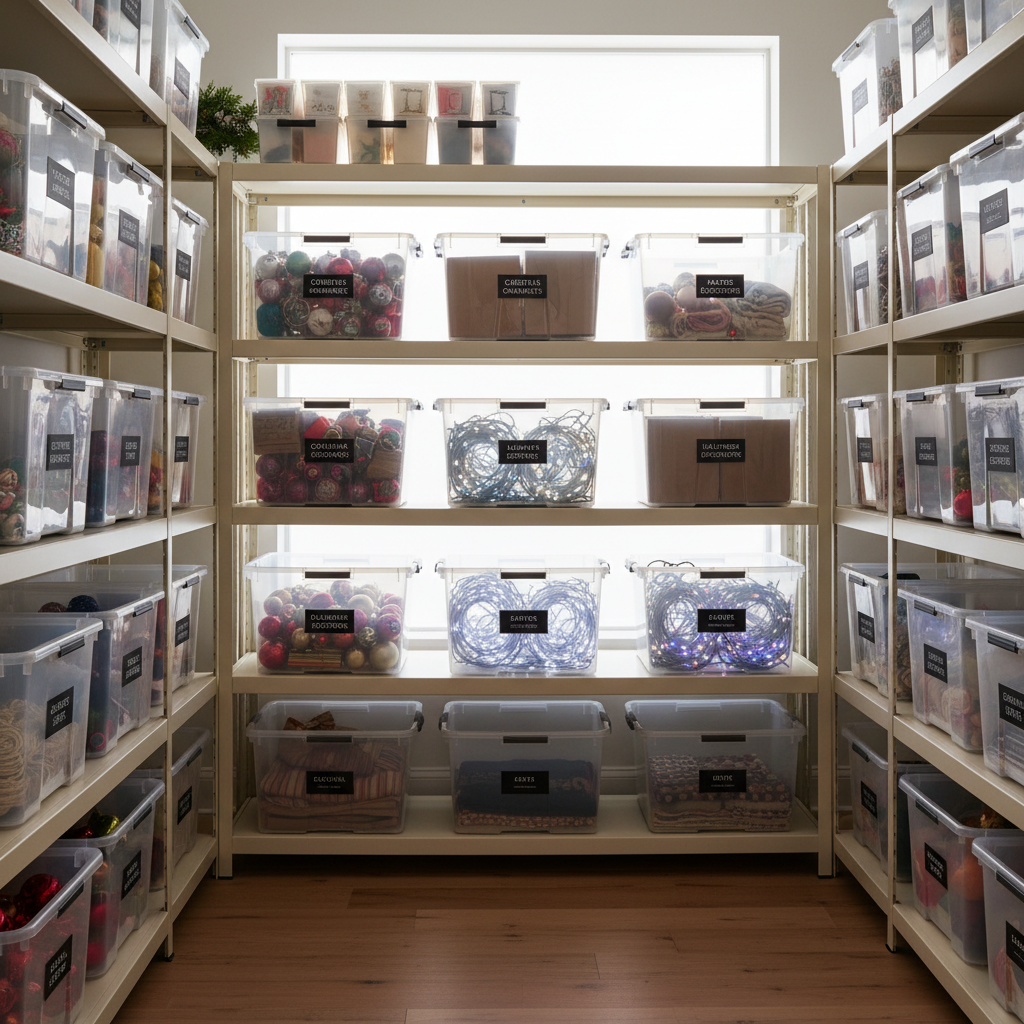
Storage containers work best when they fit your home’s real constraints: attic heat, a damp basement corner, a narrow closet shelf. The “best” bin is the one you’ll actually lift, close, stack, and find later.
According to FEMA, keeping boxes and stored items elevated can help reduce damage in areas prone to flooding or water intrusion. If your basement ever gets damp, that matters.
Container decision table
| Storage spot | What works well | Watch-outs |
|---|---|---|
| Attic | Hard plastic totes with secure lids | Heat can warp cheap plastic; avoid candles and adhesives |
| Basement | Plastic totes, elevated on shelving | Humidity; consider desiccant packs for fabric items |
| Garage | Stackable bins + labeled front-facing system | Temperature swings; pests can damage fabric and paper |
| Closet | Slim bins, garment bags for wreaths, clear shoe-box style for small items | Overstuffing makes it harder to keep organized next year |
If you’re torn between clear and opaque: clear helps you find things faster, opaque can look cleaner in a living space. A strong label makes either option workable.
Build a labeling system you can’t “accidentally ignore”
Labels fail when they’re too vague. “Christmas Decor” means nothing once you have three bins of it. The label should tell you what’s inside and where it goes.
Use this label format
- Holiday + Zone + Category
- Example: “Christmas | Living Room | Mantel”
- Example: “Halloween | Porch | Lights + Timer”
Small “must-label” items people forget
- Replacement bulbs and fuses
- Tree skirt clips, ornament hooks, zip ties
- Extension cords and outdoor-rated adapters
- Batteries (store safely; if unsure, ask your local hazardous waste program what they accept)
One practical trick: put a short setup note on the label, like “needs 2 AA batteries” or “pairs with red ribbon bin.” It feels picky now, and it saves you later.
Pack fragile and awkward items so they survive the off-season
Breakage usually comes from two things: empty space inside containers and heavy items sitting on fragile ones. Your goal is a snug fit without crushing anything.
Ornaments and glass pieces
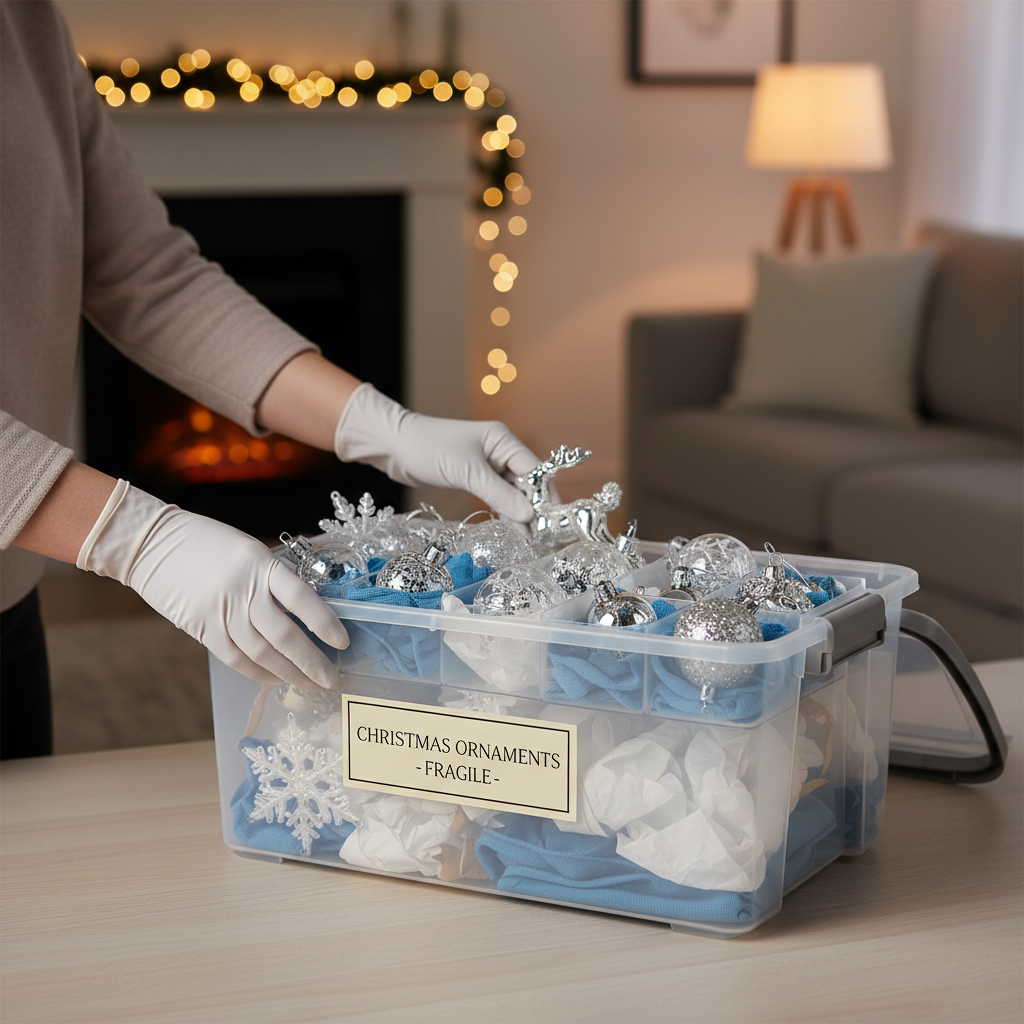
- Use divided trays, cardboard dividers, or individual cups; avoid letting ornaments roll
- Fill dead space with soft materials you already own (clean dish towels, microfiber cloths)
- Keep the heaviest layer on the bottom, even if it means splitting items across two bins
Wreaths, garlands, and greenery
- Wreaths do better in rigid containers or garment-style hanging bags
- Don’t compress wired garland too tightly, it tends to kink and shed
- If it’s flocked or glittered, isolate it so it doesn’t “snow” onto everything else
Holiday lights and cords
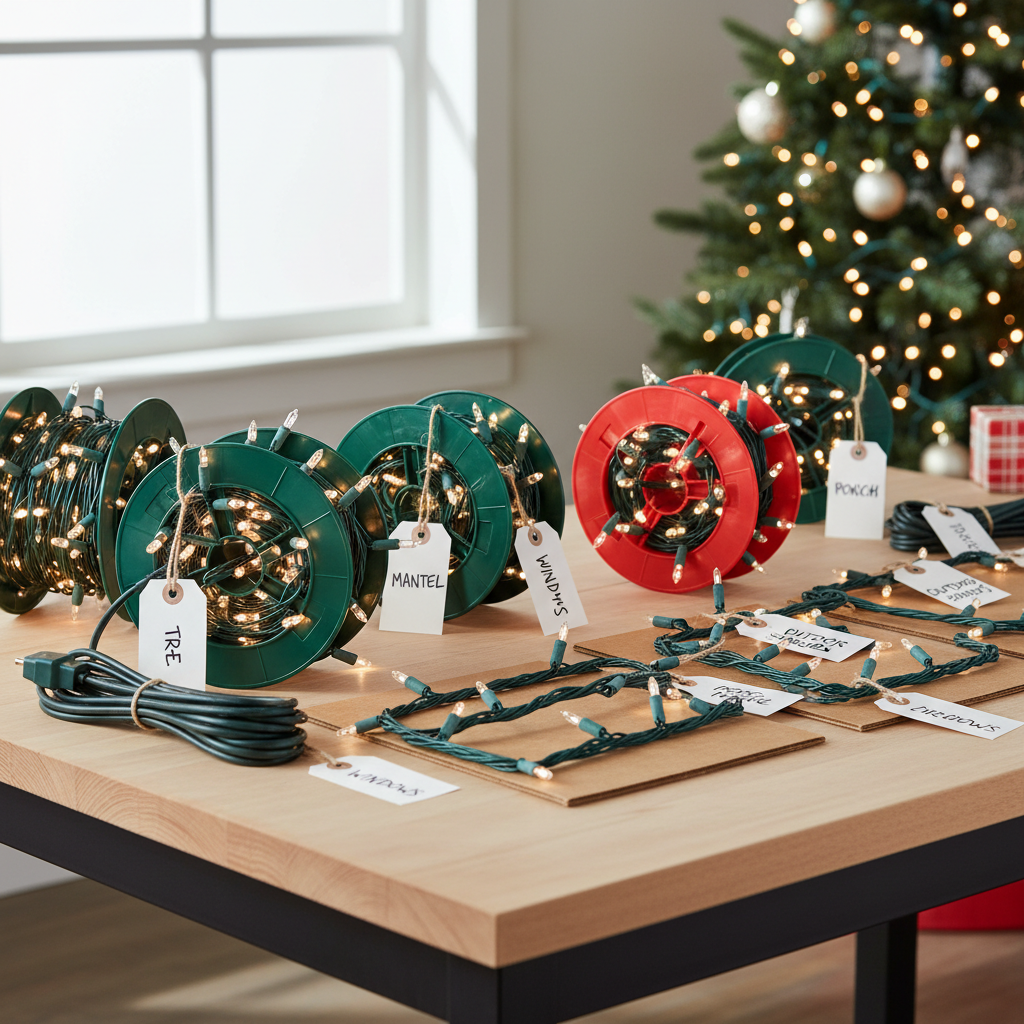
- Wrap each strand on a reel, cardboard, or dedicated winder
- Label by purpose: “tree top,” “banister,” “roofline,” not just color
- Keep timers and remote controls in the same pouch as the lights they control
A practical step-by-step plan for teardown day (the part everyone avoids)
Most systems fall apart because teardown happens when you’re tired. So the best plan has fewer decisions, not more.
Step 1: Set up three stations
- Keep: goes back into storage
- Donate: still usable, no longer your style
- Toss/Recycle: broken, unsafe, or beyond repair
According to IRS, you may be able to claim a deduction for charitable contributions if you itemize, and you’ll generally want records. If taxes matter in your situation, consider asking a tax professional.
Step 2: Pack by “next-year order”
- Put first-to-decorate zones on top or in the most accessible bin
- Group “tree day” supplies together: tree stand tools, skirt, lights, ornament hooks
- Create one small “Open First” box for each major holiday
Step 3: Do a 10-minute audit before lids go on
- Are labels readable from the front when stacked?
- Is anything heavy sitting on fragile items?
- Did cords and adapters end up in a random bin?
If you only do one audit item: make sure anything you need outdoors is grouped together. Outdoor setup is where people lose time and patience.
Common mistakes that quietly undo your whole system
- Overfilling bins: lids bow, stacks shift, items crack over time
- “Misc” boxes: they multiply, then you stop trusting your labels
- Storing candles or batteries in hot areas: temperature swings can cause leaks or warping; when in doubt, store in a more stable indoor spot
- Not separating kids’ crafts: sentimental items deserve their own bin so they don’t get crushed
- One giant light pile: it guarantees tangles next season, even if you swear you’ll “be careful”
Also, if you’re using your phone to track inventory, keep it simple. A note that says “Christmas: 6 bins total, tree bin has stand + hooks” beats a complicated spreadsheet you won’t update.
When it’s worth getting extra help (or changing the plan)
If organizing turns into a safety issue, it’s time to slow down and get support. Large attic ladders, heavy bins, or overloaded shelves can create real risk, especially if you’re lifting alone. If you’re unsure about safe storage weight limits, consider asking a qualified handyman, contractor, or organizer who works with garages and closets.
It’s also okay to change the “rules” if your household changed. New baby, smaller home, less time, or a different style often means you keep fewer items and store them closer to where you decorate.
Key takeaways
- Sort by holiday and by zone so you can decorate without opening every bin.
- Pick containers based on your storage environment, not aesthetics.
- Labels should say holiday, zone, and category, plus a short setup note when useful.
- Protect fragile items by removing empty space and controlling weight, not by over-wrapping everything.
- Make teardown easier than setup, or the system won’t stick.
Bottom line: a good storage system is the one you can repeat next year without thinking too hard. Choose one improvement you can do this weekend, like separating lights by location or creating an “Open First” box, then build from there.
If you want momentum, pick a date for a 30-minute reset after the holiday, put on a show or music, and aim for “organized enough to find things,” not perfection.
FAQ
- How do I organize holiday decorations in a small apartment?
Go zone-first and keep bins slim. Under-bed containers work well for flat decor, while one small “Open First” box prevents you from pulling everything out at once. - What’s the best way to store Christmas ornaments so they don’t break?
Use dividers and eliminate empty space so ornaments can’t roll. Avoid mixing heavy decor in the same layer as delicate pieces, even if that means using an extra bin. - How should I store string lights to avoid tangles?
Wrap each strand on a reel or cardboard, then label by where it goes. Keeping timers and remotes with the right strand prevents the “where did that adapter go?” problem. - Should I store holiday decorations in the attic or garage?
It depends on temperature swings and access. Attics can run hot, garages can vary a lot and invite pests, so sturdy sealed bins help in either space, and fragile items often do better inside the home. - How many storage bins should holiday decorations take?
There’s no universal number. A more helpful benchmark is whether you can decorate without opening “extra” bins; if you can’t, you likely need better grouping or fewer duplicates. - How do I decide what holiday decor to donate?
If you skipped it for two seasons, or it doesn’t fit your current space, it’s a good candidate. Keep what you truly use, and give sentimental pieces a dedicated bin so they stay protected. - What labels work best for holiday storage bins?
Big, readable labels on the front beat tiny labels on lids. Include holiday + zone + category, and add quick notes like battery type or “outdoor only” when it prevents mistakes.
If you’re trying to streamline how to organize holiday decorations but keep getting stuck on “what goes where,” it can help to map your zones and labels first, then buy only the containers you truly need so the system stays easy to maintain.