
How to decorate a coffee table comes down to one thing: making it look intentional while still leaving space for real life—remote controls, mugs, feet up on movie night.
If your table always feels either bare or messy, you’re not alone. Coffee tables sit in the busiest “drop zone” of the living room, so styling has to handle both visual balance and daily function.
This guide gives you a repeatable setup, quick ways to match your room style, and a few editing tricks designers use so the table looks finished, not fussy.
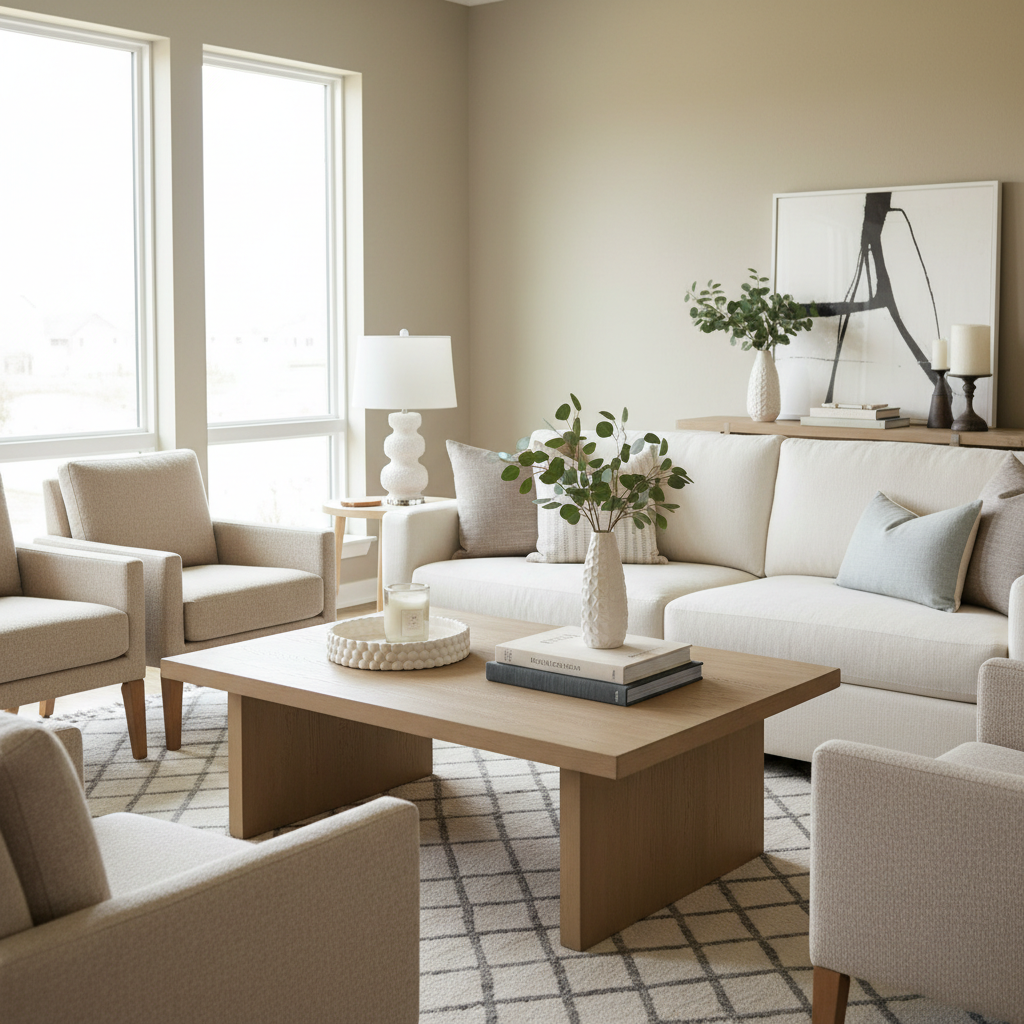
Start with function: what your coffee table needs to do
Before you shop or “style,” decide what the table is for in your home. This sounds obvious, but it’s where most setups break—people copy a photo that doesn’t match how they actually live.
- Entertaining-heavy homes: you need open surface area for drinks and snacks, plus coasters within reach.
- Family homes: prioritize rounded edges, wipeable materials, and a container for small clutter.
- Small apartments: the table often doubles as storage, dining, or work, so decor must stay compact and movable.
According to CPSC (U.S. Consumer Product Safety Commission), tip-over and furniture stability are real safety considerations in many households, especially with kids, so keep tall, heavy objects stable and avoid anything that can topple easily.
A simple formula that works in most rooms: tray + stack + organic
If you only remember one method for how to decorate a coffee table, use this trio. It reads “styled,” but it’s forgiving and easy to reset.
1) A tray to corral the chaos
A tray creates a visual boundary, and it also gives you a fast cleanup move when company shows up. Rectangular trays suit most tables; round trays soften boxy rooms.
- Choose a tray that fills roughly 1/3 to 1/2 of the table top.
- Materials that hide wear well: wood, rattan, matte metal, stone-look resin.
2) A stack for height and structure
Use 2–3 coffee table books (or a low box) as a platform. This is the easiest way to vary height without cluttering the whole surface.
- Pick books tied to your interests: travel, design, cooking, sports—anything feels more personal than random titles.
- Keep the stack low enough that it won’t block sight lines across the sofa.
3) Something organic to keep it from feeling stiff
Greenery, branches, a small bowl of citrus, or even a sculptural wood object adds texture that most living rooms need.
- If you go with flowers, use a low vase so conversations stay easy.
- If you use faux stems, pick fewer, higher-quality pieces rather than a big plastic-looking bunch.
Scale and proportion: the “see it from the couch” test
Most coffee tables look off for one of two reasons: everything is too tiny, or everything is the same height. A quick check from seated eye level fixes a lot.
- Vary heights: mix low (tray, book stack) with medium (bowl, candle) and one taller accent (vase, small sculpture).
- Mind the footprint: leave at least one clear zone for setting down a drink.
- Keep a “hand path”: if you constantly have to move decor to use the table, the styling won’t last.
A good rule is to cap your tallest piece around 10–14 inches in many living rooms, but ceiling height, sofa height, and table size can change that—trust the couch-view test more than the number.
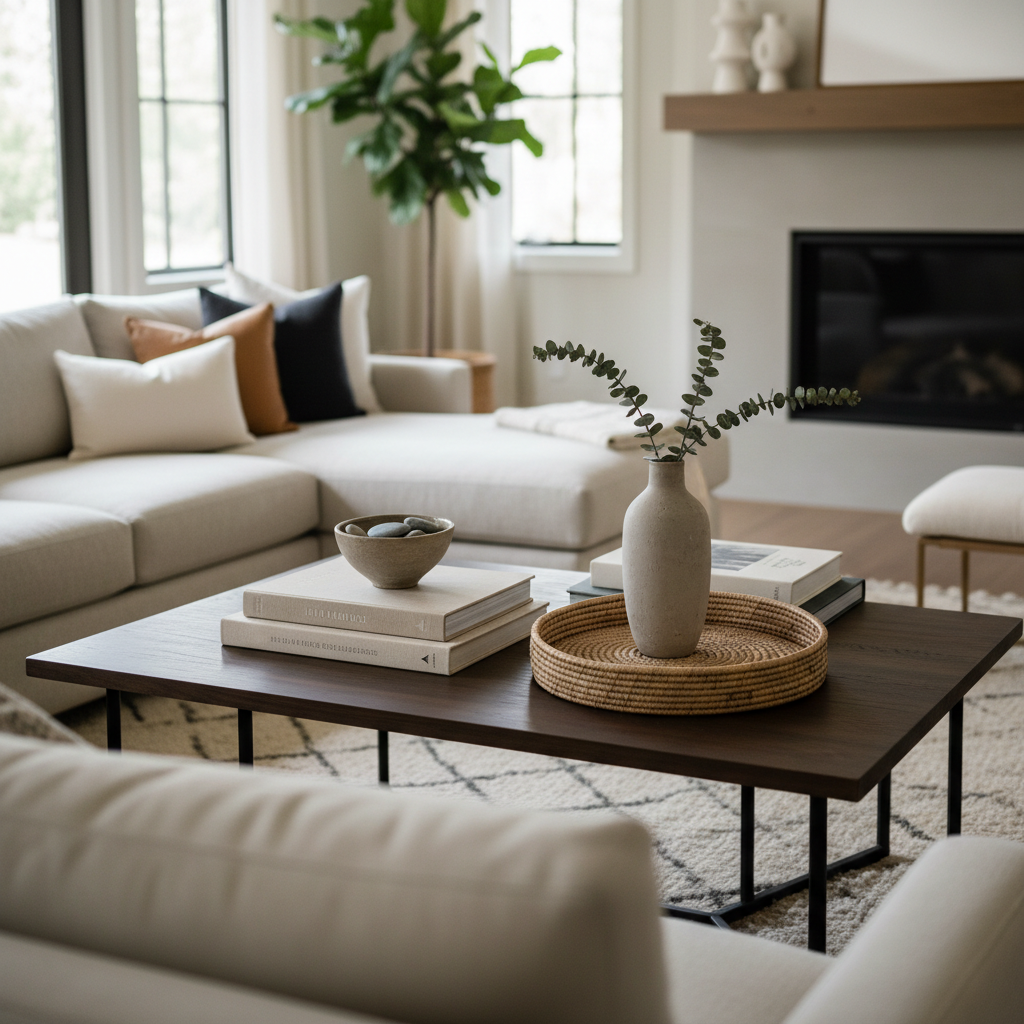
Pick a “style lane” so your pieces stop fighting each other
When a coffee table looks random, it’s usually a mix of materials and eras with no clear lead. You don’t need a strict theme, just one consistent direction.
| Room style | What to use on the coffee table | What to avoid |
|---|---|---|
| Modern / Minimal | Matte tray, 1 sculptural object, 1 book stack, simple greenery | Too many small knickknacks |
| Coastal | Light wood/rattan tray, coral-inspired shapes, pale ceramics, linen coasters | Overly themed “beach” signs |
| Farmhouse | Wood tray, vintage-looking vase, candle in glass, soft textures | Too much distressed text everywhere |
| Traditional | Symmetry-friendly pairings, classic books, brass accents, floral arrangement | Ultra-trendy pieces that feel out of place |
| Eclectic | One repeating color, mixed materials, art object + books + plant | No repeat elements at all |
If you’re unsure, repeat one finish twice (black, brass, walnut) and one color twice (cream, green, rust). Repetition is what makes “collected” look intentional.
Quick self-check: are you styling or just filling space?
Use this short checklist before you buy one more candle.
- Everything is centered and the table looks flat → you likely need asymmetry and height variation.
- Lots of small items that never feel “done” → you need fewer, larger anchors like a tray or bowl.
- No room for drinks → you need an empty zone, or a tray that can slide aside.
- It looks good in photos but annoys you daily → your setup ignores function, swap to closed storage or one movable centerpiece.
Practical truth: the best-looking tables usually have less on them than you think, just better-sized pieces.
Step-by-step setups for common coffee table shapes
If you want a clear recipe, these layouts tend to work across many homes. Adjust scale up or down based on table size.
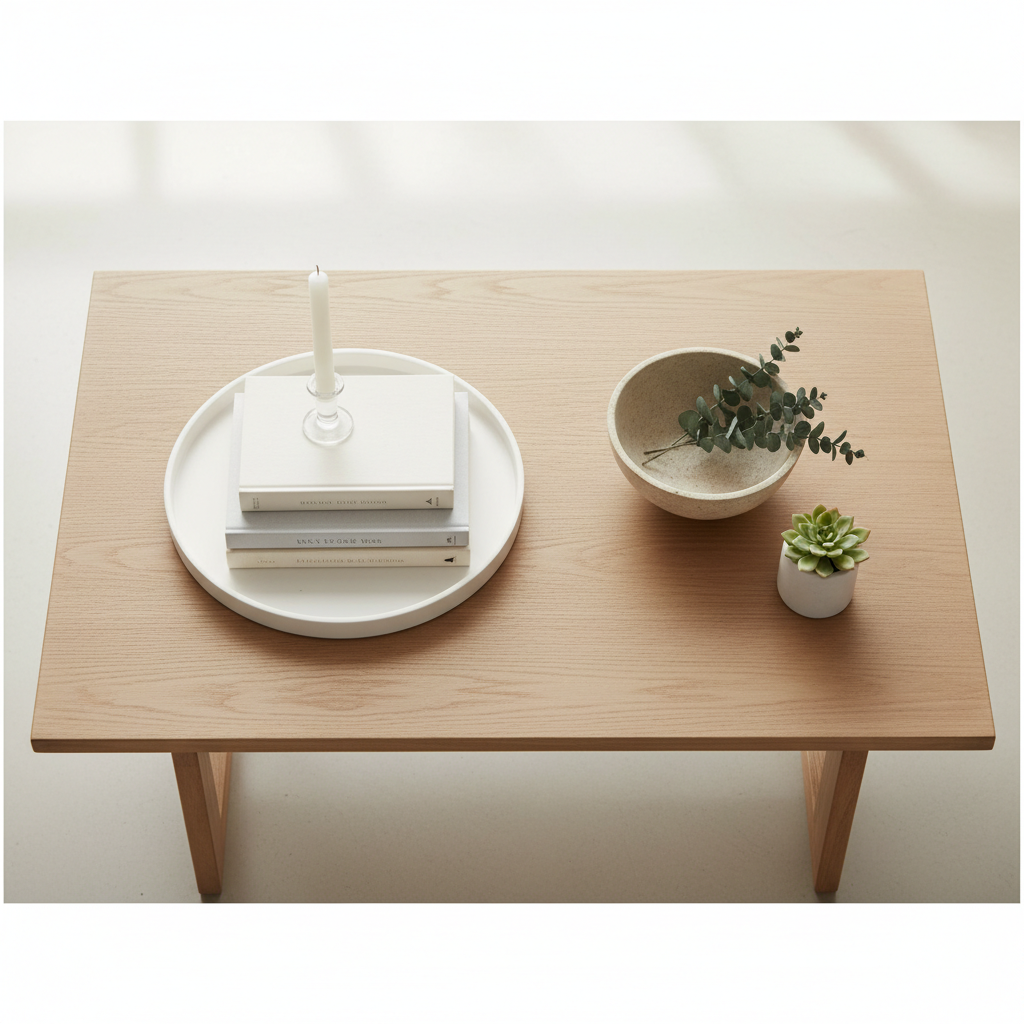
Rectangle coffee table
- Place a tray slightly off-center.
- On the tray: book stack + small object (candle or sculptural piece).
- Off the tray: one bowl or low vase on the opposite side to balance.
Round coffee table
- Use a round tray or skip the tray and build a triangle with three items.
- Try: low plant + book stack + small bowl, with different heights.
Square coffee table
- Go with a larger tray centered, then keep everything inside it for order.
- If you prefer symmetry: do two matching items (like candlesticks) plus one organic element.
Ottoman used as a coffee table
- Use a firm tray with handles so it’s stable.
- Keep decor low and soft-edged; avoid anything tippy.
Common mistakes (and the easy fixes that actually stick)
Most “coffee table styling problems” are editing problems. You don’t need more decor, you need a tighter set of rules.
- Mistake: Too many tiny objects. Fix: swap five small pieces for one medium bowl or one larger vase.
- Mistake: Everything matches too perfectly. Fix: add one contrasting texture like woven rattan, stone, or ribbed glass.
- Mistake: No personal touch. Fix: one item with meaning, a travel book, a small art object, or a framed photo in a low profile frame.
- Mistake: Candles everywhere. Fix: keep one candle, and add a different “soft” element like a ceramic piece or greenery.
Key takeaways: Anchor with one container, vary heights, repeat a finish, and always leave usable space.
When it makes sense to get extra help
If you keep buying decor and the room still feels off, the coffee table may not be the real issue. In many cases it’s scale, rug size, or furniture spacing, and styling can’t fully solve that.
- If your table is too large or too small for the seating area, consider a different size or shape.
- If safety is a concern (kids, pets, mobility needs), it may be worth asking a local interior designer or home organizer for suggestions that fit your routines.
- If you have expensive surfaces (marble, high-gloss), check care guidance from the manufacturer, or consult a professional for product recommendations to avoid etching or discoloration.
Conclusion: make it styled, then make it livable
If you’re figuring out how to decorate a coffee table, aim for a setup you can reset in 20 seconds. A tray for control, a stack for structure, and one organic element for life usually gets you 80% of the way there.
Pick one layout from above, remove one extra item you don’t truly love, then do the couch-view test tonight. Small edits add up fast, and your living room will feel calmer without trying too hard.