
How to choose right area rug size comes down to one thing: deciding what you want the rug to “hold together” in the room—just a coffee table, the full seating area, or even the entire furniture grouping.
If you’ve ever ordered a rug that looked generous online but arrived feeling like a bathmat in your living room, you’re not alone. Rug size changes the whole layout: it can make a room feel anchored and intentional, or oddly floating and unfinished.
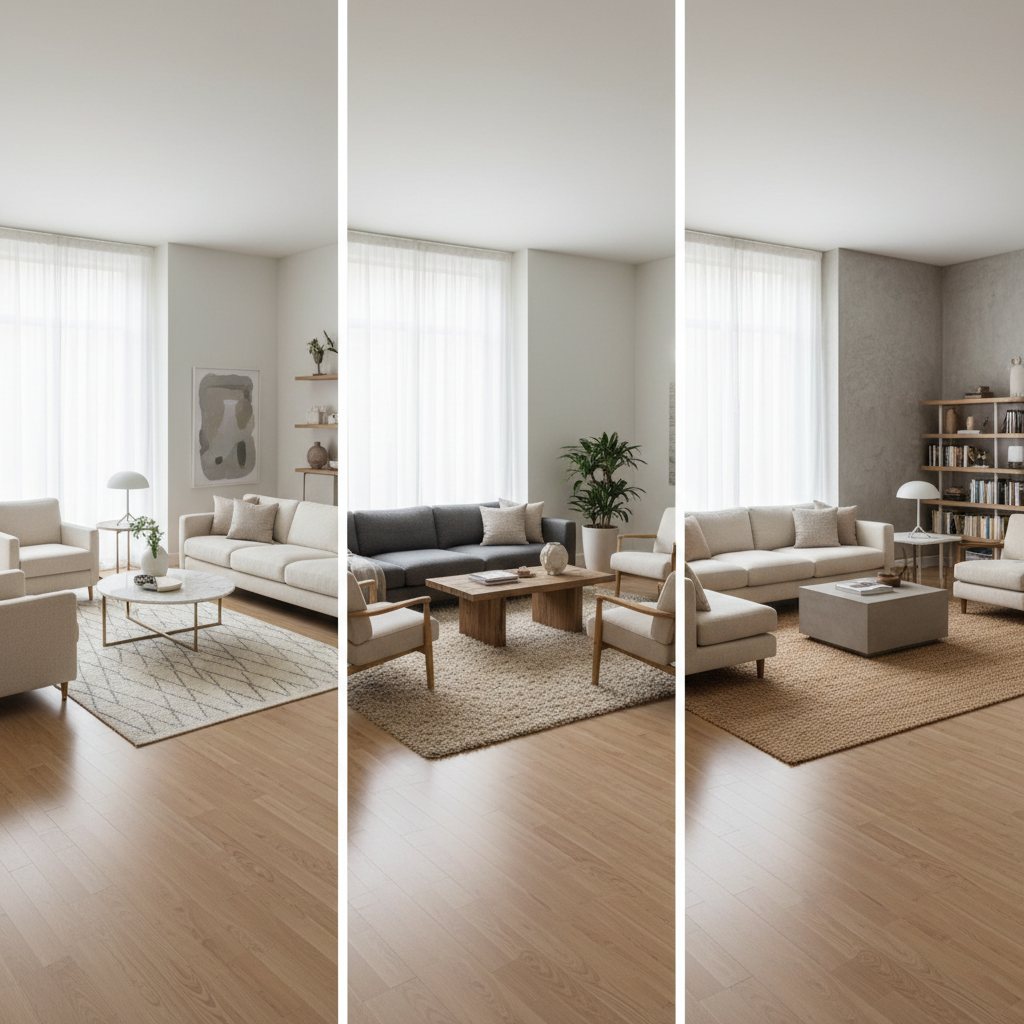
This guide gives you practical rules that designers use, a fast measuring checklist, and a room-by-room sizing table. You’ll also see common “almost right” mistakes that lead to returns, bunching, or awkward traffic paths.
Start with the anchor: what should the rug connect?
Before you measure, pick the role of the rug. This prevents the most common error: choosing a size based only on what fits the empty floor, not what fits the furniture layout you actually live with.
- Conversation zone: The rug ties sofa and chairs into one group, usually the most polished look.
- Table zone: The rug frames a coffee table or dining table, but may not include all furniture legs.
- Room zone: The rug visually “fills” the room while leaving a consistent border of flooring around it.
In many homes, the conversation zone works best because it reads finished without demanding wall-to-wall coverage.
Measure like you mean it: a quick checklist that saves returns
You don’t need fancy tools, but you do need a plan. Painter’s tape on the floor is the easiest way to see proportion before you buy.
5-minute rug sizing checklist
- Measure the seating or dining area first, not the whole room.
- Decide if front legs only or all legs will sit on the rug.
- Mark the rug outline with tape and walk the main traffic path.
- Leave a border of visible floor; many rooms look balanced with 8–18 inches of floor showing, but it varies by room size.
- Check door clearance if the rug sits near an entry or swing door.
According to the American Society of Interior Designers (ASID), scale and proportion are core principles of interior design—so a rug that’s slightly larger than you think often looks more “right” once furniture is in place.
Room-by-room area rug size chart (quick reference)
Use this as a starting point, then confirm with your tape layout. If you’re between sizes, the larger option usually reads more intentional—assuming it doesn’t block doors or create a tripping edge.
| Room | Common Rug Sizes | What it should cover |
|---|---|---|
| Living room | 5x8, 8x10, 9x12 | At least front legs of sofa/chairs; ideally all main seating legs |
| Dining room | 6x9, 8x10, 9x12 | Table + chairs fully on rug, even when chairs are pulled out |
| Bedroom (queen) | 8x10, 9x12 | Rug extends beyond sides/foot of bed for comfortable step-down |
| Bedroom (king) | 9x12, 10x14 | More side coverage; avoids “postage stamp” look under bed |
| Entryway | 2x3, 3x5, runners | Fits door swing and catches debris without bunching |
| Hallway | 2.5x8, 2.5x10, 3x12 | Centered runner with breathing room along edges |
Living room rug sizing: three layouts that actually work
Living rooms are where people most often misjudge scale because furniture “floats” more than it does in other rooms. Here are the three setups that tend to look best in real homes.
1) All legs on (most cohesive)
- Choose a rug large enough for the sofa and accent chairs to sit fully on it.
- Works well in open-plan spaces where you want a clear zone.
2) Front legs on (most common and flexible)
- Front legs of sofa and chairs sit on the rug, back legs off.
- Good balance of cost and visual impact, especially with 8x10 in many average rooms.
3) Coffee-table-only (use with caution)
- Rug sits under coffee table only, furniture legs off.
- Can work in very small rooms, but often looks undersized if there’s any extra floor space.
If you’re stuck, this is the practical rule: when you’re learning how to choose right area rug size for a living room, prioritize getting at least the front legs of key seating on the rug.
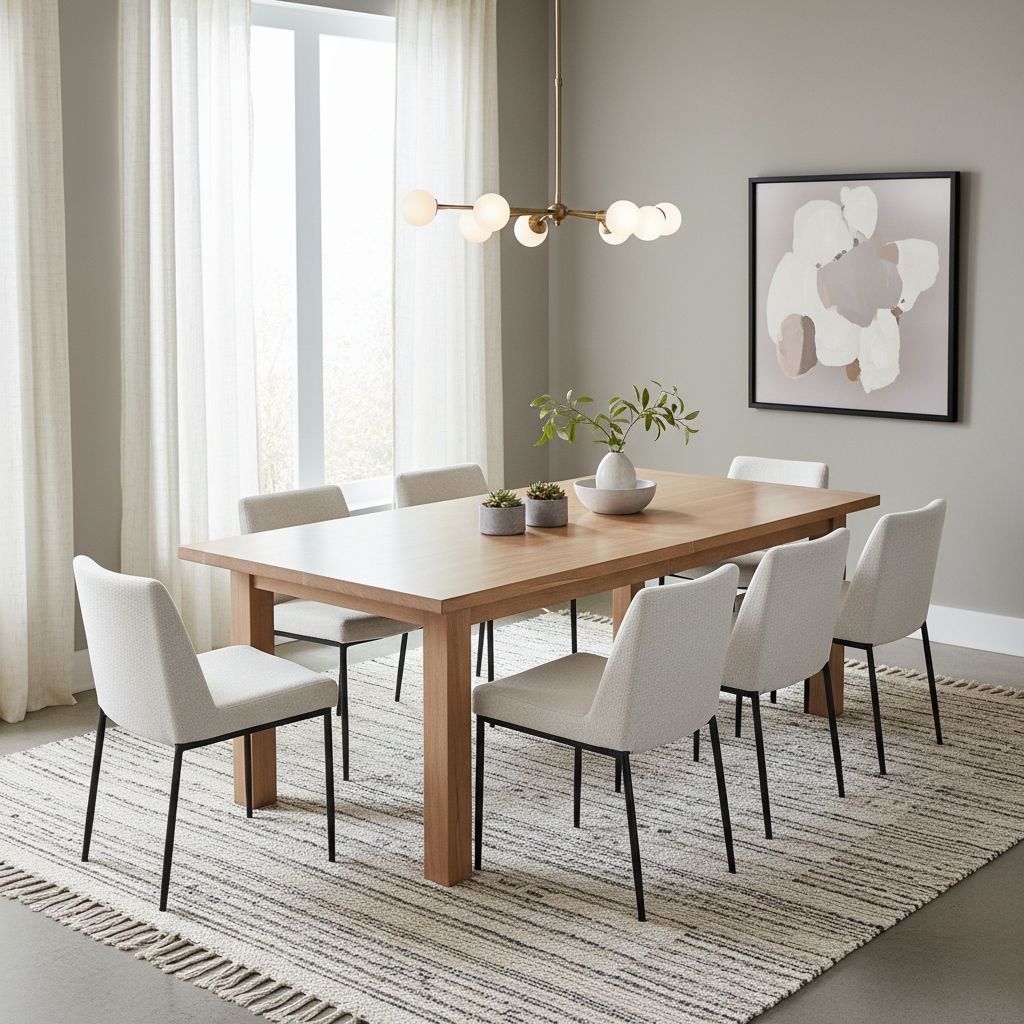
Dining room rug sizing: the “pulled-out chair” test
Dining rugs fail when chairs catch on the edge. It’s annoying, loud, and it chews up rug edges over time.
- Measure your table, then add 24–30 inches on all sides so most chairs stay on the rug when pulled out.
- If space is tight, still aim for enough depth behind the most-used chairs, usually the ends of the table.
- Flatweaves or low pile often slide more easily under chair legs than thick shag styles.
According to the National Wood Flooring Association (NWFA), using protective pads can help reduce scratches and wear on wood floors—worth considering under dining chairs, especially if you choose a larger rug that sees constant movement.
Bedroom rug sizing: what you feel matters more than what you see
Bedrooms are about the first step in the morning. A rug that looks fine from the doorway can still feel wrong if your feet land on cold floor on one side.
Common bedroom approaches
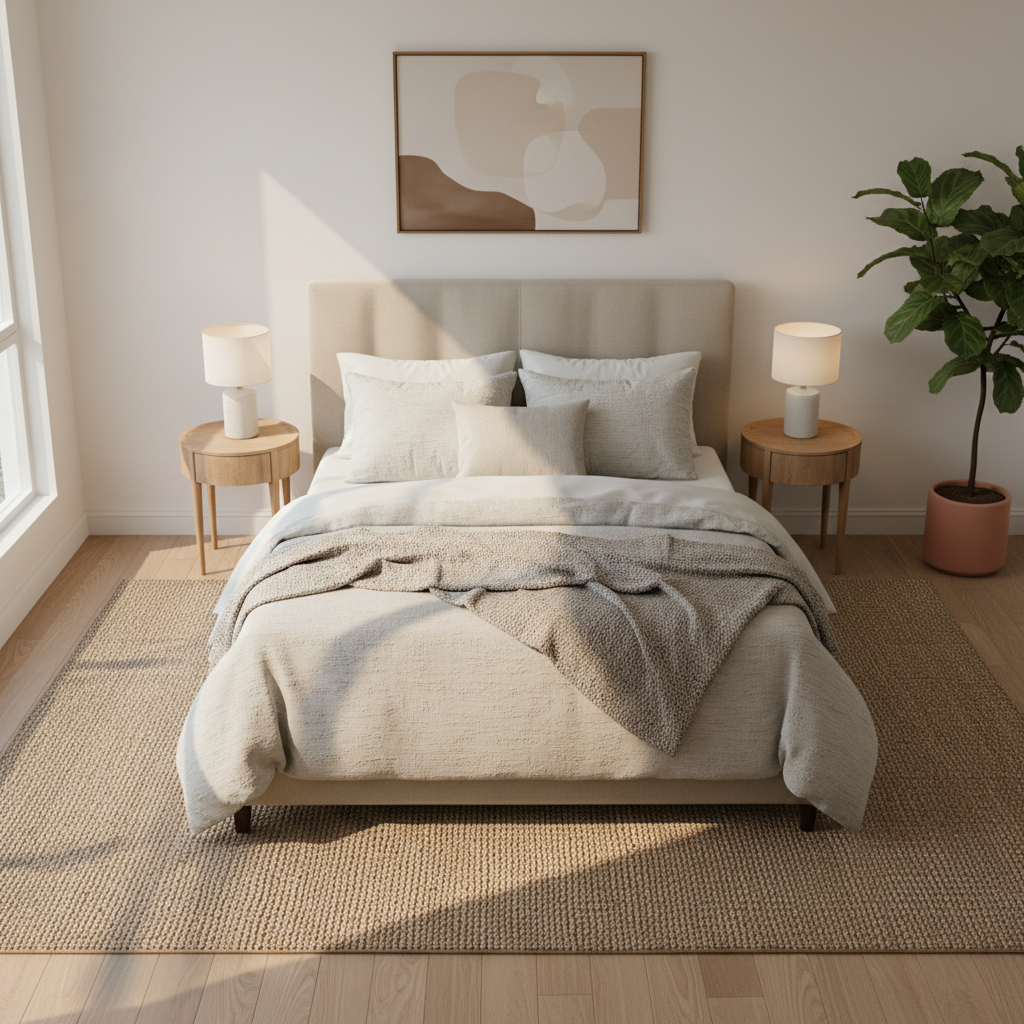
- Large rug under bed: An 8x10 under a queen often gives a comfortable border; a king often looks better with 9x12 or larger.
- Two runners: Place one on each side of the bed if you want a lighter look or easier cleaning.
- Rug at the foot: Works when space is tight, but it won’t solve cold-side problems.
Quick self-check: if you can stand up from bed and take one full step without missing the rug on either side, your size is probably in the right range.
Runners, entryways, and awkward spaces: sizing rules that prevent trips
Smaller rugs cause different problems: curling corners, door interference, and narrow paths that feel cramped.
- Entryway: Pick a size that allows the door to swing freely; if the door drags, the rug will shift and curl.
- Hallway runner: Keep it centered, and leave visible floor on both sides so it looks intentional, not wall-to-wall carpet.
- Kitchen runner: Favor washable, lower-pile options and use a quality rug pad to reduce sliding.
Safety note: rugs that slip can increase fall risk. If edges curl or the rug shifts, a non-slip pad usually helps, but in some flooring situations you may want advice from a flooring professional.
Common mistakes (and the small fixes that make a big difference)
- Buying too small to “save money”: In many rooms, the undersized rug looks accidental; going one size up often looks more refined.
- Ignoring rug pad thickness: A thick pad can affect door clearance and create a lip at the edge.
- Not matching rug shape to layout: Rectangles fit most seating groups; rounds can work, but they often need more open space around them.
- Centering the rug on the room, not the furniture: Center on the main grouping, even if the room is asymmetrical.
Key takeaways: Tape your layout, aim to capture furniture legs when possible, and test the traffic path before ordering. That’s the simplest way to practice how to choose right area rug size without relying on guesswork.
Practical step-by-step: choose a rug size in 15 minutes
- Sketch your room and mark furniture sizes (rough is fine).
- Pick your anchor goal: conversation zone, table zone, or room zone.
- Tape two candidate sizes on the floor, then take photos from the doorway and seating position.
- Check doors, drawers, and high-traffic paths.
- If you’re between sizes, choose the larger one unless it creates clearance issues.
If you do those five things, you’re usually past the hardest part, and the rest becomes style and material preference.
Conclusion: the “right” rug size is the one that supports how you use the room
The best rug size rarely comes from a single rule, it comes from a quick plan: decide what the rug should connect, tape the outline, and make sure furniture and traffic flow feel natural. If you’re making one upgrade that changes a room fast, getting the size right often beats chasing a trend.
If you want a simple next step, pick one room, tape an 8x10 or 9x12 outline (for many living rooms), and see how quickly the space feels calmer and more intentional.
FAQ
How do I choose an area rug size for a small living room without making it feel crowded?
Try the “front legs on” layout and keep a consistent border of visible floor. A rug that’s slightly larger than expected often makes the room feel bigger because the seating reads as one zone.
What size rug should go under a sectional?
In many cases, size the rug so the front legs of the sectional (and any chair) sit on it, and the rug extends past the chaise. Tape the outline first because sectionals vary a lot by depth.
Should my dining room rug be bigger than the table?
Usually yes. The practical standard is allowing chairs to slide out while staying on the rug, often by adding 24–30 inches around the tabletop dimensions.
Is it okay if the rug touches the wall?
It can be, but many rooms look more balanced with a visible flooring border. If the rug touches one wall because of the layout, try to keep other edges consistent so it doesn’t feel off-center.
How do I choose the right rug size for a queen bed?
An 8x10 is a common starting point for a queen if you want coverage on the sides and foot. If the room is tight, two runners can be a clean, practical alternative.
What’s the best rug size for an entryway?
Measure the clear floor area and confirm the door swing. The “best” size is the one that lies flat, clears the door, and gives you enough landing space to step in comfortably.
Do I need a rug pad, and does it affect sizing?
A rug pad is often helpful for grip and comfort, but thickness matters. If your rug sits near doors, choose a lower-profile pad so the door doesn’t catch.
If you’re still debating sizes, a fast way to get unstuck is to pick two candidate dimensions and test them with painter’s tape, then choose based on how the furniture grouping looks in photos. If you need a more hands-off option, some retailers and interior services offer sizing guidance from your room measurements, which can reduce the back-and-forth of ordering and returning.