
how to arrange throw pillows sofa is mostly about two things: scale and restraint, and once you get those right, almost any color or pattern combo starts to look intentional.
If you have ever bought cute pillows and still ended up with a couch that feels messy, flat, or weirdly “showroom,” you are not alone, the issue is usually arrangement, not the pillows themselves.
This guide gives you a few reliable layouts, a quick way to choose sizes, and small styling tricks that make the whole setup feel finished, without turning your sofa into a pile you have to move every time you sit down.
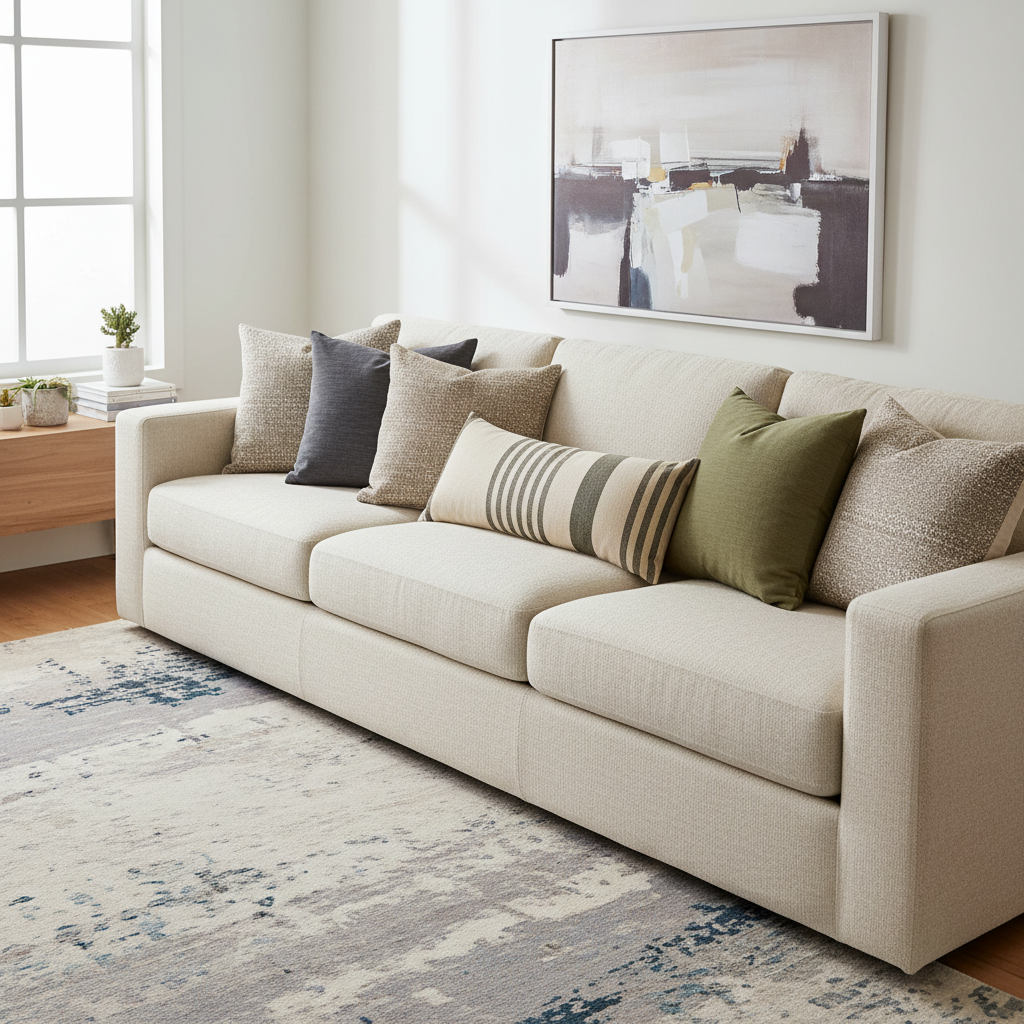
Why pillows look “off” on a sofa (even when they’re cute)
Most pillow problems come down to a few repeat mistakes, the kind you only notice after living with the setup for a week.
- Everything is the same size, which makes the arrangement look stiff, like a grid.
- Pillows are too small for the sofa, especially on deep-seat sectionals where 18-inch pillows disappear.
- Too many competing patterns, so your eye cannot find a “resting place.”
- No anchor color, meaning nothing ties the group back to the sofa, rug, or curtains.
- Overstuffed or underfilled inserts, creating either awkward bulges or limp corners.
One more that people rarely say out loud, the arrangement has to match how you actually use the couch. A formal five-pillow setup in a house with movie nights and naps can feel like a daily chore.
A quick self-check: what does your sofa really need?
Before you copy a Pinterest layout, take ten seconds and decide what you want pillows to do in your room. This small decision keeps you from buying “pretty but wrong” pieces.
Use this checklist
- Support: You lean, read, or lounge, so you want at least one pillow per corner that feels good behind your back.
- Style: The sofa looks plain, so you want color, texture, and a focal point.
- Camouflage: You want to soften worn upholstery, pet hair, or a bold sofa color.
- Low-maintenance: You do not want to re-fluff daily, so fewer, larger pillows usually win.
If your main goal is comfort, prioritize size and insert quality. If your main goal is visual polish, prioritize contrast and a clear “hero” pillow.
The easiest formulas for any couch (pick one and commit)
If you are stuck, stop improvising and use a formula. Most “effortless” living room photos are just a basic layout with good proportions.
Formula A: The Classic Pair + Accent (works for most sofas)
- Two matching 22x22 or 20x20 pillows, one on each end
- One lumbar pillow (about 12x20 to 14x22) centered or offset
This setup reads clean and adult, and it’s easy to reset.
Formula B: The Layered Corner Stack (best for deeper sofas)
- Back pillow: 22x22 to 24x24
- Front pillow: 20x20
- Optional lumbar in front for a tailored look
Layering creates depth without needing lots of patterns. It also helps when you are learning how to arrange throw pillows sofa for a larger, more modern couch.
Formula C: The “3 on one side” casual look (for sectional ends or chaise)
- One larger square
- One medium square
- One lumbar or round pillow
This intentionally unbalanced layout can look relaxed, but keep your colors tighter so it does not feel random.
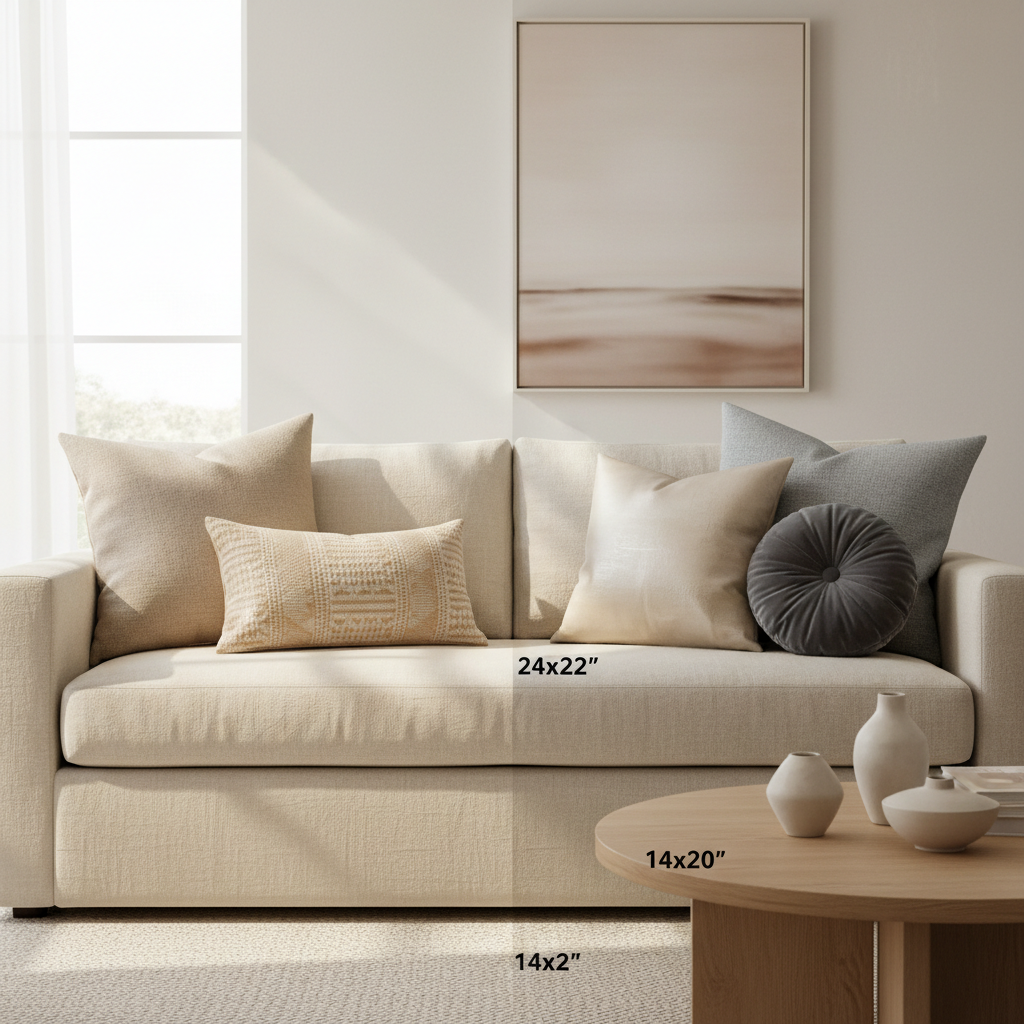
Choose the right pillow sizes and counts (simple guide + table)
Size is the quiet factor that makes everything else work. If your pillows look “cute” but not “designed,” they are often undersized for the sofa.
According to American Home Furnishings Alliance (AHFA), upholstery dimensions and comfort are closely tied to how furniture is used in daily life, which is a fancy way of saying your sofa’s scale should drive accessory choices too.
General sizing guidelines
- Standard sofas (72–90 in.) often look best with 20x20 or 22x22 squares.
- Deep-seat or oversized sofas can handle 22x22, 24x24, plus a lumbar.
- Loveseats usually need fewer pillows, often 18x18 to 20x20, or one square + one lumbar.
Pillow count and size cheat sheet
| Sofa type | Easy “looks good” pillow count | Suggested sizes | Best layout starter |
|---|---|---|---|
| Loveseat | 2–3 | 18x18 or 20x20 + 12x20 lumbar | Formula A |
| Standard 3-seat sofa | 3–5 | 20x20 or 22x22 + lumbar | Formula A or B |
| Deep-seat / modern sofa | 4–6 | 22x22 to 24x24 + 20x20 + lumbar | Formula B |
| Sectional (L-shape) | 5–7 | Mix of 22x22, 20x20, lumbar | B on corners + C on chaise end |
A practical rule: if you regularly remove pillows to sit down, you probably have one or two too many. A styled sofa should still be a usable sofa.
Color and pattern: how to mix without chaos
You do not need designer instincts, you need a couple guardrails. When people ask how to arrange throw pillows sofa and make it look “pulled together,” they are usually asking about color balance.
A reliable 60/30/10 approach (adapted for pillows)
- 60% quiet solids or subtle textures that relate to the sofa or rug
- 30% secondary color, often pulled from artwork, curtains, or a throw
- 10% small “pop,” a bolder pattern or brighter accent
Pattern mixing that rarely fails
- One large-scale pattern (big floral, oversized geometric)
- One medium pattern (stripe, check)
- One solid or textured piece (bouclé, linen, velvet)
If your sofa is already loud, treat pillows like editing, not adding. A few solid textures can look more expensive than another busy print.
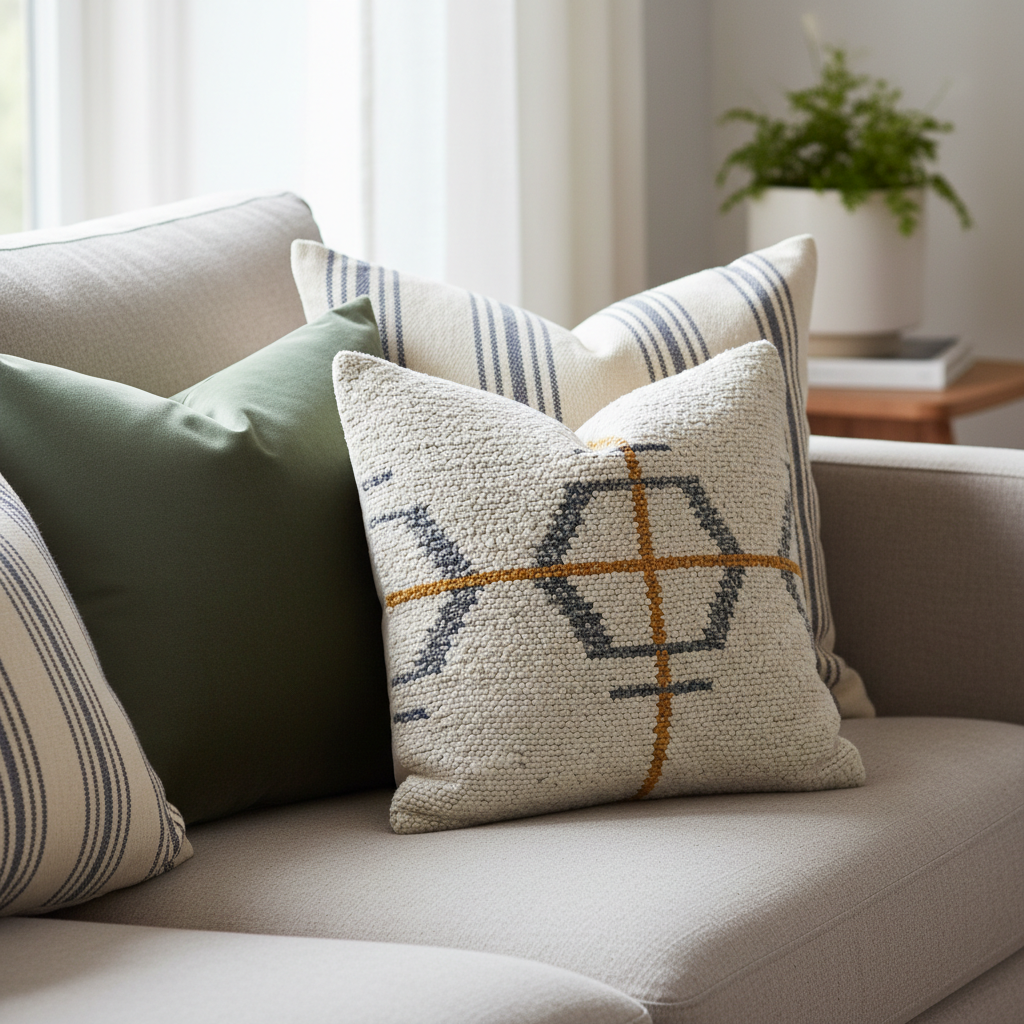
Step-by-step: style your sofa in 10 minutes
This is the fastest workflow that keeps you from overthinking. It is also easy to repeat when you swap pillows seasonally.
- Start with your largest pillows on the ends or corners, they set the frame.
- Add the second layer slightly in front and a little inward, so the back pillow still shows.
- Place the lumbar last, centered for a tidy look, or slightly off-center for casual.
- Do one “distance check”, stand 6–8 feet away and look for one thing: do the pillows read as a group.
- Fix the worst offender, usually it is size (too small) or contrast (too similar).
If you want a clean finish, align the bottom corners along the seat line. If you want relaxed, let the top edges stagger a bit. Both can look good, just do it on purpose.
Common mistakes and small fixes that make a big difference
Most “meh” pillow setups are one small tweak away from looking right.
Mistakes I see a lot
- Too many tiny pillows, swap two small squares for one larger square and a lumbar.
- No texture, add one nubby or woven cover so neutrals do not look flat.
- All pillows perfectly upright, loosen one corner stack so it feels lived-in.
- Ignoring inserts, a cover can look high-end, but a saggy insert gives it away.
Quick upgrade: covers + inserts
- For a fuller look, many stylists size inserts 1–2 inches larger than the cover, though fabric type matters and overstuffing can stress seams.
- If allergies are a concern, you may prefer synthetic inserts, and if you have sensitivities it can be worth asking a retailer or a home pro about fill options.
And yes, the “karate chop” crease can look tailored on some fabrics, but it is not required. A natural fluff often looks more current in casual rooms.
When it’s worth getting extra help (or simplifying)
If you have tried three different pillow sets and nothing works, that usually points to a larger mismatch: the rug scale, the wall art, or the sofa color undertone may be fighting the pillows.
- Consider a quick consult with an interior designer or stylist if you are furnishing a whole room and want fewer returns.
- Simplify on purpose if your household is busy, two great pillows and one throw can look better than seven “almost right” pieces.
According to American Society of Interior Designers (ASID), good design supports well-being and daily function, which is a useful reminder here: pillows are decoration, but they should not get in the way of comfort.
Key takeaways + a simple plan for tonight
If your sofa looks unfinished, do not start by buying more. Start by making the sizes make sense, then choose one layout and keep the palette tight.
- Pick a formula (A, B, or C) and match pillow sizes to sofa scale.
- Use one anchor color pulled from the room, then add one controlled “pop.”
- Edit ruthlessly, a comfortable couch beats a perfect photo.
If you want one action step, remove every pillow, put back only the largest pair, then rebuild from there. That reset solves more than you would expect.
FAQ
How many throw pillows should be on a sofa?
Many standard sofas look balanced with 3–5 pillows, while sectionals often handle 5–7. If you keep moving pillows to sit down, scale back.
How do I arrange throw pillows on a sofa without it looking cluttered?
Use fewer, larger pillows and stick to one clear layout. A pair on the ends plus one lumbar is a clean starting point, and it is easy to maintain.
What size throw pillows look best on a standard couch?
20x20 and 22x22 are common sweet spots for U.S. sofas. If your couch is deep or oversized, going up to 24x24 can look more proportional.
Should throw pillows match the sofa color?
Not exactly match, but relate. Pull one tone from the sofa or rug, then add contrast through texture or a secondary accent color so the pillows do not disappear.
How do I mix patterns on couch pillows without it feeling busy?
Limit yourself to one bold pattern, one simpler pattern like a stripe, and at least one solid or textured pillow. Keeping colors consistent does most of the work.
How to arrange throw pillows sofa for a sectional with a chaise?
Style the two main corners with layered stacks, then treat the chaise end as its own mini-moment with a three-pillow cluster. Keep at least one pillow style repeated to connect both sides.
What’s the easiest way to make cheap pillows look nicer?
Upgrading inserts and adding one textured cover usually makes the biggest visual difference. Even a simple linen or woven fabric can read more elevated than a flat print.
If you’re trying to refresh a living room without replacing the sofa, start with a single layout and a tight palette, then swap covers seasonally as needed, it is usually the most budget-friendly way to keep the space feeling new without creating clutter.