
how to make a small entryway look inviting usually comes down to three things: less visual noise, better light, and one clear “welcome” moment when you walk in.
If your entry feels cramped, it’s rarely because you need a bigger foyer, it’s because every inch is doing too many jobs at once. Shoes pile up, bags land on the closest surface, lighting stays flat, and suddenly the first thing you see is stress.
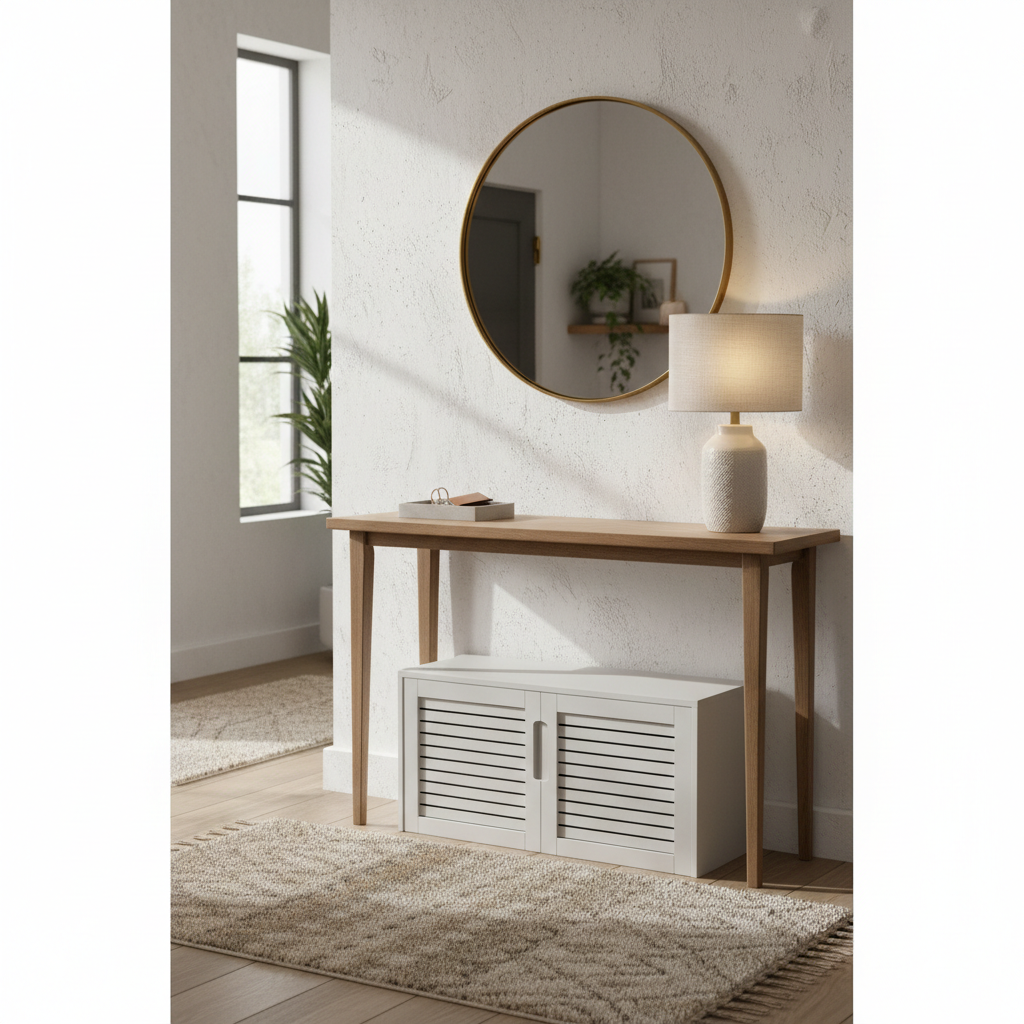
The good news is that small entryways respond fast to small changes. You don’t need a full remodel, you need a plan: what must live here, what should be hidden, and what detail signals “you’re home.”
Start with function: decide what your entryway must do
Before you buy baskets or hooks, decide what “works” means in your house. A small entryway can feel inviting even when it’s busy, as long as the busy parts stay contained.
- Daily drop zone: keys, wallet, mail, sunglasses, dog leash.
- Shoe control: a limit for how many pairs can be out.
- Outerwear: coats, hats, umbrellas, seasonal swaps.
- Quick check mirror: optional, but it makes the space feel intentional.
Quick rule that saves a lot of frustration: if an item doesn’t get used at the door at least a few times per week, it probably should not live in the entry.
Clear the sightline: reduce “visual clutter” without losing storage
Most people try to make a small entryway look inviting by adding decor, but the space often needs subtraction first. You want fewer shapes and fewer tiny piles competing for attention.
A simple declutter pass (10 minutes)
- Remove anything that belongs in another room, even if it “temporarily” landed here.
- Create one container for small items, not five mini containers.
- Move duplicates (extra sunglasses, spare keys, random receipts) into a drawer elsewhere.
- Cap loose shoes at a realistic number, then store the rest.
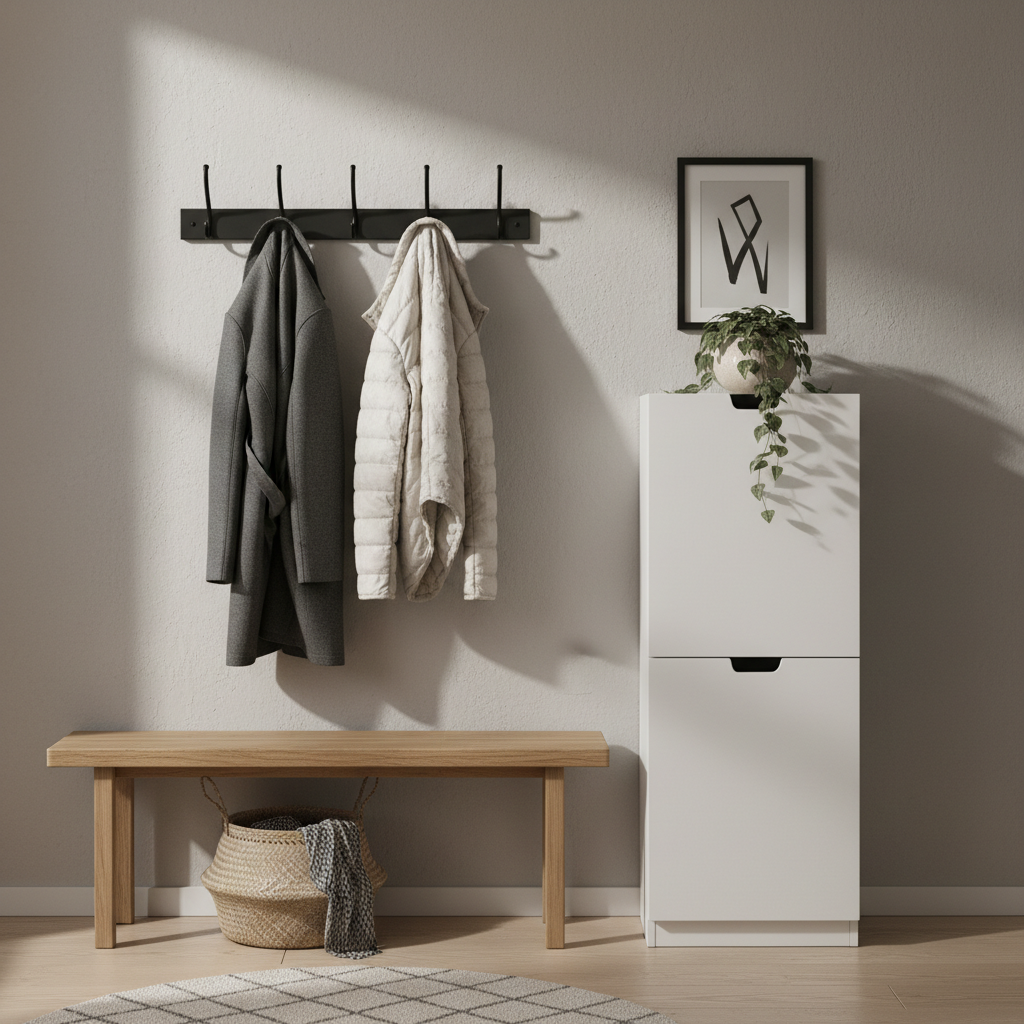
Containment beats perfection. A closed shoe cabinet or lidded basket looks calmer than an open shelf, even if both hold the same amount.
According to National Fire Protection Association (NFPA), keeping exits and pathways clear matters for safety, so a cleaner entryway is not just aesthetic, it’s also practical in many homes.
Use light like a designer: warm, layered, and aimed where you need it
Lighting is one of the fastest ways to change how an entry feels. Many small foyers have a single overhead light that throws harsh shadows and makes everything look tighter than it is.
- Go warmer: warm-white bulbs often feel more welcoming than cool-white in residential entries.
- Layer it: if you can add a small lamp on a console, the space instantly feels “lived in.”
- Aim it: a sconce or lamp that lights the wall near a mirror creates depth.
If you rent or don’t want electrical work, plug-in sconces and table lamps typically deliver most of the impact with low commitment.
Choose the right furniture for tight footprints
To figure out how to make a small entryway look inviting, you have to be picky about proportions. Oversized pieces don’t just take space, they make traffic flow feel awkward.
Small-entryway furniture that tends to work
- Slim console (10–14 inches deep): enough for a tray and lamp, not enough to become a dumping ground.
- Floating shelf + hooks: gives function without eating floor space.
- Closed shoe cabinet: visually quiet, often more “inviting” than open cubbies.
- Bench with storage: only if it doesn’t block the door swing or walkway.
Traffic test: if two people can’t pass each other without turning sideways, the piece is probably too deep for that spot.
Add one “welcome moment”: a mirror, art, or greenery (pick one)
Inviting entryways usually have one focal point that tells your brain, “this is intentional.” The mistake is trying to make every inch decorative.
- Mirror: bounces light and helps the space feel wider.
- Art: a single medium/large piece reads calmer than a gallery wall in a narrow corridor.
- Greenery: a hardy plant or a simple vase of branches softens hard lines.
If you choose a mirror, hang it where it reflects light (a nearby window or lamp) rather than reflecting the shoe pile you’re trying to hide.
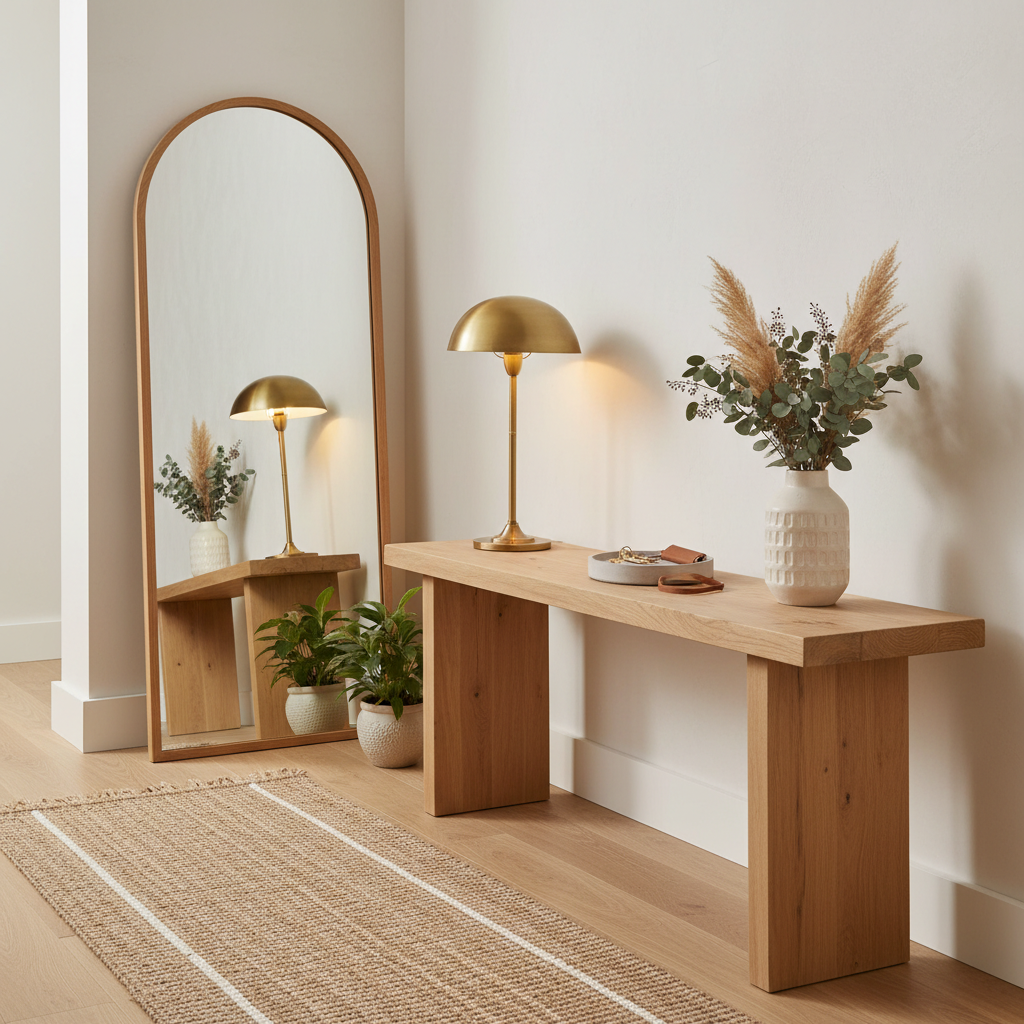
Key point: one strong choice looks more expensive and more welcoming than five small “cute” items scattered around.
Make it livable: set up a micro-system for shoes, keys, and mail
A small entry stays inviting when it stays easy. That means a system that matches your habits, not a Pinterest fantasy.
Entryway system checklist
- Keys: one tray or bowl, same spot every day.
- Mail: one vertical sorter, or a labeled basket you empty weekly.
- Shoes: “today” pairs out, “storage” pairs hidden.
- Bags: two hooks at adult shoulder height, one lower hook for kids if needed.
If packages tend to collect at the door, designate a corner basket or a small floor bin. It’s not glamorous, but it prevents the slow creep of clutter.
Quick picks: what to do in 30 minutes vs. a weekend
Sometimes you want a fast win, sometimes you want a proper refresh. Here’s a realistic way to stage the work so you actually finish.
| Time you have | What to do | Why it helps |
|---|---|---|
| 10–30 minutes | Remove floor clutter, add a tray for keys, limit shoes to a set number | Immediate calm, clearer pathway |
| 1–2 hours | Add a mirror or art, swap to warmer bulbs, add a runner rug | Brighter, wider feel, more “welcome” vibe |
| Half day | Install hooks, add closed shoe storage, set a mail system | Less daily mess, easier habits |
| Weekend | Paint refresh, upgrade light fixture, replace oversized furniture | Big visual upgrade without changing the footprint |
Common mistakes that make a small entryway feel less inviting
- Too many tiny organizers: they multiply surfaces where clutter can land.
- Open storage everywhere: open cubbies can look busy unless you keep them strict.
- Decor with no function: if you have one surface, it has to earn its keep.
- Ignoring door swing and walkway: the space can look styled and still feel annoying to use.
- Rugs that are too small: a runner that fits the path tends to feel more intentional.
If you’re making changes near a doorway, secure rugs to reduce slipping risk, and if you’re unsure about electrical updates, it’s usually wise to consult a licensed electrician.
Conclusion: a small entryway can feel warm without feeling crowded
If you’re still thinking about how to make a small entryway look inviting, focus on the order of operations: clear the path, contain the mess, warm up the lighting, then add one strong “welcome” detail.
Two easy next steps: pick a single drop-zone container today, then choose one upgrade this week, either a mirror or a lamp. Small spaces reward consistency more than big gestures.