
The best decorative trays for coffee table styling do two jobs at once: they make clutter look intentional, and they give your tabletop a “finished” center so the rest of the room feels calmer.
If you have ever cleared your coffee table, set down a candle and a book, and still felt like something looks off, it is usually a tray problem, not a “you have no taste” problem. Trays create boundaries, and boundaries create order, even in casual, lived-in homes.
This guide breaks down what actually matters when you shop, how to pick a size that fits your table, which materials work in real life, and a few styling formulas you can repeat without overthinking.
What makes a decorative tray “best” for a coffee table
“Best” is not about the fanciest tray, it is about the one that fits your table, your habits, and the way you use the room. A tray that looks great in photos can be annoying if you constantly move it to put your feet up.
Here are the practical criteria most people end up caring about after a few weeks.
- Right footprint: large enough to anchor decor, small enough to leave breathing room for drinks and remotes.
- Stable base: doesn’t rock on a textured table, doesn’t scratch easily.
- Edges that work: a slight lip helps corral items, but very tall sides can feel bulky.
- Easy to wipe: coffee tables live in the splash zone.
- Matches your room’s “hardware”: think metal finishes, wood tone, and overall vibe.
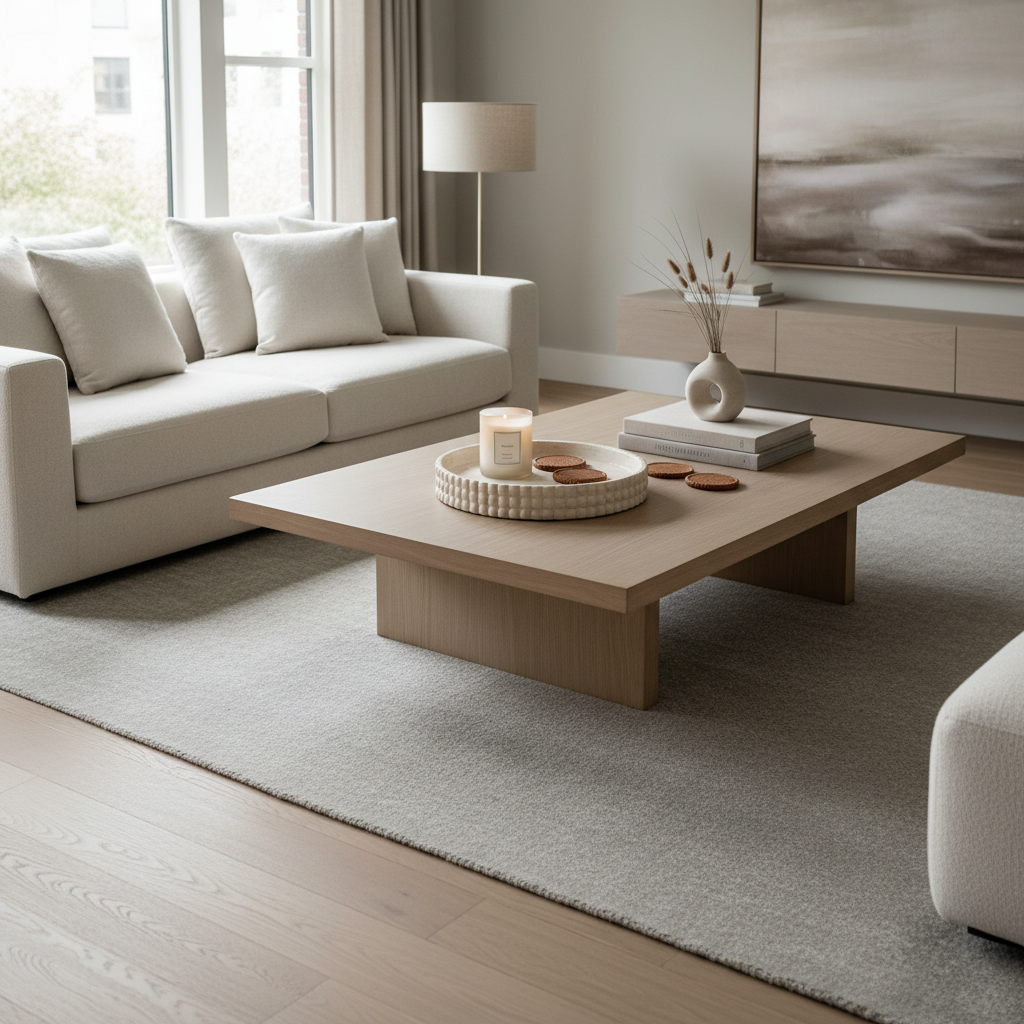
Quick sizing rules that prevent most “why does this look weird?” moments
Most coffee-table styling issues come from scale. Too small and the tray looks like an afterthought, too large and it blocks the table from being usable.
Easy sizing guidelines (use the one that fits your table shape)
- Rectangular table: aim for a tray about 1/2 to 2/3 of the table length, leaving open space at one end or on both sides.
- Square table: choose a tray that uses roughly 1/2 the table width so you still have corners for a mug or game controller.
- Round table: pick a round tray about 1/3 to 1/2 of the table diameter, or a soft-rectangle tray that keeps curves in mind.
If you are between sizes, go slightly larger, then keep the items on top lower and lighter. A tiny tray with tall decor often reads messy, even when it is technically “organized.”
Materials and finishes: what looks good vs. what lives well
Material choice is where aesthetics and lifestyle collide. Kids, pets, candle wax, and condensation from iced drinks all change the “best” answer.
| Material | Best for | Watch-outs |
|---|---|---|
| Wood (oak, walnut, mango) | Warm, cozy rooms; hides minor scuffs | Can stain if not sealed; wipe spills fast |
| Metal (brass, black, chrome) | Modern or glam looks; crisp contrast | Fingerprints and scratches show on shiny finishes |
| Rattan / cane | Casual, coastal, boho spaces | Harder to clean if sticky spills happen |
| Marble / stone look | Elevated, minimal styling; feels “decorator” | Heavy; edges can chip; cold tone in warm rooms |
| Acrylic / resin | Small spaces; visually light; easy wipe-down | Scratches can haze over time |
According to Consumer Product Safety Commission (CPSC), candles should be kept away from things that can catch fire. If you style a tray with a candle, keep wicks trimmed, avoid dried florals nearby, and consider flameless options if your household has lots of movement.
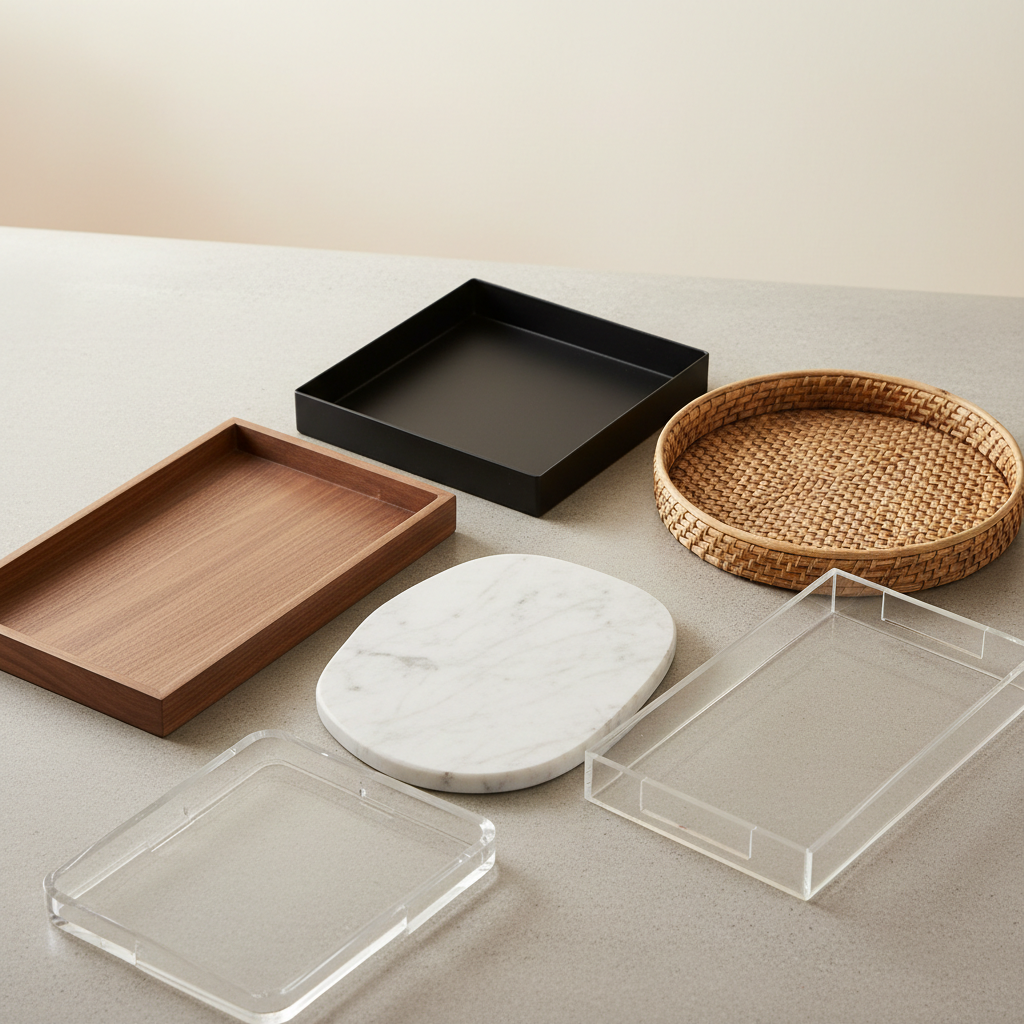
Tray shapes and edge styles that change the whole vibe
Shape does more than match the table, it controls how your eye moves across the surface. This is why two trays with the same color can feel totally different.
- Round trays: soften boxy rooms, great if your sofa and rug already have lots of straight lines.
- Rectangular trays: easiest for books and remotes, and they naturally “organize” in a clean way.
- Oval trays: the in-between option, especially good when you want softer lines without going full round.
Edge height matters too. A low lip looks sleek and still keeps coasters in place, while tall sides feel more like storage. Neither is wrong, but tall sides can dominate a small table.
A quick self-check: which coffee-table tray setup fits your life
Before you hunt for the best decorative trays for coffee table looks, be honest about what your table is for most days. Styling that fights your routine never lasts.
- If your table is a snack zone: prioritize wipeable surfaces, coasters, and a tray big enough for a small plate.
- If you host often: choose a tray with handles or a sturdy rim so you can lift and clear the table fast.
- If you have kids/pets: avoid sharp corners and top-heavy decor, pick heavier trays that do not slide easily.
- If your space is small: go lighter visually (acrylic, thin metal) and keep the tray footprint modest.
- If you work from the sofa: leave a clear “landing strip” for a laptop, and keep the tray off-center.
3 repeatable styling formulas that look intentional (not staged)
You do not need a dozen objects, you need a plan. The tray is the plan. Use one of these and tweak based on your taste.
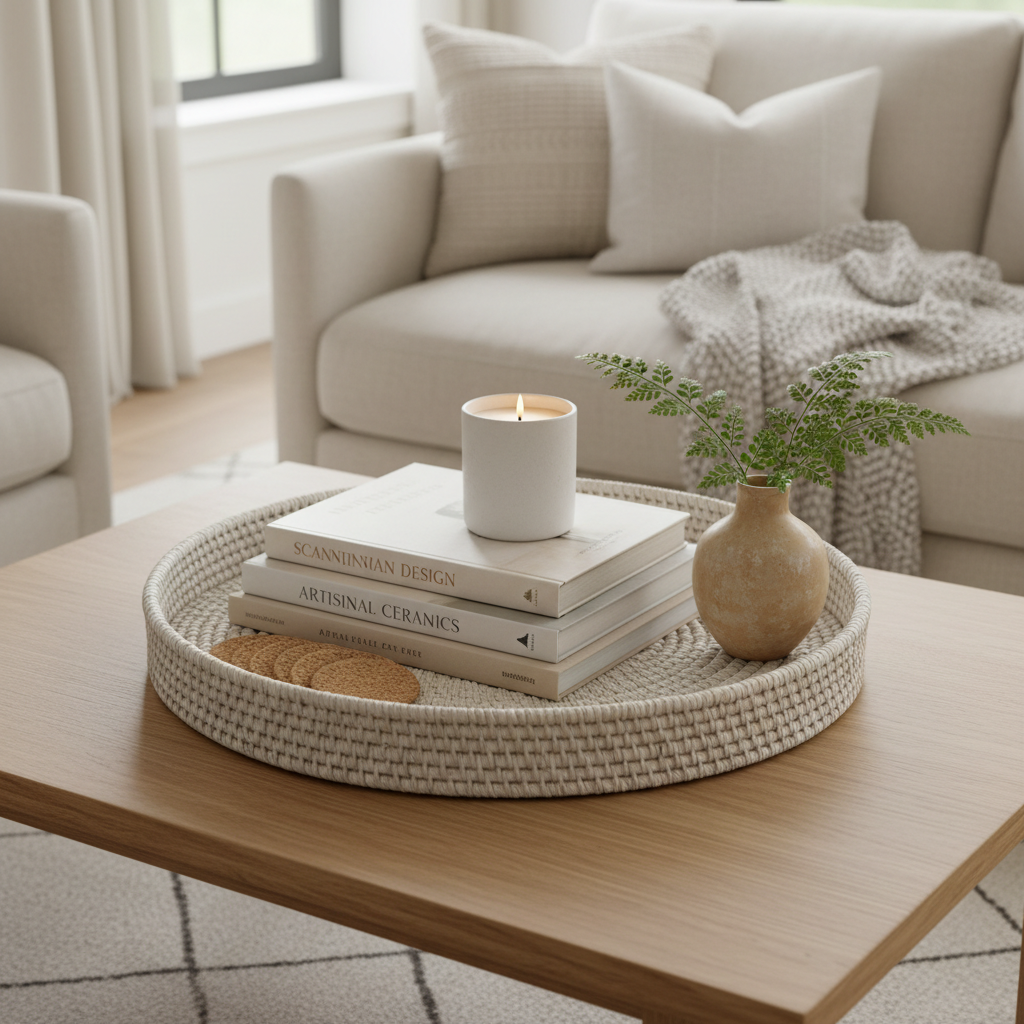
Formula 1: The classic “book + candle + small object”
- 1–2 coffee table books (or one book plus a magazine)
- One candle or small lamp
- One small sculptural object or bowl (keys-friendly, if needed)
Key point: keep at least one item low, so the grouping doesn’t become a wall between people on the couch.
Formula 2: The “hosting-ready” tray
- Coasters (stacked)
- Small lidded container (matches, remote, or tea lights)
- Short vase or faux greenery
This setup reads welcoming, but it still leaves space for a bowl of popcorn without tearing everything apart.
Formula 3: The minimal “one hero + one helper”
- One hero item: a statement vase, sculptural piece, or bold candle
- One helper item: a small dish or a single book
Minimal only works when scale is right. If your tray is large, the hero item has to hold its own.
Common mistakes (and the fixes that actually help)
Most “fails” are easy to correct once you know what you are looking at. And yes, you can fix a tray you already own.
- Mistake: tray is too small, everything feels crowded.
Fix: remove one item, or swap in fewer, larger pieces. - Mistake: everything is the same height.
Fix: add one tall element (short vase, candlestick), keep the rest lower. - Mistake: “random stuff bowl” vibe.
Fix: add one intentional decor item (book or candle), then corral daily-use items in a lidded container. - Mistake: tray clashes with room metals/woods.
Fix: match one finish already in the room, like black legs, brass lamp, or warm oak.
When it might be worth asking for extra help
If you keep buying trays and nothing looks right, the issue may be bigger than the tabletop. It can be proportion between the coffee table and sofa, a too-small rug, or lighting that makes everything feel flat.
In those cases, a quick consult with an interior designer or even an in-store styling appointment at a home retailer can help you confirm scale and finishes before you spend again. If you rent or cannot change big furniture, ask for solutions that rely on moveable pieces only.
Key takeaways and a simple next step
The best decorative trays for coffee table styling usually come down to three decisions: size, material, and how you actually use the table. Nail those, and the “styling” part becomes surprisingly easy.
If you want one action that pays off fast, measure your tabletop, pick a tray footprint that leaves real open space, then build one of the three formulas above with items you already own before buying anything new.
FAQ
What size tray works best on a standard coffee table?
Many standard coffee tables do well with a tray that takes up about half to two-thirds of the table length, but the best check is leaving space for a drink on at least one side without shifting the tray.
Are round trays better than rectangular trays for coffee tables?
Round trays often feel softer and more casual, especially in rooms with lots of straight lines. Rectangular trays feel cleaner and hold books and remotes more naturally, so “better” depends on what you keep on the table.
How do I style a coffee table tray without making it look cluttered?
Use fewer items with stronger presence, and mix heights. A common fix is removing one small object and replacing it with one larger piece, like a single book or a slightly bigger candle.
What should I put in a decorative tray on a coffee table for everyday life?
Coasters, one intentional decor piece, and one container for small daily items usually cover real-life needs. If you use remotes a lot, a lidded box can look calmer than an open pile.
Do decorative trays damage wood coffee tables?
They can if grit gets trapped underneath or if the tray slides. Felt pads or a soft liner helps, and wiping under the tray when you dust keeps tiny scratches from building up.
Is it safe to put candles on a tray on the coffee table?
It can be, but it depends on materials and placement. Keep flames away from anything flammable, avoid dried botanicals, and if you have kids or pets, flameless candles may be the lower-risk choice.
How do I choose the best decorative trays for coffee table styling in a small apartment?
Go visually light and functional: slimmer profiles, acrylic or thin metal, and a tray size that still leaves a clear area for eating or working. Off-center placement often feels more livable than a centered “display.”
If you are trying to refresh your living room without replacing furniture, a well-chosen tray is one of the few upgrades that can make the whole space feel more organized fast, and if you want a more done-for-you look, bring a photo of your coffee table and nearby finishes when you shop so you can match scale and tone with less guesswork.