
Attic storage ideas for home work best when you treat the attic like a small “utility room” with limits, not a magical closet where anything can live forever. If your attic feels dusty, awkward to access, or always one step away from becoming a mess, that’s normal, but it’s also fixable with a few practical rules.
Most people get stuck in the same place: they buy a few bins, stack them randomly, and then avoid the attic because finding anything becomes a project. The goal isn’t just “more storage,” it’s storage you can actually retrieve without stress.

Below you’ll get a clear way to decide what your attic should store, how to set zones, which containers usually hold up best, and when it’s smarter to call a pro. I’ll also point out a few common “looks organized but fails later” traps.
Start with what your attic can safely handle
Before you plan shelves or built-ins, you need the guardrails. A lot of attic frustration comes from ignoring structure, insulation, and access, then trying to organize around problems that never got solved.
According to FEMA... heavy items should be stored low and secured to reduce shifting and injury risk during emergencies, and that logic applies in attics too, especially when people climb ladders carrying boxes. You don’t need to overthink it, you just need a “no hero moves” setup.
- Floor strength: Many attics have ceiling joists not designed for heavy storage. If you’re unsure, ask a qualified contractor or structural professional.
- Walkway: Create a stable path from the hatch to storage zones. No balancing on joists.
- Heat and humidity: Attics often run hot in summer and cold in winter. That affects what you should store and which bins survive.
- Insulation and ventilation: Don’t compress insulation to “make room.” It can reduce performance and sometimes create moisture issues.
Quick self-check: what kind of attic storage do you actually need?
Not every home needs the same approach. Use this quick checklist to sort your situation, then match solutions to it.
- You need seasonal rotation: holiday décor, winter coats, patio cushions, kids’ size-up clothing.
- You need long-term “archive” storage: keepsakes, photos, paper records, memorabilia.
- You need bulky-but-light storage: empty suitcases, gift wrap, artificial trees, camping pads.
- You’re storing “just in case” items: if this category dominates, organization won’t fix the root problem, downsizing will.
If you’re mostly seasonal + bulky-but-light, attic storage ideas for home tend to be simple: shelving, labeled bins, and a clean walkway. If you’re mostly archive storage, you’ll want better containers and a plan for temperature swings.
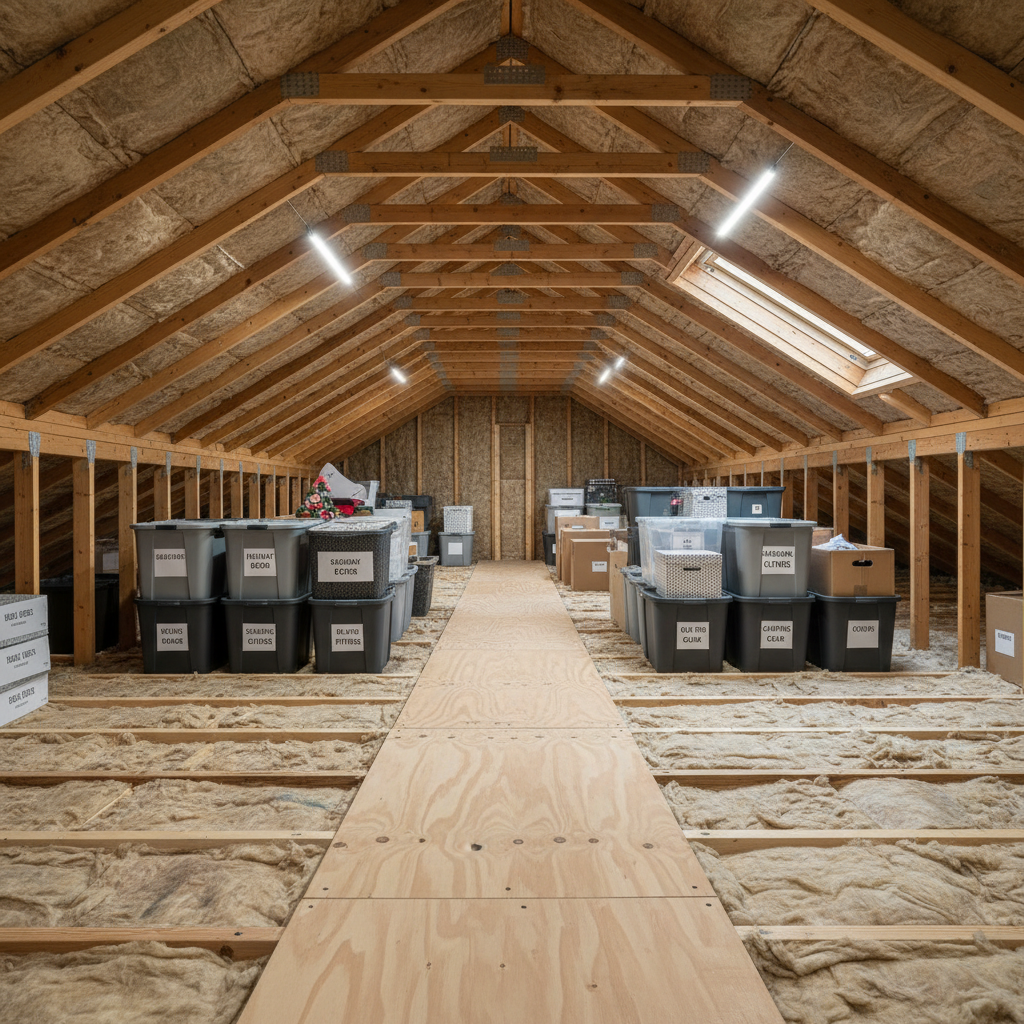
One honest rule: if you can’t safely walk to it, you don’t really have storage, you have “stuff parked in a hazard zone.”
Pick the right containers (and avoid the ones that fail)
Container choice matters more in an attic than in a closet. Heat, dust, and occasional pests are what make “cheap bins” crack, warp, or become gross to handle.
Containers that usually work well
- Heavy-duty latching totes: better for dust control and stacking; look for thicker plastic and strong latches.
- Clear bins for seasonal items: helps you identify contents without opening everything.
- Flat under-eave bins: for low clearance areas where standard totes waste space.
- Vacuum bags (selectively): good for linens and soft items, but avoid trapping anything that might hold moisture.
Containers that often backfire
- Cardboard boxes: they attract moisture and pests, and collapse when stacked over time.
- Thin “budget” totes: lids warp in heat, corners crack, and stacks become unstable.
- Open baskets: look nice, but dust wins in an attic.
For labeling, keep it boring: big text on two sides, one “category label” plus one “specific label,” like HOLIDAY: Outdoor lights.
Layout ideas that create usable extra space (not just stacks)
The simplest way to get extra space is to stop storing air and start storing by “edges + access.” Most attics have awkward slopes, and that’s not a problem if you plan around them.
- Center walkway + two storage bands: keep the middle clear, store bins along both sides for easy reach.
- Low items under eaves: gift wrap, spare pillows, lightweight décor in flat bins.
- Frequently used items closest to the hatch: you’ll actually put them back where they belong.
- One “staging shelf” near entry: a spot to set items down while you move things around.
If you’re building shelving, many homeowners like adjustable wire shelving because it’s easy to reconfigure, but wood shelves can be sturdier for odd-sized items. Either way, make sure shelves are anchored correctly and not compressing insulation.
Storage zones that stay organized after month two
Zones are the difference between “tidy today” and “still tidy next season.” Don’t over-label; keep it human.
- Seasonal zone: holiday, seasonal textiles, decorations.
- House maintenance zone: filters, spare fixtures, paint touch-up kits (only if temperature swings won’t ruin them).
- Kid memory zone: one bin per child per year, or you’ll drown in sentimental items.
- Travel zone: suitcases, travel gear, packing supplies.
Key point: give every zone a physical boundary, a shelf, a row, a corner, not just a label in your head.

A small trick that works: keep an “empty bin slot” in each zone. When you bring something up, you’re not forced to play attic Tetris.
What to store in the attic (and what to keep out)
A lot of attic storage ideas for home look great on Pinterest, but the contents matter. Heat and humidity swings can damage plenty of everyday items.
| Store Here (Often OK) | Use Caution | Avoid in Most Attics |
|---|---|---|
| Holiday décor, artificial trees, empty luggage | Linens in sealed totes, photo copies (not originals) | Paint, aerosols, candles, vinyl records |
| Seasonal clothing (clean, sealed) | Small appliances (boxed, protected) | Electronics, important documents, medications |
| Gift wrap in flat bins | Books (can warp in humidity) | Anything food-related, anything with batteries installed |
When in doubt, store “temperature-sensitive and irreplaceable” items inside conditioned living space. That single choice prevents most regrets.
Step-by-step: a weekend attic organization plan
If you want results without turning it into a month-long project, keep the workflow tight and make fewer decisions in the attic itself.
- Step 1: Pull everything into three groups: keep, donate/sell, trash. If you can’t decide, park it in a “review later” bin with a date.
- Step 2: Clean the entry area, confirm the walkway, and set lighting so you can see labels.
- Step 3: Assign zones, then place shelves or racks where bins can be reached without stepping off the path.
- Step 4: Re-pack with categories first, details second, label as you go, not at the end.
- Step 5: Create a simple inventory note on your phone, even a basic list like “Holiday row: 6 bins.”
This is also where attic storage ideas for home either stick or fade: if you skip labeling and zone boundaries, you’ll be reorganizing again next season.
Safety and common mistakes that waste space
Some mistakes look efficient but create long-term headaches, or worse, safety issues. Keep these in mind.
- Overstacking bins: tall stacks tip when you pull one out; keep heavy bins low.
- Blocking vents or soffits: can contribute to moisture problems; if you’re unsure what you’re looking at, ask a professional.
- Storing items with strong odors: smells can linger and transfer to fabric items.
- Using the attic for “miscellaneous”: that category expands until it becomes the whole attic.
According to OSHA... ladder safety basics include maintaining three points of contact and avoiding carrying heavy loads while climbing, which is a good reminder to use a haul rope or pass items up safely when possible.
When it’s worth calling a professional
Sometimes the best “storage idea” is admitting the space needs a fix before it can store anything safely.
- You see sagging joists, cracked drywall ceilings, or bouncy flooring: consult a qualified contractor or structural professional.
- Signs of moisture, mold, or recurring condensation: an insulation or HVAC professional may help diagnose ventilation and air sealing issues.
- Pest activity: pest control can address entry points before you invest in new containers and shelving.
- You want built-ins near electrical or recessed lights: an electrician may be needed to confirm clearances and safe routing.
This isn’t about overreacting, it’s about not building an organization system on top of a problem that keeps ruining your stuff.
Conclusion: make the attic easy to use, not just easy to fill
The most effective attic storage ideas for home come down to a few boring but powerful moves: a safe walkway, a handful of zones, sturdy containers, and labels you can read in bad lighting. If you do that, the attic stops being a “junk limbo” and starts functioning like extra space you can count on.
If you only do two things this week, do this: pick three zones and swap cardboard for sealed bins. You’ll feel the difference the next time you need something quickly.
FAQ
What are the best attic storage ideas for home with low headroom?
Focus on low-profile bins under the eaves, plus a clear center walkway. Low headroom spaces often waste vertical stacking, so go wider, not taller.
Is it okay to store clothes in the attic?
Many people do, but results vary by heat and humidity. If you store clothing, keep items clean, use sealed totes, and avoid anything sentimental or hard to replace.
How do I keep attic storage from getting dusty?
Use latching bins instead of open boxes, and avoid open shelving for fabric items. Dust will still exist, but sealed containers reduce cleanup and protect contents.
What should I never store in an attic?
In many homes, avoid paint and aerosols, candles, important documents, medications, and electronics. Temperature swings can damage them or create safety concerns.
Do I need shelves, or can I just stack bins?
You can stack bins, but shelves tend to make retrieval easier and safer because you aren’t pulling from a tall tower. A hybrid works well: shelves for most items, a floor zone for oversized light items.
How do I label attic bins so I can actually find things later?
Use big labels on two sides, keep wording consistent, and label by category plus specific item. If your handwriting varies, printed labels usually stay readable longer.
How do I make attic storage safer to access?
Improve lighting, keep a stable walkway, and avoid carrying heavy loads on a ladder. If access feels sketchy, upgrading the attic ladder or entry may be worth discussing with a professional.
If you’re trying to reclaim attic space but keep getting stuck on layout, container choices, or what to store up there at all, a simple planning checklist and a zone-based labeling system can make the project feel a lot more manageable without turning it into a full remodel.